
A website for marketing serves as the digital foundation for businesses seeking to establish authority, generate leads, and convert prospects into customers. In 2026, websites have evolved beyond simple online brochures into sophisticated marketing engines that integrate with multiple channels, track customer behavior, and optimize for both human visitors and AI-powered search tools. According to recent research, AI-optimized websites can generate significantly more human traffic, making strategic website development essential for competitive businesses. Whether you're launching a new venture or revitalizing an existing online presence, understanding how to leverage your website as a marketing asset determines your success in the digital marketplace.
Strategic Foundation of Your Marketing Website
Building a website for marketing requires more than aesthetic appeal. Your digital presence must align with business objectives, target audience needs, and measurable performance metrics. Every element from homepage messaging to navigation structure should guide visitors toward specific actions that support your revenue goals.
Defining Your Marketing Objectives
Before designing a single page, clarify what you need your website to accomplish. Marketing websites typically serve multiple purposes:
- Lead generation through contact forms, resource downloads, and newsletter signups
- Brand positioning that differentiates your services from competitors
- Customer education addressing common questions and objections
- Trust building through testimonials, case studies, and credentials
- Conversion optimization moving visitors through defined sales funnels
Businesses in coaching and consulting industries particularly benefit from websites that demonstrate expertise while making it effortless for prospects to take the next step. Pat Bruce's approach at Mountain Mover Coaching and Digital Marketing exemplifies this principle by combining strategic positioning with clear pathways to engagement.
Audience-Centered Design Principles
Your website must speak directly to your ideal client's challenges and aspirations. This requires comprehensive audience research beyond basic demographics to understand psychographics, pain points, and decision-making processes.
Create detailed buyer personas that inform every content and design decision. Consider their technical sophistication, information preferences, and typical customer journey stages. A website for marketing to small business owners demands different messaging and functionality than one targeting enterprise decision-makers.

Essential Components That Drive Marketing Results
Modern marketing websites incorporate specific features that transform passive visitors into active leads. Implementing built-in marketing and SEO tools streamlines optimization and reduces dependence on multiple third-party platforms.
High-Performance Homepage Strategy
Your homepage serves as the primary entry point for most visitors and must immediately communicate value. Effective homepages include:
- Clear value proposition stated within the first viewport
- Specific audience identification so visitors know they're in the right place
- Primary call-to-action prominent and action-oriented
- Social proof elements building credibility immediately
- Navigation clarity enabling quick access to key information
Avoid homepage clutter that dilutes your core message. Every element should either communicate value or facilitate visitor action. Remove generic stock photos and placeholder content that waste valuable screen real estate.
Service and Solution Pages
Service pages represent critical conversion points where prospects evaluate whether you can solve their problems. These pages require more depth than homepage summaries, including:
| Element | Purpose | Best Practice |
|---|---|---|
| Problem Statement | Demonstrate understanding | Use client language, not industry jargon |
| Solution Overview | Explain your approach | Focus on outcomes, not just features |
| Process Transparency | Reduce purchase anxiety | Outline clear steps from engagement to results |
| Proof Points | Validate effectiveness | Include specific metrics and testimonials |
| Next Steps | Facilitate action | Single clear CTA with low commitment options |
Each service page should target specific search intent and keywords while maintaining natural, persuasive copy. For businesses offering specialized services like digital marketing consulting, location-specific pages can capture local search traffic effectively.
Content Marketing Integration
A website for marketing must include robust content capabilities that support ongoing engagement and search visibility. Blog functionality, resource libraries, and downloadable assets position you as a trusted authority while generating organic traffic.
Develop content pillars aligned with your core services and audience questions. Create comprehensive guides, how-to articles, and thought leadership pieces that demonstrate expertise while naturally incorporating target keywords. Consistency matters more than volume, focus on publishing valuable content on a sustainable schedule.
Conversion Optimization Architecture
Traffic without conversions wastes marketing investment. Your website architecture must systematically guide visitors toward valuable actions through strategic placement of conversion elements and friction reduction.
Strategic Call-to-Action Placement
Effective CTAs appear contextually throughout the user journey, not just at page bottoms. Consider these placement strategies:
- Primary CTA above the fold on every main page
- Secondary CTAs embedded within content at natural decision points
- Exit-intent popups capturing abandoning visitors
- Sidebar CTAs for blog and content pages
- Footer CTAs for thorough readers who scroll completely
Vary CTA types based on visitor awareness levels. First-time visitors might respond better to educational resource downloads, while returning visitors may be ready for consultation bookings. According to website design best practices for high conversion, testing different CTA formats and messaging significantly impacts results.
Form Optimization Techniques
Contact forms represent the final barrier to lead capture. Minimize form fields to essential information only. Every additional field decreases completion rates, particularly on mobile devices.
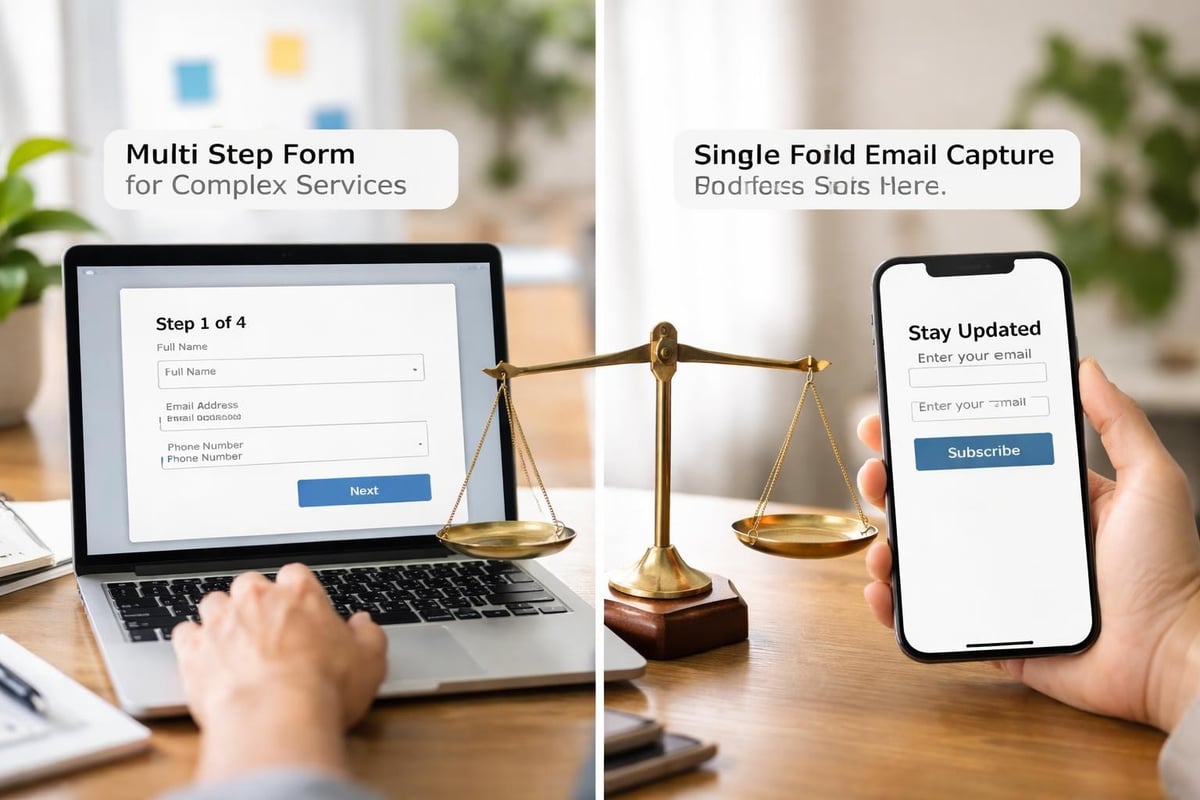
Implement these form enhancements:
- Progress indicators for multi-step forms
- Field validation providing real-time feedback
- Smart defaults reducing typing requirements
- Mobile optimization with appropriate input types
- Privacy assurance clarifying how information will be used
Test confirmation page messaging and follow-up sequences. The moment after form submission represents peak engagement, leverage it with relevant next steps or additional resources.
Trust Elements Throughout the Site
Credibility signals reduce prospect hesitation and increase conversion likelihood. Strategically place trust elements including:
- Client testimonials with names and photos
- Case studies demonstrating measurable results
- Industry certifications and credentials
- Security badges and privacy certifications
- Media mentions and third-party validation
Professional website design plays a crucial role here. Independent designers like Leone Finzi understand how visual psychology and user experience design influence trust perception, particularly for small and medium businesses establishing digital authority.
Search Engine Optimization Integration
A website for marketing must rank for terms your ideal clients actually search. SEO integration begins during site planning, not as an afterthought. Website marketing strategies focused on SEO compound over time, generating increasingly valuable organic traffic.
Technical SEO Foundation
Technical excellence ensures search engines can crawl, index, and understand your content. Essential technical elements include:
- Mobile responsiveness across all device sizes
- Page speed optimization targeting sub-3-second load times
- SSL certification for secure connections
- XML sitemap properly submitted to search engines
- Structured data markup enhancing search result displays
Modern website platforms handle many technical requirements automatically, but verification remains important. Run regular technical audits identifying issues before they impact rankings.
On-Page Optimization Strategy
Each page should target specific keywords while maintaining natural, valuable content. Optimize these on-page elements:
| Element | Optimization Approach |
|---|---|
| Title Tags | Include primary keyword within 60 characters |
| Meta Descriptions | Compelling copy within 155 characters prompting clicks |
| Header Tags | Logical hierarchy with keywords in H2 and H3 |
| URL Structure | Clean, descriptive URLs containing relevant keywords |
| Image Alt Text | Descriptive text serving both accessibility and SEO |
| Internal Linking | Strategic connections between related content |
Avoid keyword stuffing that degrades readability. Search algorithms in 2026 prioritize comprehensive, user-focused content over mechanical optimization tactics.
Content Depth and Authority
Comprehensive content outperforms shallow pages across most competitive industries. Create pillar pages exceeding 2,000 words for primary topics, supported by shorter cluster content addressing specific subtopics.
Answer Engine Optimization (AEO) has become increasingly important as AI-powered search tools reshape how people find information. Structure content to directly answer common questions, use clear formatting, and provide definitive expertise that AI systems can confidently reference.
Performance Tracking and Continuous Improvement
Marketing effectiveness requires measurement. Implement comprehensive analytics tracking visitor behavior, conversion paths, and revenue attribution. Data-driven decisions consistently outperform intuition-based changes.
Essential Metrics for Marketing Websites
Monitor these key performance indicators regularly:
- Traffic sources identifying which channels drive visitors
- Bounce rate indicating content relevance and user experience
- Time on page suggesting engagement levels
- Conversion rate measuring lead generation effectiveness
- Goal completions tracking specific desired actions
- Revenue attribution connecting website activity to actual sales
Set baseline measurements and improvement targets. Small conversion rate increases generate significant revenue impact when applied to consistent traffic volumes.
A/B Testing Methodology
Systematic testing reveals what actually works for your specific audience. Test one variable at a time to isolate impact:
- Headline variations on landing pages
- CTA button colors and text
- Form lengths and field orders
- Page layouts and content organization
- Social proof placement and formats
Run tests until statistical significance is achieved before declaring winners. Premature conclusions based on limited data lead to poor optimization decisions.
User Feedback Integration
Quantitative analytics tell you what happens, but qualitative feedback explains why. Implement feedback mechanisms including:
- User testing sessions watching real people navigate your site
- Heat mapping tools revealing actual click and scroll patterns
- Exit surveys understanding why visitors leave without converting
- Customer interviews gathering detailed experience insights
Businesses often discover significant usability issues they never noticed internally. Fresh perspective from actual users identifies improvement opportunities analytics alone cannot reveal.
Mobile-First Marketing Considerations
Mobile devices generate the majority of web traffic in 2026. A website for marketing must deliver exceptional mobile experiences, not merely functional ones. Building reputation through website marketing increasingly depends on mobile performance and usability.
Responsive Design Essentials
Responsive design adapts layout and functionality to any screen size. Key mobile considerations include:
- Touch-friendly buttons minimum 44×44 pixels for easy tapping
- Readable text without requiring zoom, minimum 16px font size
- Simplified navigation prioritizing essential menu items
- Fast loading optimized images and minimal scripts
- Vertical scrolling natural content flow for thumb navigation
Test your website on actual devices, not just desktop browser simulators. Real-world performance often differs from development environment testing.

Mobile Conversion Optimization
Mobile visitors exhibit different behavior patterns than desktop users. They're often in research mode or seeking quick information rather than ready for lengthy forms. Adapt conversion strategies accordingly:
- Click-to-call buttons enabling immediate phone contact
- SMS opt-in for text message follow-up
- Simplified forms requesting only essential information
- Location integration for service businesses with physical presence
- App-like interactions creating familiar mobile experiences
Mobile conversion rates typically lag desktop, but mobile traffic volume often compensates. Optimize the entire mobile funnel from arrival through conversion and follow-up.
Integration with Broader Marketing Ecosystem
Your website for marketing doesn't exist in isolation. It serves as the hub connecting various marketing channels into a cohesive system that nurtures prospects through the entire customer journey.
Email Marketing Connection
Email remains one of the highest-ROI marketing channels when properly executed. Your website should facilitate list building through strategic opt-in opportunities. Create valuable lead magnets relevant to your services: comprehensive guides, assessment tools, video training, or exclusive insights.
Segment email lists based on website behavior and interests. Visitors who viewed specific service pages receive different nurture sequences than those who downloaded general resources. This personalization significantly improves engagement and conversion rates.
Social Media Synergy
Social platforms drive awareness and traffic, but conversions typically happen on your website. Create content specifically designed for social sharing: visually engaging infographics, compelling statistics, thought-provoking insights, and practical tips.
Include social sharing buttons on valuable content, making it effortless for readers to distribute your expertise. Monitor social referral traffic in analytics, identifying which platforms and content types drive the most qualified visitors.
Paid Advertising Landing Pages
Generic homepages underperform as paid advertising destinations. Create dedicated landing pages aligned with specific ad campaigns, matching message and offer exactly. Remove navigation distractions and focus entirely on the promised value and conversion action.
For businesses exploring the best online marketing services, landing page quality often determines campaign success more than platform selection or budget allocation.
Marketing Automation Integration
Connect your website forms to marketing automation platforms enabling sophisticated nurture campaigns. Automatically tag contacts based on pages viewed, resources downloaded, and forms completed. This behavioral data enables highly relevant follow-up communication.
Automation shouldn't feel robotic. Craft personalized message sequences addressing specific challenges and interests demonstrated through website behavior. The goal is providing helpful information at the right time, building trust that eventually converts to clients.
Accessibility and Inclusive Design
Accessible websites reach broader audiences while improving overall user experience. Accessibility benefits everyone, not just users with disabilities. Clear navigation, readable text, and logical structure make your website for marketing more effective across all visitor types.
Core Accessibility Principles
Implement these foundational accessibility practices:
- Semantic HTML using proper heading hierarchy and landmarks
- Keyboard navigation enabling full site access without a mouse
- Color contrast ensuring readability for visual impairments
- Alternative text describing images for screen readers
- Caption/transcripts for video and audio content
Accessibility compliance also reduces legal risk. Numerous jurisdictions now require digital accessibility, particularly for businesses serving the public.
Universal Design Benefits
Designing for accessibility creates better experiences universally. Large, clear buttons help users with motor impairments and mobile users equally. Descriptive link text aids screen reader users and improves SEO simultaneously. Simple language benefits non-native speakers and enhances clarity for everyone.
Test your website with accessibility evaluation tools and consider hiring consultants with lived disability experience. Their insights often reveal improvements technical audits miss.
Security and Privacy Considerations
Website security protects both your business and your visitors. Security breaches damage reputation, compromise sensitive data, and can result in significant financial penalties. Lenovo’s overview of website marketing emphasizes that technical foundation including security enables effective marketing execution.
Essential Security Measures
Implement these baseline security practices:
- SSL/TLS encryption for all pages, not just forms
- Regular updates of website platform and plugins
- Strong passwords with two-factor authentication
- Backup systems enabling quick recovery from incidents
- Security monitoring detecting suspicious activity
Partner with qualified hosting providers maintaining infrastructure security. Shared responsibility models require both host security and your vigilant practices.
Privacy Policy and Compliance
Transparency about data collection builds trust and satisfies legal requirements. Create clear privacy policies explaining:
- What information you collect
- How you use that information
- Who has access to visitor data
- How long data is retained
- Visitor rights regarding their information
Cookie consent mechanisms are now standard practice. Implement compliant consent management allowing visitors to control tracking preferences while maintaining site functionality.
Building an effective website for marketing requires strategic planning, user-centered design, and ongoing optimization aligned with measurable business objectives. Your website serves as the digital hub connecting all marketing efforts while establishing credibility and facilitating conversions. If you're ready to transform your online presence into a powerful marketing asset that drives measurable growth, Mountain Mover Coaching and Digital Marketing specializes in creating strategic websites integrated with comprehensive digital marketing systems designed to accelerate profit and scale your business effectively.