
Social media ad campaigns have become the cornerstone of modern digital marketing strategies, transforming how businesses connect with their target audiences. In 2026, the landscape has evolved beyond simple boosted posts to sophisticated, multi-platform campaigns that leverage artificial intelligence, advanced targeting capabilities, and creative storytelling. For businesses seeking measurable growth, understanding how to design, execute, and optimize these campaigns is no longer optional. The platforms have matured, consumer behavior has shifted toward social discovery, and the opportunities for businesses willing to invest strategically have never been more promising. Successfully navigating this environment requires both technical expertise and creative vision, making it essential to partner with experienced professionals who understand the nuances of social media advertising.
Understanding the Current Social Media Advertising Landscape
The social media advertising ecosystem in 2026 continues to expand at an unprecedented rate. According to comprehensive social media advertising statistics, conversion rates and audience engagement metrics have reached new benchmarks across major platforms. Businesses now allocate substantial portions of their marketing budgets to social channels, recognizing that social media has become the primary way consumers discover brands.
The shift toward creator-driven content has fundamentally altered campaign strategies. The creator economy now commands more ad spending than traditional media, pushing businesses to reconsider their approach to influencer partnerships and user-generated content.
Platform Selection and Budget Allocation
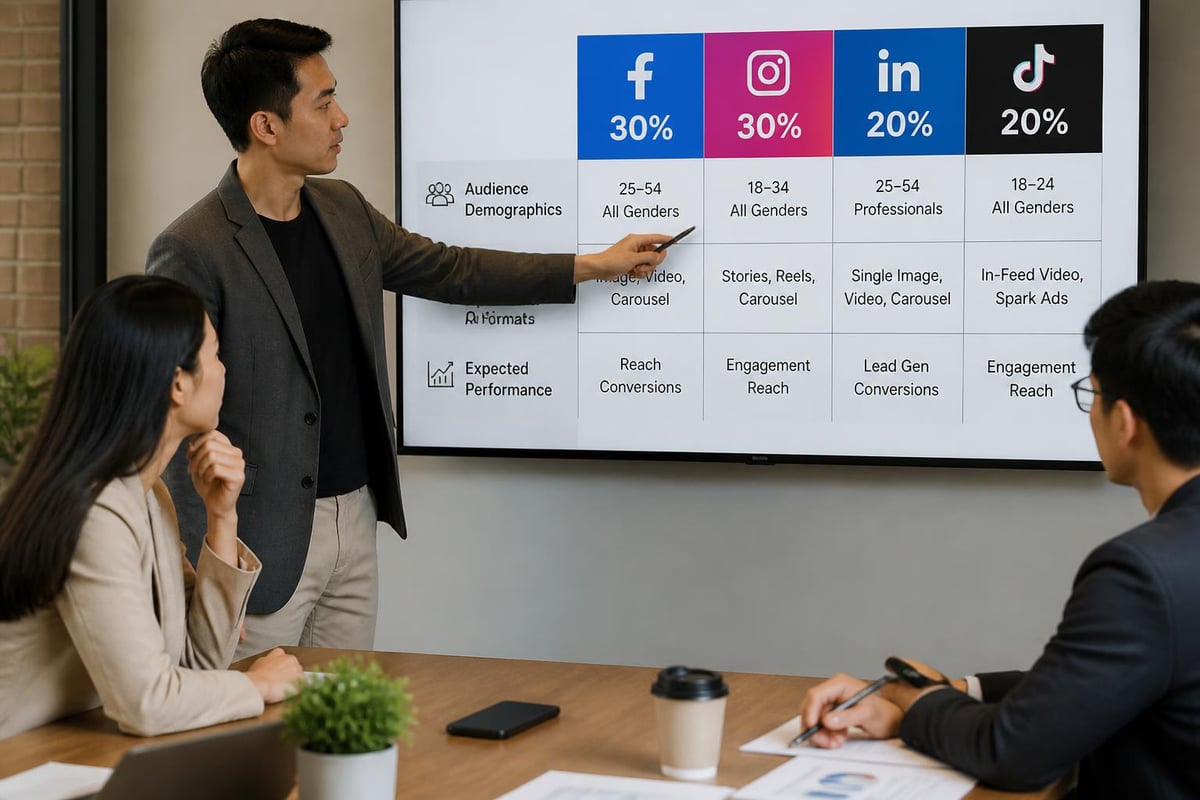
Choosing the right platforms for your social media ad campaigns requires careful analysis of where your target audience spends time and how they engage with content.
Key Platform Considerations:
- Facebook and Instagram remain dominant for broad audience reach
- LinkedIn excels for B2B targeting and professional services
- TikTok captures younger demographics with high engagement rates
- Pinterest drives purchase intent for visual products
- Twitter (X) serves real-time conversations and trending topics
| Platform | Best For | Average CPC (2026) | Conversion Strength |
|---|---|---|---|
| Broad targeting, retargeting | $0.95 – $2.30 | High | |
| Visual products, lifestyle brands | $1.10 – $2.75 | High | |
| B2B, professional services | $5.25 – $8.50 | Medium-High | |
| TikTok | Brand awareness, Gen Z/Millennial | $0.85 – $2.10 | Medium |
Budget allocation should reflect both platform costs and audience concentration. Testing across multiple platforms initially helps identify where your campaigns generate the strongest return on investment.
Developing High-Performance Creative Assets
The creative component of social media ad campaigns determines whether users stop scrolling or keep moving. Following social media ads creative best practices ensures your content resonates with platform algorithms and human audiences alike.
Authenticity has emerged as the dominant theme in successful creative strategies. Platform-native content that feels organic rather than overtly promotional consistently outperforms polished, corporate-style advertisements. Videos formatted vertically for mobile viewing, user-generated content repurposed with permission, and behind-the-scenes glimpses into your business operations all generate stronger engagement.
Creative Testing Framework
- Develop multiple ad variations for each campaign objective
- Test different hooks in the first three seconds of video content
- Experiment with various calls-to-action to identify what drives conversions
- Analyze performance data after reaching statistical significance
- Scale winning combinations while continuing to test new concepts
The problem-first approach to ad creative addresses customer pain points before introducing solutions. This methodology builds relevance immediately, capturing attention from users experiencing the specific challenges your business solves.
Essential Creative Elements:
- Clear value proposition within first 3 seconds
- Mobile-optimized formatting (vertical or square)
- Accessible design with captions for sound-off viewing
- Strong visual contrast to stand out in feeds
- Compelling call-to-action that creates urgency
Organizations like Mountain Mover Coaching and Digital Marketing specialize in developing creative strategies that align with business objectives while maintaining platform best practices.
Advanced Targeting Strategies for Maximum ROI
Precise audience targeting separates profitable social media ad campaigns from budget-draining experiments. The targeting capabilities available in 2026 combine first-party data, behavioral signals, and predictive algorithms to identify high-probability prospects.
Layering multiple targeting parameters creates audiences more likely to convert. Rather than casting wide nets, successful campaigns typically combine demographic criteria with interest-based targeting and behavioral indicators. Research on how perceptions of social media advertisements impact engagement provides valuable insights into optimizing campaigns for specific demographic segments.
Custom and Lookalike Audiences
Building custom audiences from existing customer data provides the foundation for sophisticated targeting strategies:
- Website visitors who viewed specific products or services
- Email subscribers segmented by engagement level
- Past customers for retention and upsell campaigns
- Video viewers who watched specific percentages of content
- Social media engagers who interacted with previous posts
Lookalike audiences extend reach by identifying users who share characteristics with your best customers. Starting with a seed audience of your highest-value customers, platform algorithms find similar users likely to respond positively to your offers.
Implementing digital marketing best practices throughout your targeting approach ensures campaigns remain optimized as they scale.

Campaign Structure and Optimization Tactics
Organizing social media ad campaigns with proper structure enables efficient testing and scaling. The campaign hierarchy typically follows a three-tier system: campaign level (objective), ad set level (targeting and budget), and ad level (creative).
Campaign Organization Best Practices:
- Separate campaigns by objective (awareness, consideration, conversion)
- Create distinct ad sets for different audience segments
- Test 3-5 ad variations within each ad set
- Monitor frequency to prevent ad fatigue
- Establish clear naming conventions for easy analysis
Budget management requires balancing learning phases with performance optimization. New campaigns need sufficient budget and time to exit the learning phase before making significant adjustments. Premature optimization often resets the learning process, delaying optimal performance.
Performance Monitoring and Adjustment
Tracking the right metrics at each campaign stage prevents misguided optimization decisions:
| Campaign Stage | Primary Metrics | Optimization Focus |
|---|---|---|
| Awareness | Impressions, Reach, CPM | Audience size, creative appeal |
| Consideration | CTR, Engagement Rate, Video Views | Message relevance, targeting precision |
| Conversion | CPA, ROAS, Conversion Rate | Landing page alignment, offer strength |
Daily monitoring during the first week identifies technical issues or major performance problems. After stabilization, weekly reviews provide sufficient data for strategic adjustments without over-correcting based on normal variance.
The platform's automated optimization features have improved significantly, but human oversight remains critical for strategic decision-making. Combining algorithmic efficiency with marketing expertise produces superior results compared to fully automated or fully manual approaches.
Addressing Security and Trust Concerns
The prevalence of fraudulent activities in social advertising requires businesses to implement protective measures. Reports indicate social advertising is being used for fraud at scale, making transparency and credibility essential components of legitimate campaigns.
Building trust through social media ad campaigns involves:
- Maintaining consistent branding across all touchpoints
- Using verified business accounts with complete profiles
- Directing traffic to secure, professional landing pages
- Displaying customer testimonials and social proof
- Clearly communicating privacy policies and data usage
Securing your advertising infrastructure protects both your investment and your customers. Working with secure cloud services providers like vBoxx ensures your landing pages, databases, and customer information remain protected throughout the campaign lifecycle.
Transparency in Ad Delivery
Research examining discrepancies in political ad delivery on social platforms highlights complexities in how targeting actually functions versus advertiser intentions. While this research focuses on political advertising, the principles apply broadly to commercial campaigns.
Understanding that platform algorithms may deliver ads differently than targeted specifications suggests the importance of:
- Regularly reviewing actual audience demographics in campaign reports
- Comparing intended targets with delivered audience composition
- Adjusting targeting parameters based on actual delivery patterns
- Testing different targeting approaches to achieve desired reach
Scaling Successful Campaigns Strategically
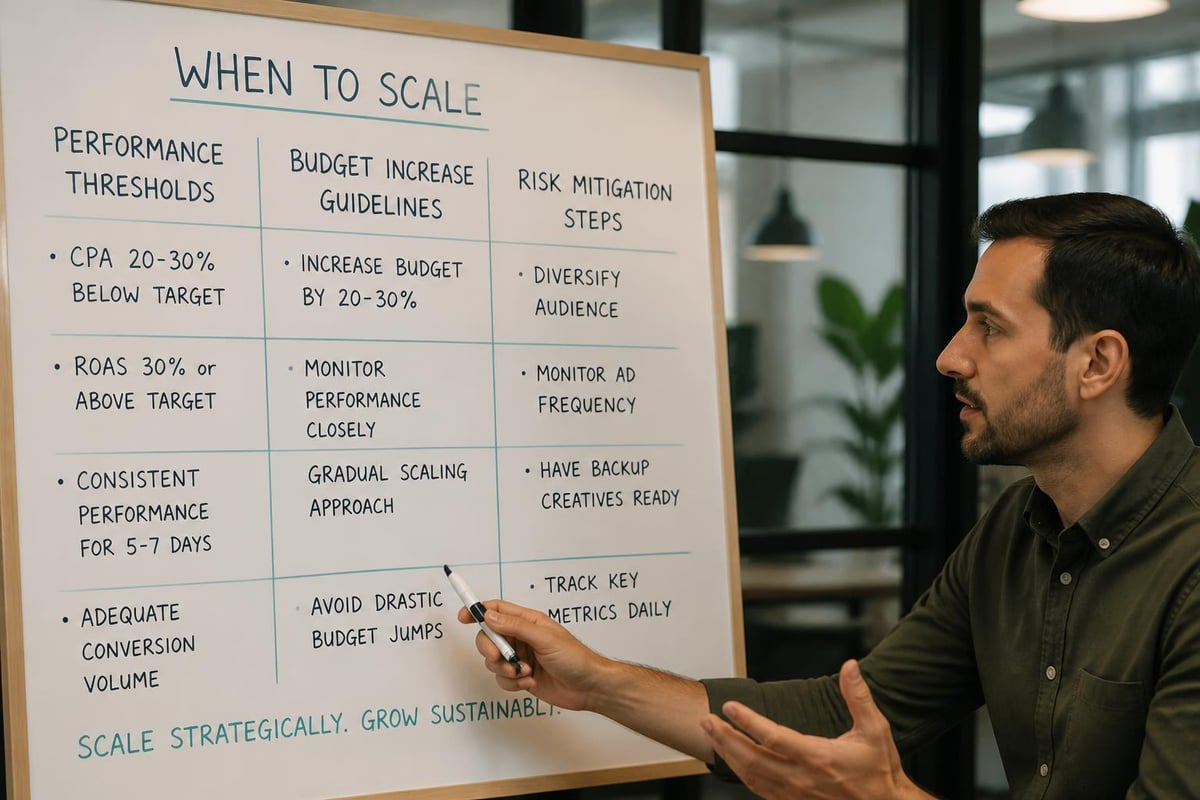
Once social media ad campaigns demonstrate consistent profitability, strategic scaling transforms moderate success into substantial revenue growth. However, scaling requires more nuance than simply increasing budgets.
Horizontal Scaling Approaches:
- Expand to additional platforms with similar audiences
- Create new ad sets targeting adjacent customer segments
- Develop seasonal variations of winning campaigns
- Test different campaign objectives using proven creative
Vertical Scaling Methods:
- Increase daily budgets gradually (10-20% increments)
- Extend audience size through broader targeting parameters
- Allocate more budget to top-performing ad sets
- Extend campaign duration for consistent presence
The key to successful scaling lies in maintaining the performance metrics that made campaigns profitable initially. Rapid budget increases often destabilize campaigns, increasing costs per result as platforms struggle to find sufficient qualified audiences at the new scale.
Maintaining Creative Freshness
Ad fatigue represents one of the most common challenges in sustained campaigns. As audiences see the same creative repeatedly, engagement rates decline and costs increase. Strategies for creating engaging social media ad campaigns emphasize continuous creative development.
Establishing a content production pipeline ensures fresh creative assets remain available:
- Schedule quarterly creative refresh cycles
- Repurpose high-performing content across formats
- Source user-generated content from satisfied customers
- Test seasonal themes and timely references
- Monitor frequency metrics to identify fatigue early
The investment in ongoing creative development pays dividends through sustained performance and lower costs per conversion.
Integration with Broader Marketing Strategies
Social media ad campaigns achieve maximum impact when integrated with comprehensive marketing ecosystems. Isolated campaigns without supporting infrastructure leave value on the table.
Critical Integration Points:
- Email marketing sequences for nurturing ad-generated leads
- SEO-optimized landing pages that reinforce ad messaging
- Retargeting campaigns across display networks
- Customer relationship management systems for lead tracking
- Marketing automation for consistent follow-up
The synergy between paid social efforts and organic content strategies amplifies both. Successful ads drive engaged followers who consume organic content, while strong organic presence provides social proof that improves ad performance.
Businesses working with full-service agencies benefit from cohesive strategies where social advertising aligns with website optimization, content marketing, and conversion rate optimization efforts. This integrated approach characterizes the services offered by experienced partners who understand the interconnected nature of modern digital marketing.
Attribution and Multi-Touch Analysis
Understanding which touchpoints contribute to conversions helps optimize budget allocation across channels. Social media ad campaigns rarely work in isolation. Customers typically interact with multiple touchpoints before converting.
Common Attribution Models:
| Model | Credit Distribution | Best For |
|---|---|---|
| Last Click | 100% to final touchpoint | Direct response campaigns |
| First Click | 100% to initial touchpoint | Awareness campaign evaluation |
| Linear | Equal credit to all touchpoints | Understanding full journey |
| Time Decay | More credit to recent touchpoints | Sales cycle evaluation |
Testing different attribution models reveals how social advertising contributes throughout the customer journey, informing more strategic budget decisions.
Platform-Specific Considerations and Tactics
While fundamental principles apply across platforms, each social network requires tailored approaches for optimal performance. Understanding these nuances separates adequate campaigns from exceptional ones.
Facebook and Instagram Campaigns
The Meta ecosystem offers the most mature advertising platform with extensive targeting options and creative formats. Advantage+ campaigns leverage machine learning for automated optimization, while manual campaigns provide greater control over specific parameters.
Stories and Reels placements command premium engagement rates, particularly for brands targeting younger demographics. The shift toward short-form video content shows no signs of reversing, making video production capabilities essential for competitive campaigns.
LinkedIn Professional Targeting
LinkedIn's professional targeting capabilities make it invaluable for B2B campaigns despite higher costs per click. Job title, company size, industry, and seniority filters enable precision targeting impossible on consumer-focused platforms.
Thought leadership content and educational offers typically outperform direct sales pitches on LinkedIn. The professional context requires messaging that respects users' time while providing genuine value.
TikTok's Engagement Potential
TikTok's algorithm prioritizes content quality over follower count, giving businesses opportunities to achieve viral reach regardless of existing audience size. The platform rewards authentic, entertaining content that feels native to the user experience.
Spark Ads that boost organic content often outperform traditional ad formats, particularly when featuring creators or employees rather than polished corporate productions.
Successful social media ad campaigns combine strategic planning, creative excellence, precise targeting, and continuous optimization to deliver measurable business results. The complexity of managing campaigns across multiple platforms while maintaining performance and security requires expertise that many businesses find challenging to develop internally. Mountain Mover Coaching and Digital Marketing specializes in transforming social advertising investments into profitable growth engines through expert campaign management, creative development, and strategic optimization. Whether you're launching your first campaign or scaling existing efforts, partnering with experienced professionals ensures your advertising budget generates maximum return while you focus on serving your customers and growing your business.