
Paid social marketing has evolved from a supplementary advertising channel into a cornerstone of modern digital strategy. For businesses seeking measurable growth in 2026, understanding how to leverage paid social platforms effectively can mean the difference between stagnant results and exponential expansion. With global social media advertising spending projected to exceed $280 billion this year, the opportunity to connect with precisely targeted audiences has never been more accessible. Yet success requires more than simply boosting posts or running generic campaigns. It demands strategic planning, continuous optimization, and a deep understanding of platform-specific best practices that drive real business outcomes.
Understanding the Fundamentals of Paid Social Marketing
Paid social marketing encompasses any advertising activity on social media platforms where businesses pay to promote content, products, or services to specific audiences. Unlike organic social media efforts, paid campaigns guarantee visibility and offer sophisticated targeting capabilities that connect brands with their ideal customers.
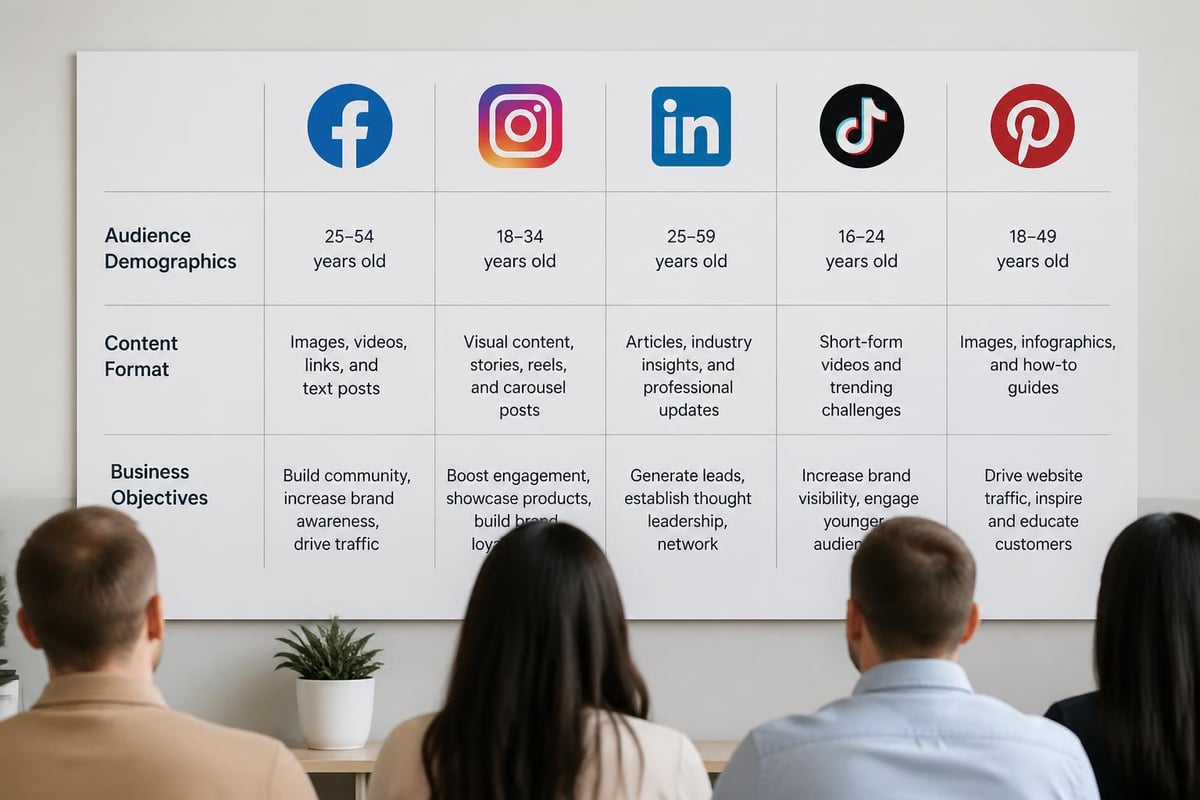
The landscape spans multiple major platforms:
- Facebook and Instagram for broad consumer reach and detailed demographic targeting
- LinkedIn for B2B relationships and professional services
- TikTok for younger demographics and viral video content
- Pinterest for visual discovery and purchase intent
- X (formerly Twitter) for real-time engagement and trending conversations
Each platform offers unique advantages depending on your business objectives. Sprout Social’s comprehensive guide emphasizes that successful campaigns begin with understanding where your target audience spends their time and how they engage with content on each network.
Platform Selection and Audience Alignment
Selecting the right platforms requires analyzing your customer demographics, purchasing behavior, and content preferences. A B2B software company might prioritize LinkedIn's professional network, while an eCommerce fashion retailer could find better returns through Instagram's visual shopping features.
For eCommerce businesses specifically, integrating paid social campaigns with robust platform infrastructure makes a significant difference. Communities like Talk Shop provide valuable insights where Shopify merchants share real-world experiences optimizing paid social campaigns for conversion. Their Discord community brings together merchants who've tested various platform combinations and can offer practical guidance beyond standard tutorials.
| Platform | Best For | Average CPC 2026 | Audience Size |
|---|---|---|---|
| Broad B2C reach | $0.97 | 3.0 billion | |
| Visual products | $1.20 | 2.4 billion | |
| B2B services | $5.26 | 950 million | |
| TikTok | Gen Z/Millennial | $1.00 | 1.7 billion |
Developing Campaign Strategy and Objectives
Before allocating budget to paid social marketing, establishing clear, measurable objectives provides the foundation for success. Campaigns without defined goals inevitably waste resources on vanity metrics that don't translate to business growth.
Setting SMART Campaign Goals
Effective paid social objectives follow the SMART framework:
- Specific: Define precisely what you want to achieve (increase qualified leads by 40%)
- Measurable: Establish concrete metrics (cost per acquisition under $50)
- Achievable: Set realistic targets based on historical data and industry benchmarks
- Relevant: Align with broader business objectives and revenue goals
- Time-bound: Create clear deadlines (achieve targets within Q2 2026)
Common objectives include brand awareness, lead generation, website traffic, engagement, app installations, and direct sales. According to Marketing Profs’ analysis of social advertising failures, many campaigns fail because they conflate multiple objectives without prioritizing the primary conversion action.
Mountain Mover Coaching and Digital Marketing approaches campaign development by first understanding client profit acceleration goals. This ensures every dollar spent on paid social marketing contributes directly to measurable business outcomes rather than superficial engagement metrics.
Budget Allocation and Bidding Strategies
Strategic budget distribution across platforms and campaign types maximizes return on ad spend. Rather than spreading resources thinly across all available channels, concentrate initial efforts on platforms demonstrating strongest performance indicators.
Start with testing budgets that allow statistical significance:
- Minimum $500-1,000 per platform monthly for meaningful data
- 70% of budget toward proven performers
- 20% toward scaling successful campaigns
- 10% toward experimental testing of new audiences or formats
Bidding strategies vary by objective. Cost-per-click (CPC) works well for traffic campaigns, while cost-per-thousand-impressions (CPM) suits awareness goals. Cost-per-acquisition (CPA) bidding directly optimizes for conversions when sufficient historical data exists.
Audience Targeting and Segmentation
The most powerful advantage of paid social marketing lies in precision targeting capabilities that traditional advertising channels cannot match. Platforms collect extensive user data enabling businesses to reach highly specific audience segments based on demographics, interests, behaviors, and custom parameters.
Core Audience Types
Demographic targeting filters audiences by age, gender, location, language, education, job title, and relationship status. This foundational layer ensures ads reach people matching basic customer profiles.
Interest-based targeting connects with users based on pages they follow, content they engage with, and topics they explore. A fitness coaching business might target people interested in meal planning, CrossFit, and wellness podcasts.
Behavioral targeting leverages purchase history, device usage, travel patterns, and online activities. This identifies users demonstrating specific behaviors indicating purchase readiness.
Custom audiences upload existing customer lists, website visitors, or app users for remarketing. These warm audiences typically convert at significantly higher rates than cold prospects.
Lookalike audiences use platform algorithms to find new users sharing characteristics with your best existing customers. This scalable approach expands reach while maintaining relevance.
Power Digital Marketing’s best practices guide emphasizes layering multiple targeting parameters rather than relying on single criteria. Combining demographic, interest, and behavioral filters creates highly qualified audience segments that drive superior campaign performance.

Advanced Targeting Techniques for 2026
Beyond standard targeting options, sophisticated marketers leverage advanced techniques:
- Sequential messaging delivers different creative to users based on previous ad interactions
- Exclusion targeting prevents ad waste by removing converters, competitors, or irrelevant segments
- Life event targeting reaches people during significant moments like moving, graduating, or getting married
- Job change targeting on LinkedIn captures professionals entering new roles with budget authority
For businesses building eCommerce operations, technical implementation matters enormously. Kida Digital specializes in conversion-led Shopify development that properly integrates tracking pixels and conversion events, ensuring paid social campaigns accurately measure results and optimize delivery.
Creative Development and Ad Formats
Even perfectly targeted campaigns fail without compelling creative that captures attention and drives action. Paid social marketing success depends equally on what you show audiences and who sees it.
Platform-Specific Creative Requirements
Each platform maintains distinct creative specifications and best practices:
Facebook and Instagram prioritize mobile-optimized visuals with minimal text overlay. Square (1:1) and vertical (4:5) formats outperform landscape orientations. Video content generates 48% higher engagement than static images.
LinkedIn responds well to professional imagery and thought leadership content. Document ads sharing research reports or whitepapers perform exceptionally for B2B lead generation.
TikTok demands authentic, entertainment-focused video content that doesn't feel like traditional advertising. User-generated content styles significantly outperform polished corporate videos.
Elements of High-Performing Ad Creative
Regardless of platform, effective paid social ads share common characteristics:
- Strong visual hierarchy guides viewer attention to key messages within the first second
- Clear value proposition communicates specific benefits rather than generic features
- Compelling call-to-action directs users toward concrete next steps
- Social proof elements incorporate testimonials, ratings, or user counts building credibility
- Mobile optimization ensures readability and functionality on smartphone screens
Testing multiple creative variations identifies top performers. Run at least three different images or video concepts per campaign, measuring which drives lowest cost-per-result. Search Engine Journal’s PPC best practices recommend refreshing creative every 2-3 weeks to combat ad fatigue.
The Mountain Mover Coaching and Digital Marketing approach to creative development involves understanding the deeper business transformation clients seek. This insight shapes messaging that resonates emotionally while maintaining professional credibility.
Campaign Launch and Optimization
Launching paid social marketing campaigns represents only the beginning of an ongoing optimization process. Continuous monitoring, testing, and refinement separate mediocre results from exceptional performance.
Pre-Launch Campaign Checklist
Before activating campaigns, verify critical setup elements:
- Conversion tracking pixels properly installed and firing
- UTM parameters configured for accurate attribution
- Audience sizes sufficient for delivery (minimum 1,000 users)
- Daily budgets set appropriately for learning phase (at least $50 daily)
- Ad account billing information current and approved
- Multiple ad variations ready for testing
- Landing pages optimized for mobile conversion
Most platforms require a "learning phase" where algorithms gather performance data before optimizing delivery. During this period, avoid making significant changes that reset the learning process.
Key Performance Metrics to Monitor
Track metrics aligned with campaign objectives:
| Objective | Primary Metrics | Secondary Metrics |
|---|---|---|
| Awareness | Impressions, Reach, CPM | Video Views, Engagement |
| Traffic | Clicks, CTR, CPC | Landing Page Views, Bounce Rate |
| Leads | Conversions, CPL, Form Submissions | Landing Page CVR, Quality Score |
| Sales | ROAS, Revenue, CPA | AOV, Customer LTV |

Analyze performance at multiple levels: campaign, ad set, and individual ad. Poor performance at the campaign level might mask strong individual ads being dragged down by underperforming variants.
A/B Testing and Iterative Improvement
Systematic testing drives continuous improvement. Test one variable at a time to isolate impact:
- Audience testing compares different demographic or interest segments
- Creative testing evaluates images, videos, headlines, and body copy
- Placement testing measures results across feed, stories, reels, and audience network
- Bid strategy testing compares automated versus manual bidding approaches
According to Eyeful Media’s paid social strategies, year-over-year performance analysis reveals seasonal patterns and long-term trends informing smarter budget allocation. Compare current campaign metrics against historical benchmarks to identify improvement opportunities.
Advanced Strategies and Scaling Tactics
Once foundational campaigns demonstrate profitability, advanced strategies unlock additional growth potential through paid social marketing.
Retargeting and Customer Journey Mapping
Sophisticated retargeting sequences nurture prospects through complete buyer journeys:
- Stage 1: Target website visitors who viewed products but didn't add to cart
- Stage 2: Re-engage cart abandoners with product-specific reminders and incentives
- Stage 3: Cross-sell to recent purchasers with complementary products
- Stage 4: Win back lapsed customers with reactivation offers
Dynamic product ads automatically show users the exact items they previously viewed, dramatically increasing relevance and conversion rates.
Funnel Integration and Multi-Touch Attribution
Paid social marketing rarely operates in isolation. Prospects typically require multiple touchpoints across channels before converting. Implement attribution models that credit paid social appropriately:
- First-touch attribution credits the initial interaction introducing the brand
- Last-touch attribution assigns value to the final conversion click
- Linear attribution distributes credit equally across all touchpoints
- Time-decay attribution weights recent interactions more heavily
Understanding true contribution prevents undervaluing top-of-funnel awareness campaigns that initiate customer relationships eventually closing through other channels.
Automation and AI-Powered Optimization
Platform algorithms in 2026 offer increasingly sophisticated automation capabilities:
- Advantage+ campaigns on Meta platforms automatically test audiences, placements, and creative combinations
- Smart bidding uses machine learning to adjust bids in real-time based on conversion likelihood
- Dynamic creative optimization automatically assembles best-performing creative elements
- Predictive audiences identify users statistically likely to convert based on behavioral patterns
While automation delivers efficiency gains, human strategic oversight remains essential. Machines optimize toward defined parameters but cannot set business strategy or understand nuanced brand positioning.
Integration with Broader Marketing Strategy
Paid social marketing achieves maximum impact when integrated with comprehensive digital marketing efforts rather than operating as an isolated tactic.
Cross-Channel Synergies
Coordinate paid social campaigns with:
Email marketing by retargeting email subscribers who haven't engaged recently or suppressing active email recipients to reduce ad waste.
Content marketing by promoting high-value content assets (guides, webinars, tools) that demonstrate expertise and capture leads.
SEO efforts by using paid social to accelerate visibility for newly published content while organic rankings develop.
Traditional advertising by reinforcing messaging across digital and offline channels for maximum frequency and recall.
The strategic approach emphasized by Mountain Mover Coaching and Digital Marketing recognizes that sustainable business growth requires integrated tactics working synergistically rather than competing for budget in silos.
Platform Updates and Future Trends
Staying current with platform changes ensures campaigns leverage newest capabilities:
- AI-generated creative tools now help advertisers produce variations at scale
- Social commerce integration enables in-app purchasing without leaving platforms
- Privacy-focused targeting adapts to cookieless future through first-party data strategies
- Augmented reality ads let users virtually try products before purchasing
Creative AdBundance’s data-backed strategies emphasize staying ahead of platform evolution rather than reacting after competitors have already capitalized on new features.
Compliance, Ethics, and Transparency
Professional paid social marketing demands adherence to platform policies, legal requirements, and ethical standards that protect both businesses and consumers.
Regulatory Requirements
Advertisers must comply with:
- FTC disclosure guidelines requiring clear identification of sponsored content and affiliate relationships
- GDPR and privacy regulations governing data collection and user consent
- Platform-specific policies prohibiting certain claims, industries, or targeting practices
- Industry regulations affecting healthcare, financial services, alcohol, and other restricted sectors
Research examining affiliate marketing disclosures on social platforms found significant compliance gaps that expose businesses to regulatory penalties and reputational damage.
Building Trust Through Transparency
Beyond legal minimums, ethical paid social marketing prioritizes:
- Honest representation of products without exaggerated claims
- Respectful creative that doesn't exploit insecurities or fears
- Data privacy practices exceeding minimum requirements
- Responsive customer service addressing ad-related inquiries
Studies on social influence in social advertising demonstrate that authentic peer recommendations significantly outperform impersonal brand messages, suggesting transparency and genuine customer advocacy drive superior results.
Paid social marketing offers unparalleled opportunities for businesses to reach precisely targeted audiences, generate qualified leads, and drive measurable revenue growth when executed strategically. Success requires understanding platform nuances, continuously optimizing campaigns, and integrating paid efforts with broader marketing objectives. Whether you're launching your first campaign or scaling proven performers, Mountain Mover Coaching and Digital Marketing provides the strategic guidance and execution expertise needed to transform paid social investments into sustainable business growth.