
Digital marketing is transforming faster than ever, and your website is now the front line of brand success. In 2026, marketing website design will be a decisive factor in capturing attention and building trust.
Staying ahead means embracing web design that not only attracts visitors but also engages and converts them. The right approach can set your brand apart in a crowded digital landscape.
In this post, you will discover 10 inspiring trends shaping the future of marketing website design. Ready to elevate your business? Explore these actionable strategies and lead your market forward.
The Future of Marketing Website Design: Key Drivers for 2026
The landscape of marketing website design is transforming as new technologies, user expectations, and global challenges reshape digital experiences. Staying on top of these shifts is essential for businesses aiming to build powerful, high-performing marketing websites in 2026.
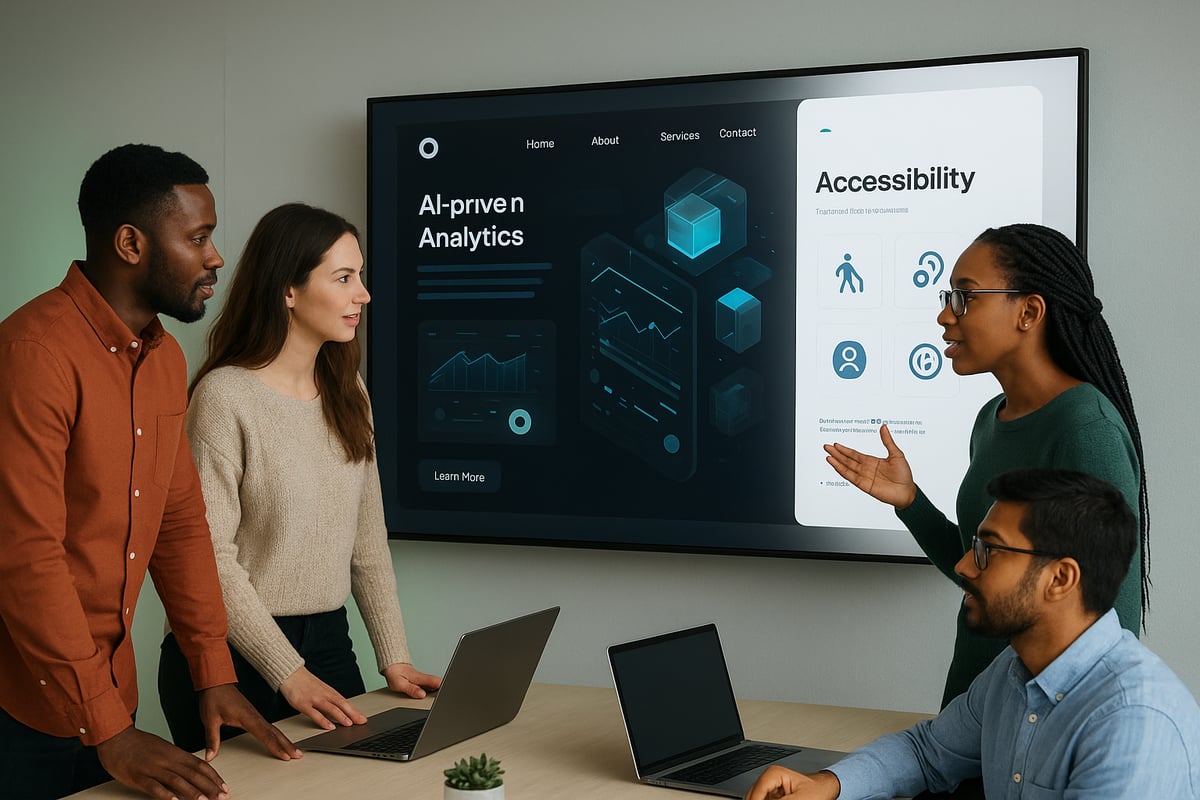
The Impact of AI and Automation on Web Design
Artificial intelligence is redefining marketing website design by enabling deeper personalization and smarter automation. AI-powered tools now automate content generation, adapt layouts in real time, and deploy chatbots that guide users through seamless journeys. These innovations streamline marketing workflows and help brands deliver tailored experiences at scale.
For example, adaptive landing pages can change offers based on user data, while AI chatbots answer questions instantly, raising customer satisfaction. Automated design elements also allow for faster site updates and more effective A/B testing. According to AI’s Role in Web Design, businesses using AI see higher conversion rates and improved user engagement. As AI evolves, its influence on marketing website design will only grow stronger.
The Shift to Hyper-Personalization and User-Centric Experiences
Hyper-personalization is now a cornerstone of marketing website design. Marketers use behavioral tracking and predictive analytics to shape individualized journeys, dynamic calls-to-action, and tailored content. This user-centric approach increases engagement and helps brands stand out.
Competitor data shows that personalized experiences drive more return visits and higher retention. Techniques like real-time content recommendations or adaptive navigation ensure each visitor's path is unique. Agencies leveraging these personalization tools for marketing website design report significant boosts in client results. The focus is clear: users expect websites to recognize their needs and respond accordingly.
The Importance of Accessibility and Inclusivity in Modern Design
Accessible marketing website design is no longer optional. Global brands recognize that inclusive digital experiences expand market reach and meet compliance standards. Features such as alt text, keyboard navigation, and strong color contrast are now standard practice.
Case studies reveal that accessible sites increase audience size and build brand loyalty among users with disabilities. Recent statistics indicate that a growing portion of internet users require accessible features. As a result, marketing website design must prioritize inclusivity from the start, ensuring everyone can engage with content and services.
The Role of Sustainability and Green Design in Digital Marketing
Sustainability is shaping the future of marketing website design. Companies are adopting eco-friendly practices like carbon-neutral hosting, minimalist code, and optimized media to reduce energy consumption. Agencies leading in green design demonstrate not only environmental responsibility but also improved SEO and user trust.
Industry data shows that consumers increasingly prefer brands committed to sustainability. Integrating green messaging into marketing website design can enhance reputation and attract eco-conscious audiences. By prioritizing efficiency and transparency, brands set themselves apart in a competitive digital landscape.
10 Inspiring Marketing Website Design Trends for 2026
In 2026, marketing website design is evolving at a remarkable pace. These ten trends are redefining how brands connect with audiences, driving engagement, and setting new standards for digital excellence.
Explore these innovations to ensure your marketing website design stands out, delivers results, and positions your brand for future growth.

1. Immersive 3D and Interactive Elements
Immersive 3D visuals and interactive modules are taking marketing website design to the next level. Brands now use 3D graphics, animated product demos, and interactive storytelling to capture attention and create memorable experiences.
For example, agencies like Magnetism showcase their work with 3D navigation and dynamic scenes. Animated product tours allow users to explore features hands-on, increasing engagement and boosting dwell time.
Benefits of 3D and Interactivity:
- Higher user engagement and longer session durations
- Enhanced storytelling and brand differentiation
- Increased conversion rates through interactive content
| Feature | Benefit |
|---|---|
| 3D Graphics | Immersive brand experience |
| Interactive Animations | User-led exploration |
| AR Product Demos | Realistic product previews |
However, integrating advanced visuals in marketing website design requires attention to accessibility, device compatibility, and loading speed. Tools like Three.js and WebGL help streamline development, but balancing performance with creativity can be challenging.
Despite higher development costs, data shows interactive content can increase conversion rates by up to 40 percent. Prioritize fast-loading assets and test on various devices to ensure a seamless experience for all visitors.
2. Hyper-Personalized User Journeys
Hyper-personalization is transforming marketing website design by delivering tailored experiences to every visitor. Dynamic content, AI-driven segmentation, and real-time recommendations ensure users see offers, headlines, and images relevant to their interests.
Top agencies are integrating marketing website design with CRM and automation platforms. This allows for individualized journeys, from dynamic CTAs to custom landing pages, boosting engagement and retention.
Techniques for Personalization:
- Behavioral tracking and predictive analytics
- Real-time content adaptation
- Segmented email and web campaigns
Both B2B and B2C brands benefit from personalization in marketing website design. For instance, e-commerce sites present product suggestions based on browsing history, while service providers adjust messaging for returning visitors.
Privacy remains a priority. Always offer opt-out options and clearly explain data usage. When done right, hyper-personalization can increase conversion rates by over 20 percent and strengthen brand loyalty.
3. Minimalism Meets Bold Typography
Minimalist aesthetics are merging with expressive, oversized fonts to give marketing website design a modern edge. Clean layouts paired with bold typography create visual hierarchy, improve readability, and reinforce brand personality.
Square Media Agency exemplifies this trend with striking headings and uncluttered interfaces. Users gravitate toward these designs because they are intuitive and easy to navigate.
Best Practices for Typography:
- Select fonts that reflect your brand identity
- Use generous whitespace for clarity
- Ensure font sizes scale for mobile devices
Minimalism in marketing website design also supports accessibility and fast load times. Data shows users are 30 percent more likely to engage with sites that feature clean, bold designs.
Challenges include maintaining uniqueness and avoiding monotony. Tools like Google Fonts and Adobe Fonts make custom typography accessible, but always test for legibility and contrast.
4. Advanced Micro-Interactions and Motion Design
Micro-interactions are subtle animations and feedback cues that guide users through marketing website design. These include hover effects, animated buttons, and interactive case studies that bring static pages to life.
Leading agencies use motion design to highlight key actions, such as revealing content on hover or animating form submissions. These elements make marketing website design more engaging and intuitive.
Benefits of Micro-Interactions:
- Improved usability and intuitive navigation
- Emotional connection and brand delight
- Higher conversion rates through guided actions
Emerging tools like Lottie and Framer Motion allow designers to add lightweight animations without sacrificing speed. However, it is vital to prioritize performance and accessibility. Overuse can distract users or slow down the site.
Stats reveal that micro-interactions can increase time-on-site by up to 25 percent. Keep motion purposeful and simple to maximize impact without overwhelming visitors.
5. Adaptive Dark and Light Modes
Offering both dark and light themes is now a standard in marketing website design. Users can toggle between modes based on preference, reducing eye strain and improving accessibility.
Croing Agency’s site is a prime example, letting visitors switch themes seamlessly. This feature is widely adopted across devices and platforms, reflecting a growing demand for customizable interfaces in marketing website design.
Implementation Tips:
- Maintain consistent branding across modes
- Test for readability and color contrast
- Use tools like CSS Custom Properties for flexibility
Data shows that over 80 percent of users prefer sites with theme options. The challenge lies in ensuring all design elements adapt smoothly and that branding remains intact.
Adaptive modes not only enhance user comfort but also signal a commitment to accessibility and modern UX standards. Regular testing and user feedback help refine this feature.
6. Sustainable and Eco-Conscious Web Design
Sustainability is at the forefront of marketing website design in 2026. Brands are adopting green practices such as low-energy hosting, efficient coding, and optimized media to minimize environmental impact.
VOVI Studio’s carbon-friendly website is a standout, demonstrating how eco-conscious design can be both attractive and effective. Sustainable web design improves SEO, builds consumer trust, and enhances reputation. For further reading, explore Sustainable Web Design Practices for actionable insights.
Best Practices for Green Design:
- Compress images and minimize scripts
- Choose carbon-neutral hosting providers
- Display sustainability messaging clearly
Consumer surveys show that 70 percent of users trust brands committed to green initiatives. In marketing website design, the challenge is balancing performance with aesthetic appeal. Use tools like Website Carbon Calculator to measure and track your site's footprint.
Integrating sustainability into marketing website design not only benefits the planet but also attracts a broader, more loyal audience.
7. Inclusive and Accessible UX
Accessibility is essential in modern marketing website design, ensuring everyone can interact with your site regardless of ability. Leading agencies are setting new standards by implementing ARIA labels, keyboard navigation, and high-contrast color schemes.
Accessible marketing website design expands your audience, improves SEO, and provides legal protection. For example, agencies that prioritize inclusivity see increased engagement from users with disabilities.
Key Accessibility Features:
- Alt text for images and scalable fonts
- Logical heading structures and tab navigation
- Color contrast ratios that meet WCAG guidelines
Stats reveal that 15 percent of the global population experiences some form of disability. By integrating accessibility from the start, marketing website design reaches more users and demonstrates social responsibility.
Audit your site regularly with tools like Axe or Wave, and involve users with diverse needs in testing. Inclusivity in marketing website design is no longer optional but a business imperative.
8. Storytelling Through Visual Narratives
Storytelling is a powerful tool in marketing website design, transforming static content into immersive journeys. Brands use sequential visuals, animated timelines, and interactive case studies to guide users through their story.
Agencies leverage visual narratives on homepages and landing pages, using video intros or scroll-triggered animations to foster emotional connections. This approach improves brand recall and drives higher conversions.
Best Practices for Visual Storytelling:
- Map out a clear narrative flow
- Integrate brand messaging throughout visuals
- Use interactive elements to engage users
Data shows that users are 50 percent more likely to remember stories than standalone facts. Marketing website design that prioritizes narrative helps brands stand out in crowded markets.
Tools like Figma and Adobe XD support prototyping of narrative-driven sites. Keep stories concise, relevant, and visually engaging for maximum impact.
9. AI-Powered Content and Chatbot Integration
AI is revolutionizing marketing website design by automating content creation, curation, and real-time support. Brands now deploy AI chatbots for lead capture and personalized recommendations, ensuring 24/7 engagement.
Automated content tools generate headlines, suggest products, and tailor messaging based on user data. According to AI-Generated Content Prevalence, much of today’s web content is machine-assisted, making marketing website design more scalable and responsive.
Benefits of AI in Web Design:
- Faster response times and improved scalability
- Enhanced conversion rates with tailored interactions
- Continuous optimization based on user feedback
Balance automation with the human touch to maintain authenticity. Clearly communicate data usage and privacy policies to build trust.
AI-driven marketing website design delivers measurable results, with agencies reporting up to 35 percent higher conversion rates after chatbot integration.
10. Data-Driven Design and Real-Time Analytics
Data-driven strategies are essential for effective marketing website design in 2026. Agencies use analytics, heatmaps, and A/B testing to refine layouts and optimize user journeys.
Iterative design, informed by real-time data, ensures marketing website design responds to actual user behavior. This leads to continuous improvement and greater ROI.
Key Metrics to Track:
- Bounce rate and conversion rate
- Time-on-site and accessibility score
- User feedback and engagement patterns
Popular tools include Google Analytics, Hotjar, and Crazy Egg. The main challenge is avoiding analysis paralysis, where too much data stalls decision-making.
Set clear goals and focus on actionable insights. Successful marketing website design transformations often result from small, data-informed tweaks rather than complete overhauls.
Implementing 2026’s Trends: Best Practices for Marketing Teams
Staying ahead in marketing website design requires a strategic approach that balances innovation, usability, and measurable results. By focusing on future-ready strategies and embracing ongoing learning, teams can ensure their sites remain competitive and impactful.

Building a Future-Ready Design Strategy
To excel in marketing website design, align your design vision with overall business goals from the outset. Continuously research trends, analyze competitors, and adopt a design system that supports scalability and consistency. Cross-functional collaboration between design, marketing, and IT teams fuels creative solutions and smooth rollouts.
Collect user feedback early and often to guide iterative improvements. Brands that evolve their web presence proactively often outperform those that react too late. Balancing innovation with brand identity ensures your marketing website design remains both relevant and recognizable. Consider using project management and collaboration tools to streamline processes and maintain alignment across teams.
Balancing Creativity, Usability, and Performance
Great marketing website design harmonizes bold visuals with seamless navigation and fast load times. Leading sites prioritize mobile-first frameworks, responsive layouts, and clear calls-to-action. Use techniques such as lazy loading, code optimization, and performance testing to enhance speed and user satisfaction.
Review competitor sites that excel in aesthetics and usability to identify best practices. Regularly test and optimize for speed, as even minor delays can impact SEO and conversions. For more on avoiding critical design pitfalls, see Avoid website mistakes that hurt business. Maintain creative flair without sacrificing function by monitoring site performance continuously and making adjustments as needed.
Measuring Success: KPIs and Optimization
Tracking the right KPIs is essential for effective marketing website design. Focus on metrics like bounce rate, conversion rate, time-on-site, and accessibility score. Use real-time analytics and A/B testing to understand visitor behavior and refine your site experience.
Leverage tools such as Google Analytics, Hotjar, or similar platforms for robust reporting and actionable insights. Set clear goals, benchmark performance, and communicate results to stakeholders regularly. Ongoing optimization, informed by data, leads to iterative improvements and sustained growth for your marketing website design.
Staying Ahead: Continuous Learning and Trend Adoption
The digital landscape is evolving rapidly, so marketing website design teams must stay informed and adaptable. Tap into industry blogs, webinars, online courses, and design communities to gather inspiration and stay updated on new techniques. Agencies known for trendsetting often pilot innovative ideas before full-scale adoption.
Foster a culture of experimentation—test new concepts on a small scale, analyze results, and iterate quickly. For a broader view of current trends, visit Marketing trends for small businesses. Networking with peers and tracking competitor moves will keep your team agile and ready to adopt the next best practice in marketing website design.
As you explore these forward thinking website design trends for 2026, it becomes clear how critical it is to stay ahead in a rapidly evolving digital landscape. By embracing innovation in areas like hyper personalization, accessibility, and data driven design, you can position your business for measurable growth and lasting impact. Curious about where your current website stands and how you can leverage these trends to maximize your online presence? Take the next step and get your Free Visibility Snapshot to see actionable insights tailored to your business goals.