The pace of change in marketing is reaching record speeds, making adaptability a non-negotiable trait for any successful brand in 2026. Every week brings new technologies, evolving consumer expectations, and unpredictable shifts in the digital landscape.
In this environment, marketing growth is more than a goal, it is the lifeline that separates thriving businesses from those left behind. Brands must embrace proactive strategies, harness data, and innovate continuously to secure their place in the market.
This comprehensive guide will equip you with actionable insights, proven frameworks, and data-driven tactics. Whether you are building your foundation or scaling advanced initiatives, discover the essential roadmap to achieve and sustain remarkable marketing growth in 2026.
Understanding Marketing Growth in 2026: New Realities and Definitions
The landscape of marketing growth in 2026 is evolving faster than ever before. Companies are rethinking their approach, recognizing that old tactics no longer guarantee results. Brands that adapt to this new era are those that embrace data, collaboration, and a relentless focus on the customer. In this section, we explore how marketing growth is being redefined and what it takes to succeed.

The Evolution of Growth Marketing
Marketing growth has experienced a profound shift from traditional campaigns to a dynamic, iterative process. Today, successful brands like Mailchimp and Salesforce have integrated marketing, product, and analytics teams to drive holistic growth. This approach emphasizes continuous experimentation, rapid testing, and a strong focus on customer needs.
Growth marketing is no longer a siloed function. Instead, it thrives on cross-functional collaboration, where insights from every department fuel smarter strategies. Micro-campaigns and data-driven decisions are now standard, enabling brands to adapt quickly and stay ahead in a crowded market.
Key Trends Shaping Marketing Growth in 2026
Several powerful trends are redefining marketing growth in 2026. AI-driven personalization and automation are now industry standards, allowing brands to tailor experiences at scale. Omnichannel engagement ensures customers receive consistent messaging across all touchpoints. Privacy-first marketing and compliance with data regulations are top priorities. First-party data is more valuable than ever, as brands seek to build trust and foster loyalty.
According to AI-driven personalization in marketing, 70 percent of marketers plan to increase AI adoption by 2026, reflecting the technology’s vital role in shaping the future of marketing growth.
Growth Marketing vs. Traditional Marketing: What’s Changed?
The difference between growth marketing and traditional marketing is striking. Growth marketing focuses on maximizing the lifetime value of each customer rather than chasing one-time conversions. Continuous optimization is achieved through A B testing and feedback loops, ensuring campaigns are always improving.
Agile marketing cycles and just-in-time campaigns allow teams to react swiftly to market shifts. For example, many SaaS brands have seen retention rates climb by 30 percent after adopting iterative marketing practices, demonstrating the clear advantage of this modern approach.
The Growth Mindset: Skills and Team Structures for 2026
Thriving in marketing growth requires a new mindset and skill set. Teams must be proficient in data analysis, experimentation, and cross-functional collaboration. Growth teams now blend marketers, product managers, and engineers to create a powerful mix of expertise.
Adaptability and a culture of continuous learning are essential. High-performing organizations prioritize upskilling and encourage team members to embrace change. Well-defined roles and transparent structures support accountability, setting the stage for sustained marketing growth in 2026.
Step 1: Building a Data-Driven Foundation for Growth
Establishing a solid data-driven foundation is the first critical step toward sustainable marketing growth in 2026. Brands that prioritize measurable objectives, advanced analytics, and continuous learning will outpace competitors and adapt to shifting market realities.

Setting Clear, Measurable Growth Objectives
Every successful marketing growth journey begins with well-defined goals. In 2026, SMART objectives—specific, measurable, achievable, relevant, and time-bound—are essential. Teams should align these objectives with key business outcomes, such as revenue growth, retention rates, or customer acquisition.
For example, an e-commerce brand might target a 25 percent year-over-year sales increase. By mapping objectives to concrete metrics, brands create a roadmap that makes marketing growth both trackable and actionable. This clarity ensures every campaign, experiment, and investment supports the larger vision.
Harnessing Advanced Analytics and Reporting Tools
Cutting-edge analytics platforms have become indispensable for marketing growth. Real-time dashboards and predictive analytics empower teams to spot trends, optimize strategies, and make data-backed decisions faster than ever. Integrating CRM, website, and campaign data provides a holistic view of performance and customer behavior.
Many high-growth companies leverage unified analytics stacks to streamline reporting and boost efficiency. For those seeking the right tools, exploring essential digital marketing tools can help identify solutions tailored to modern marketing growth needs. The right analytics infrastructure transforms data into a powerful growth engine.
| Analytics Tool | Core Function | Benefit to Growth |
|---|---|---|
| Predictive Dashboards | Trend Forecasting | Anticipate changes |
| Unified Stacks | Data Integration | 360-degree insights |
| Real-Time Alerts | Performance Monitoring | Rapid response |
Leveraging AI and Automation for Actionable Insights
AI and automation are revolutionizing marketing growth. Machine learning algorithms enable precise audience segmentation, trend forecasting, and content optimization at scale. Automated reporting and alert systems allow marketers to focus on strategy rather than manual tasks.
Consider AI-powered churn prediction tools. By identifying at-risk customers, brands can intervene proactively, resulting in measurable retention improvements. As AI becomes standard, teams that embrace automation will unlock new levels of marketing growth and operational efficiency.
First-Party Data Collection and Privacy Compliance
With evolving privacy laws and rising consumer expectations, first-party data collection is now a cornerstone of marketing growth. Brands must gather consented, high-quality data while navigating regulations like GDPR and CCPA. Transparent data practices build trust and encourage customers to share information.
Strategies such as clear value exchanges—offering personalized discounts or exclusive content—can boost opt-in rates significantly. By prioritizing privacy and compliance, brands lay the groundwork for sustainable, long-term marketing growth in a data-conscious world.
Continuous Experimentation and Learning Loops
Continuous experimentation is vital for accelerating marketing growth. A/B and multivariate testing frameworks help teams identify what works and scale successful initiatives quickly. Building a culture that values testing, learning, and iterating allows organizations to adapt rapidly to market shifts.
Documenting experiments and their outcomes ensures that insights are shared and replicated across teams. Companies running frequent tests consistently achieve higher growth rates, proving that a learning mindset is the backbone of modern marketing growth.
Step 2: Crafting Customer-Centric Growth Strategies
To achieve unstoppable marketing growth in 2026, brands must fully embrace customer-centric strategies. Today’s consumers expect brands to know their needs, personalize every touchpoint, and deliver consistent value. Placing the customer at the core of your approach is the most reliable way to drive sustainable marketing growth and outpace the competition.

Deep Customer Understanding Through Data and Feedback
True marketing growth begins with a rich understanding of your customers. Brands in 2026 use behavioral and transactional data to build detailed personas, uncovering not just who their customers are but how they think and act.
Mapping the customer journey highlights friction points and opportunities to enhance experiences. Leading marketers also tap into surveys, online reviews, and social listening tools to gather candid feedback. This holistic approach ensures every marketing growth strategy is aligned with real customer needs.
For the latest insights and proven tactics, explore digital marketing strategies for growth to stay ahead of evolving trends and customer expectations.
Personalization at Scale: AI-Driven Customer Journeys
Personalization is now a baseline expectation for marketing growth. With advanced AI, brands tailor offers, content, and messaging in real time, responding to each customer’s behavior and preferences.
Dynamic product recommendations and automated content adjustments drive meaningful engagement. For example, AI-personalized email campaigns consistently deliver up to six times higher response rates, proving that marketing growth is directly tied to relevant, individualized experiences.
Omnichannel Engagement and Seamless Integration
Modern marketing growth depends on meeting customers wherever they are. Brands must coordinate messaging across email, SMS, social media, and websites to create a unified experience.
Effective omnichannel strategies bridge the gap between online and offline touchpoints. As a result, 78% of consumers now expect brands to deliver integrated experiences. Seamless integration not only supports marketing growth but also builds long-term loyalty.
Retention and Loyalty as Growth Engines
Sustained marketing growth relies on keeping customers engaged and loyal. Companies are investing in VIP programs, exclusive perks, and proactive retention campaigns powered by predictive analytics.
A SaaS company, for example, reduced churn by 22% after implementing a targeted onboarding process. By focusing on retention, brands turn satisfied customers into advocates, fueling ongoing marketing growth and lowering acquisition costs.
Community Building and Advocacy
Community-driven marketing growth is a powerful force in 2026. Brands encourage user-generated content, foster online groups, and incentivize referrals to amplify their reach.
Successful advocacy programs measure and scale word-of-mouth efforts, transforming happy customers into brand ambassadors. This approach not only accelerates marketing growth but also strengthens brand credibility and trust.
Step 3: Channel Optimization and Emerging Platforms
Optimizing your channels is crucial for sustainable marketing growth in 2026. With new platforms emerging and consumer preferences shifting, brands must adapt their channel mix and strategies to maximize reach and ROI.
Evaluating and Prioritizing High-Impact Channels
A successful marketing growth strategy starts with a thorough channel audit. Identify which platforms deliver the highest engagement and conversions, then reallocate resources accordingly. Balance paid, owned, and earned media to create a resilient mix.
For example, a DTC brand might shift 30 percent of its budget to influencer partnerships if data shows strong ROI. Leveraging expert resources, like the online advertising agencies guide, can help you assess which channels are evolving fastest and where your audience is most active.
Regularly revisit your channel priorities to ensure your marketing growth efforts remain aligned with business objectives and consumer trends.
Mastering Content Marketing for 2026
Content is the engine of marketing growth, and in 2026, data-driven strategies are essential. Use topic clusters and pillar pages to organize content for both users and search engines. AI-assisted creation and curation enable personalized, timely content at scale.
Video, interactive, and immersive formats are gaining traction, engaging audiences across touchpoints. Consider integrating short-form video and interactive infographics into your content mix.
Keep testing new content types to see what drives the most engagement. By refining your approach, you position your brand for sustainable marketing growth.
Social Media Evolution: From Engagement to Commerce
Social media's role in marketing growth has transformed. Platforms now blend engagement with direct commerce, allowing users to purchase products without leaving the app. Micro-influencer partnerships are becoming a staple for authentic reach.
Community management is essential as consumers value real-time interaction and brand transparency. With 60 percent of Gen Z purchases starting on social platforms, brands must combine creativity with analytics.
Track social commerce performance closely to optimize spend and identify emerging opportunities for marketing growth.
Email and SMS: The Resurgence of Direct Communication
Direct channels like email and SMS are experiencing a resurgence in marketing growth strategies. Advanced segmentation and automation workflows make it possible to deliver highly personalized content at the right moment.
Interactive and AMP emails boost engagement, while SMS offers immediacy and high open rates. Compliance and privacy remain paramount, so ensure your practices meet evolving standards.
Test different message formats and timing to maximize impact, keeping your marketing growth objectives front and center.
Exploring New and Emerging Platforms
Staying ahead in marketing growth means exploring the latest platforms, such as voice search, AR/VR, and conversational marketing. Early adopters often see outsized engagement and ROI.
Brands using AR-powered campaigns have reported up to three times higher engagement compared to traditional digital ads. Monitor platform performance and invest in promising technologies that align with your audience.
By embracing innovation and agility, your marketing growth strategy will be well-positioned for future trends and disruptions.
Step 4: Scaling Growth with Technology, Automation, and AI
The landscape of marketing growth is being transformed by an ecosystem of emerging technologies. Brands that leverage automation, artificial intelligence, and integrated platforms are scaling faster and outperforming competitors. To maximize marketing growth in 2026, organizations must adopt a holistic approach to technology, data, and customer experience.
Marketing Automation Platforms and Workflow Orchestration
Adopting leading marketing automation platforms is crucial for driving marketing growth at scale. In 2026, platforms like HubSpot, Salesforce Marketing Cloud, and Marketo offer advanced features that enable seamless orchestration across channels.
Key benefits include:
- Automated lead nurturing and scoring
- Real-time campaign deployment
- Unified data management
For example, companies using automation report a 50% reduction in campaign launch time while maintaining high personalization standards. These platforms support workflow integration, allowing teams to synchronize email, social, and paid campaigns easily. By embedding automation into daily processes, brands can accelerate decision-making and respond quickly to market changes—key drivers of marketing growth.
AI for Predictive Analytics and Campaign Optimization
Artificial intelligence is now a core pillar of marketing growth. Predictive analytics powered by AI enables marketers to anticipate customer behavior, identify high-value segments, and optimize campaigns in real time. Automated algorithms analyze vast datasets to deliver actionable insights.
Marketers are experiencing significant ROI improvements as AI adoption accelerates. According to this Generative AI adoption in marketing report, most marketing teams now view AI as indispensable for campaign effectiveness. Brands using AI-driven ad optimization have seen up to 28% higher returns. Integrating AI empowers teams to test messaging, creative, and targeting strategies—fueling ongoing marketing growth.
Integrating CRM and Marketing Systems
Centralizing data through CRM and marketing system integration is essential for sustainable marketing growth. Modern CRM solutions enable a unified 360-degree view of each customer, merging interactions from sales, service, and marketing channels.
Integration benefits include:
- Improved lead routing and qualification
- Consistent messaging across touchpoints
- Enhanced reporting and attribution
Synchronizing these systems helps align marketing and sales, removing silos and boosting collaboration. Recent studies show that integrated CRM and marketing stacks can increase conversion rates by 35%. This alignment is foundational for data-driven marketing growth and effective scaling.
Chatbots, Conversational AI, and Customer Experience
Chatbots and conversational AI have become indispensable tools for marketing growth, offering instant support and personalized engagement. Advanced chatbots leverage natural language processing to qualify leads, answer queries, and guide users through the sales funnel.
Key advantages:
- 24/7 customer support
- Automated lead capture and nurturing
- Consistent, personalized messaging
For instance, businesses implementing AI chatbots have achieved a 20% increase in lead capture rates. These technologies not only enhance the customer experience but also free up human teams to focus on high-value tasks, multiplying the impact of marketing growth initiatives.
Measuring ROI and Attribution in a Multi-Touch World
Accurate measurement is vital for sustaining marketing growth in today’s multi-channel environment. Advanced attribution models, such as data-driven and algorithmic attribution, help marketers understand which touchpoints drive conversions.
Consider this comparison:
| Attribution Model | Use Case | Complexity | Insights Provided |
|---|---|---|---|
| First-touch | Simple journeys | Low | Source channel |
| Last-touch | Final conversion | Low | Closing channel |
| Data-driven | Complex, multi-touch | High | Full journey impact |
| Algorithmic | Custom, cross-channel | High | Incremental contribution |
By leveraging unified analytics and attribution, brands can allocate budgets more effectively and scale what works. This precision ensures that every investment in technology, automation, and AI delivers measurable marketing growth.
Step 5: Building an Agile, High-Performing Growth Team
To achieve unstoppable marketing growth in 2026, companies must invest in agile, cross-functional teams built for rapid adaptation and innovation. The right structure, leadership, and incentives will drive performance, collaboration, and long-term results.
Assembling Cross-Functional Growth Teams
A high-performing marketing growth team blends expertise across marketing, product, data, and engineering. This cross-disciplinary approach ensures every campaign is driven by insights, technical know-how, and creative execution.
Typical roles include:
- Growth marketers
- Product managers
- Data analysts
- Software engineers
Below is an example of an agile team structure:
| Role | Responsibility |
|---|---|
| Growth Marketer | Campaign strategy, optimization |
| Product Manager | Feature alignment, user feedback |
| Data Analyst | Analytics, reporting |
| Engineer | Tech integration, automation |
Collaboration and shared accountability are the backbone of effective marketing growth teams.
Leadership, Culture, and Continuous Learning
Strong leadership is the catalyst for sustainable marketing growth. Leaders must foster a culture where experimentation is encouraged, calculated risks are rewarded, and learning is continuous.
Investing in upskilling team members ensures they keep pace with evolving tools and industry trends. This adaptability is crucial for navigating the uncertainties of 2026 and beyond.
Encouraging open communication, feedback, and knowledge sharing builds a resilient team ready to tackle any marketing growth challenge.
Performance Management and Incentives
Clear performance management processes are essential for driving marketing growth. Setting KPIs and OKRs that align with business objectives keeps teams focused and accountable.
Best practices include:
- Transparent progress reporting
- Regular feedback cycles
- Recognizing and rewarding innovation
Teams that celebrate measurable impact and foster a sense of ownership are more likely to sustain high performance and deliver consistent marketing growth.
Empowering Growth with Expert Coaching and Digital Marketing Solutions
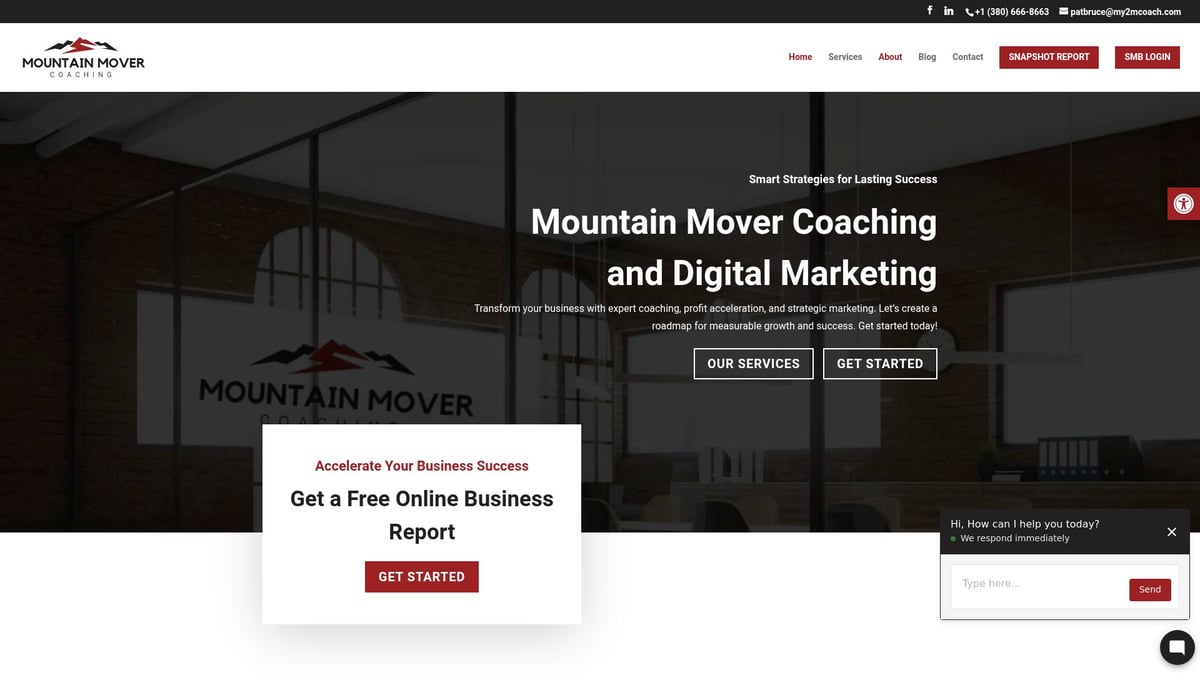
Expert guidance can be a game changer for marketing growth. Mountain Mover Coaching and Digital Marketing combines coaching with integrated marketing solutions to accelerate results.
Services include:
- Website design and SEO
- Social media management
- Digital advertising
- Leadership development
Real-world examples show how SMBs achieve rapid profit acceleration and digital transformation with tailored strategies. Businesses can also access a free online report for actionable growth insights. In 2026, leveraging expert support ensures your marketing growth efforts are focused, strategic, and scalable.
Future-Proofing Your Marketing Growth Strategy
Staying ahead in marketing growth means never standing still. The landscape in 2026 is shaped by rapid technological change, evolving consumer preferences, and increasing competition. Brands that anticipate trends and adapt quickly are poised to lead. Let us explore the key pillars for future-proofing your marketing growth strategy, ensuring your brand not only survives but thrives in the years ahead.
Anticipating Trends and Staying Ahead
To future-proof marketing growth, organizations must proactively monitor emerging technologies and shifting consumer behaviors. Regularly analyzing industry reports, attending innovation conferences, and leveraging resources like AI marketing adoption rates by industry helps marketers spot early signals. Scenario planning enables brands to test responses to potential disruptions, while agile strategy adjustments ensure swift pivots. For example, companies embracing AI-driven tools early consistently gain a competitive edge. Building a habit of trend-watching and rapid adaptation is essential for any marketing growth strategy aiming for long-term success.
Innovation Through Experimentation and Rapid Prototyping
Innovation is the heartbeat of marketing growth in 2026. Brands should develop a testing roadmap, prioritizing quick experiments with new channels, formats, or technologies. By leveraging findings from research on AI-generated advertising effectiveness, teams can compare results of AI-driven and human-created campaigns to maximize impact. Scaling successful prototypes across the organization sustains momentum. Data shows that companies with dedicated innovation teams achieve marketing growth at 1.8 times the rate of their peers. Building a culture of experimentation ensures your strategy remains dynamic and competitive.
Sustainability and Ethical Marketing Growth
Consumers increasingly demand that brands incorporate social responsibility into their marketing growth efforts. Ethical data usage, transparency, and sustainability must be core principles. Develop campaigns that resonate with purpose-driven audiences, ensuring your team navigates the ethical challenges of automation and data. Companies prioritizing sustainability in marketing growth report a 25 percent increase in brand loyalty. Integrate environmental and social considerations into every stage of your strategy, from creative development to data collection, to build trust and long-term value.
Measuring Long-Term Impact and Adapting for 2027 and Beyond
Ongoing measurement is critical to sustainable marketing growth. Set up systems that track performance across all channels, using advanced analytics to identify trends and inform decisions. Foster feedback loops among marketing, product, and customer teams to capture insights and stay responsive. Prepare for future disruptions by building adaptability into your marketing growth framework. This approach positions brands to seize new opportunities, ensuring continued success as the landscape evolves into 2027 and beyond.
As you look to apply these proven strategies for unstoppable marketing growth in 2026, it helps to know exactly where your business stands today. Let’s take the guesswork out of your next move. With a clear snapshot of your current marketing visibility, you can confidently prioritize your efforts and start scaling with real impact. If you want tailored, data-driven insights to fuel your next phase of growth, get your Free Visibility Snapshot today. This is your first step toward measurable results, empowered by expert guidance every step of the way.