In today’s digital landscape, the pace of change is relentless. Businesses unable to adapt risk falling behind as new technologies and consumer behaviors reshape the rules overnight.
This complete guide is designed to help organizations master marketing and strategy, empowering you to achieve growth and stay ahead in 2026. By uniting these disciplines, companies can create powerful, future-proof plans.
Inside, you’ll discover core principles, a practical framework, proven digital trends, and actionable measurement tactics. Real-world examples and expert insights will guide your journey, turning complexity into opportunity.
The stakes have never been higher. Use the strategies in this guide to seize measurable growth, outpace competitors, and secure your place at the forefront of marketing and strategy success.
The New Foundations of Marketing and Strategy in 2026
In 2026, the landscape of marketing and strategy is being redefined at an unprecedented pace. Organizations are witnessing a shift where traditional boundaries blur, and success depends on an integrated, agile approach. To thrive, businesses must understand the new rules shaping this unified discipline.

The Convergence of Marketing and Strategy
Historically, marketing and strategy operated as separate silos within organizations. Strategy defined long-term direction, while marketing executed campaigns to connect with customers. However, in 2026, these functions have merged, forming a single, cohesive discipline that drives sustainable growth.
Industry leaders have recognized that separating marketing and strategy often leads to duplicated efforts and missed opportunities. Roger Martin’s influential analysis highlights how the question of “Where to Play and How to Win” is now central to both disciplines. Companies like Procter & Gamble have eliminated standalone strategy departments, integrating strategic thinking directly into their marketing teams.
This convergence means organizations must view every decision through three lenses: customer needs, competitor moves, and company capabilities. Digital transformation has accelerated this trend, enabling real-time data sharing and cross-functional collaboration. Teams now work together to respond quickly to market changes, leveraging insights that span the entire business.
Siloed departments can create barriers that slow innovation and dilute impact. By uniting marketing and strategy, businesses foster a culture of shared accountability and rapid execution. As highlighted in the Six marketing trends for 2026, the most successful organizations are those that break down internal walls and embrace a holistic mindset.
Ultimately, the convergence of marketing and strategy is not just a structural change. It is a fundamental shift in how companies compete, adapt, and grow in a digital-first world.
Core Principles for Success
With marketing and strategy now intertwined, several core principles define success in 2026. First among these is customer-centricity. Every initiative, from product development to branding, must begin and end with the customer’s needs and preferences.
Data-driven decision-making is critical. Organizations rely on robust analytics to track performance, anticipate trends, and make informed choices. Agility and adaptability are equally essential, allowing teams to pivot quickly as markets evolve or new competitors emerge.
Brand positioning remains a cornerstone of differentiation. In crowded markets, a clear, compelling brand story helps businesses stand out and build lasting loyalty. Holistic marketing, integrating the 7 Ps—product, price, place, promotion, people, process, and physical evidence—ensures that every touchpoint contributes to a consistent customer experience.
| Core Principle | Description |
|---|---|
| Customer-Centricity | Focus on solving real customer problems |
| Data-Driven Choices | Use analytics for every key decision |
| Agility & Adaptation | Rapid response to market and customer changes |
| Brand Positioning | Unique story and value in every interaction |
| Holistic Marketing | Align all 7 Ps for seamless execution |
Organizations are also shifting from product-focused to solution-focused strategies. This approach addresses broader customer challenges rather than simply selling features. Companies that embrace holistic marketing and strategy integration are consistently outperforming their peers.
As businesses plan for the future, these principles will continue to be the foundation for achieving growth, resilience, and market leadership.
Step-by-Step Framework for Building a Winning Marketing Strategy
Building a robust marketing and strategy framework is essential for navigating the complex digital landscape of 2026. This step-by-step approach ensures your organization remains agile, competitive, and aligned with its growth ambitions.
Step 1: Assess Your Current Situation
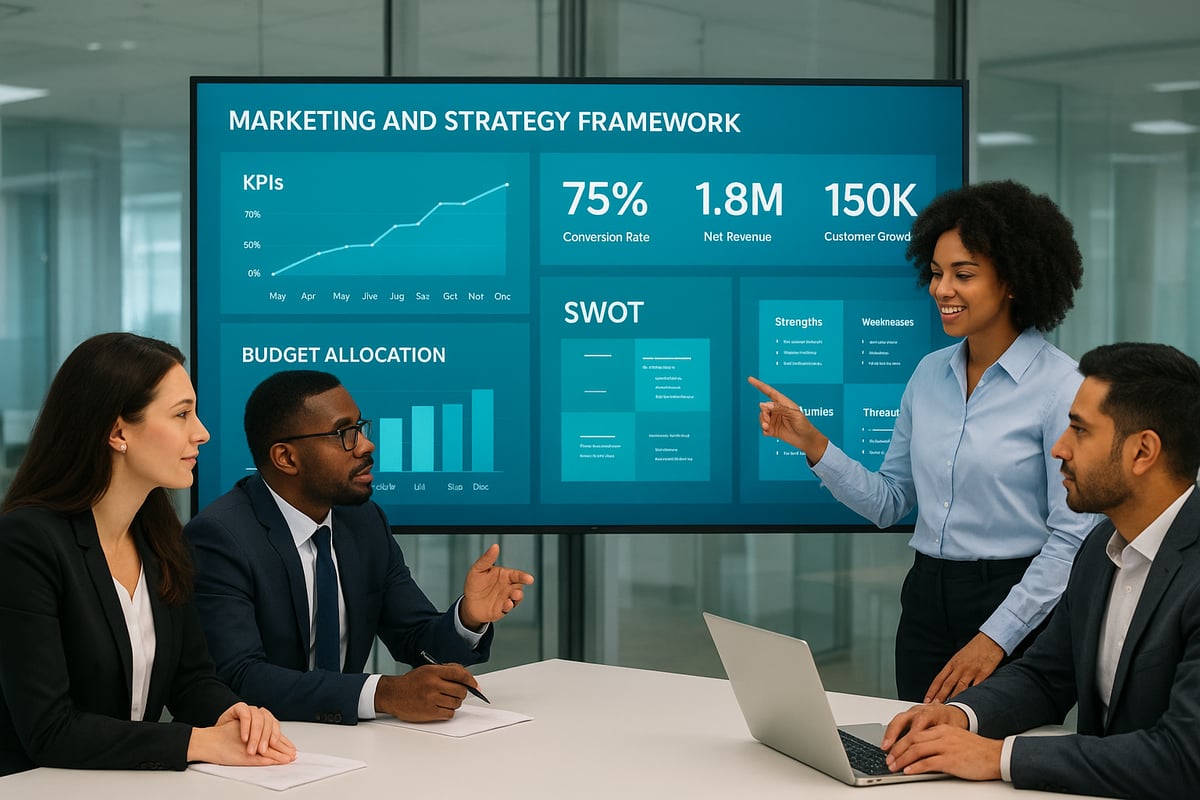
Start by evaluating your internal and external environment. Use desktop research to gather market data, then supplement with quantitative and qualitative studies for deeper insights. Conduct a SWOT analysis to map your strengths, weaknesses, opportunities, and threats.
| SWOT Element | Example Insight |
|---|---|
| Strength | Strong digital presence |
| Weakness | Limited brand awareness |
| Opportunity | Rising demand for eco-products |
| Threat | New tech-savvy competitors |
Gather competitive intelligence by benchmarking against industry leaders. Monitor technology disruptors like AI and automation. This holistic review sets a strong foundation for your marketing and strategy development.
Step 2: Set Clear, Measurable Objectives
Align your marketing and strategy objectives with overarching business goals. Use SMART criteria—Specific, Measurable, Achievable, Relevant, Time-bound—to ensure clarity and accountability.
Define KPIs such as cost per acquisition, customer lifetime value, and digital engagement rates. Regularly review and adjust these objectives to remain responsive to market shifts.
For example, you might set a goal to increase brand awareness by 20% in six months or achieve a 15% growth in customer retention. These tangible targets guide your efforts and help measure success.
Step 3: Define and Prioritize Target Segments
Apply the STP (Segmentation, Targeting, Positioning) framework to identify high-value customer groups. Segment your market by demographics, geography, psychographics, and behavior. Create detailed personas to visualize your ideal customers.
Example Persona Table:
| Persona Name | Age | Interests | Pain Points |
|---|---|---|---|
| Eco Emma | 32 | Sustainability | Lack of eco options |
| Tech Tim | 28 | Gadgets, AI | Complexity |
Prioritize segments based on value, differentiation, and your ability to serve them well. This focus allows your marketing and strategy initiatives to resonate with the most impactful audiences.
Step 4: Conduct Competitive Analysis and Brand Positioning
Analyze both direct and indirect competitors to uncover strategic insights. Identify your unique value proposition—what makes your offering distinct and relevant.
Use a competitive analysis matrix to map strengths and gaps:
| Competitor | Price | Product Quality | Digital Presence |
|---|---|---|---|
| You | $$ | High | Strong |
| Competitor A | $$$ | High | Moderate |
| Competitor B | $ | Medium | Strong |
Position your brand in ways that align with customer needs and fill market gaps. Sustainable advantage comes from clear differentiation and consistent messaging across all channels.
Step 5: Identify Strategic Priorities and Resource Allocation
Rank potential marketing programs by impact and feasibility. Balance long-term brand-building with short-term sales initiatives to drive growth.
Use decision matrices to evaluate options and ensure cross-functional alignment. For example:
| Initiative        | Impact | Feasibility | Priority |
|-------------------|--------|-------------|----------|
| SEO Optimization  | High   | High        | 1        |
| New Product Launch| Medium | Medium      | 2        |
| Event Sponsorship | Low    | High        | 3        |
Effective resource allocation is critical. Consider insights from How business owners grow with marketing and coaching, where integrated marketing and strategy approaches have led to measurable business growth. This ensures every initiative supports organizational goals and maximizes ROI.
Integrating Digital Marketing Trends and Technologies
In 2026, integrating digital marketing trends and technologies is fundamental for any business aiming for sustainable marketing and strategy success. Organizations must continuously harness new tools and platforms to remain competitive, adaptable, and relevant. This section explores how data, channels, automation, and expert support can drive your marketing and strategy initiatives to new heights.
Harnessing the Power of Data and Analytics
The backbone of effective marketing and strategy in 2026 is data-driven decision making. Businesses now have access to vast amounts of customer data, enabling deeper insights into behaviors and preferences. By leveraging big data and predictive modeling, companies can anticipate market shifts and tailor strategies accordingly.
Real-time analytics allow for immediate campaign optimization. Marketing and strategy teams use digital dashboards to track KPIs, spot trends, and adjust tactics on the fly. For example, a dashboard might track cost per acquisition, engagement rates, and conversion metrics. With these insights, organizations can prioritize resources and maximize ROI.
Data is not just about numbers, though. It empowers marketing and strategy leaders to make informed choices, reduce guesswork, and maintain agility in a fast-changing landscape.
Digital Channels and Content Strategy
The digital landscape is evolving rapidly, reshaping how businesses approach marketing and strategy. Websites remain a crucial hub for customer acquisition, but SEO and content marketing now play a more significant role in driving qualified traffic. High-value, relevant content positions brands as industry leaders and builds lasting relationships.
Social media management is equally vital. Brands foster engaged communities and encourage advocacy through interactive posts, live events, and personalized communication. The rise of video, interactive tools, and immersive content keeps audiences captivated and differentiates brands in crowded markets.
Omnichannel campaigns are now standard practice. Successful marketing and strategy efforts seamlessly blend website, email, social, and offline touchpoints to create unified customer experiences.
Automation, AI, and Emerging Technologies
Automation and artificial intelligence are transforming marketing and strategy execution. Modern marketing automation tools streamline lead nurturing and customer journey mapping, freeing up teams to focus on strategic initiatives. AI-driven personalization, including chatbots and recommendation engines, delivers tailored experiences that boost engagement and conversion rates.
Cutting-edge innovations like voice search, augmented reality, and virtual reality are becoming integral to marketing and strategy planning. These technologies open new avenues for customer interaction and brand storytelling. For a deeper look at the latest advancements, explore the digital marketing trends for 2025 and see how AI is reshaping the competitive landscape.
Staying ahead with automation and emerging tech is essential for marketing and strategy leaders seeking measurable results.
Mountain Mover Coaching and Digital Marketing: Empowering Business Growth
Expert coaching and integrated digital marketing services can be the catalyst for business transformation. Mountain Mover Coaching combines website design, SEO, social media, and leadership development to help organizations achieve their marketing and strategy goals.
Tailored strategies ensure each business addresses its unique challenges and opportunities. By aligning marketing and strategy efforts with clear objectives and expert guidance, SMBs and entrepreneurs can scale effectively, maximize resources, and adapt to changing market conditions.
Integrated coaching and marketing support foster confidence, innovation, and measurable growth for any organization seeking next-level marketing and strategy success.
Implementation: Turning Strategy into Action
Executing a robust marketing and strategy plan is where vision transforms into measurable business results. Success relies on bridging the gap between high-level goals and practical, day-to-day initiatives. By following a structured approach, organizations can ensure that their marketing and strategy efforts deliver real, sustainable impact.
Translating Strategy into a Tactical Marketing Plan
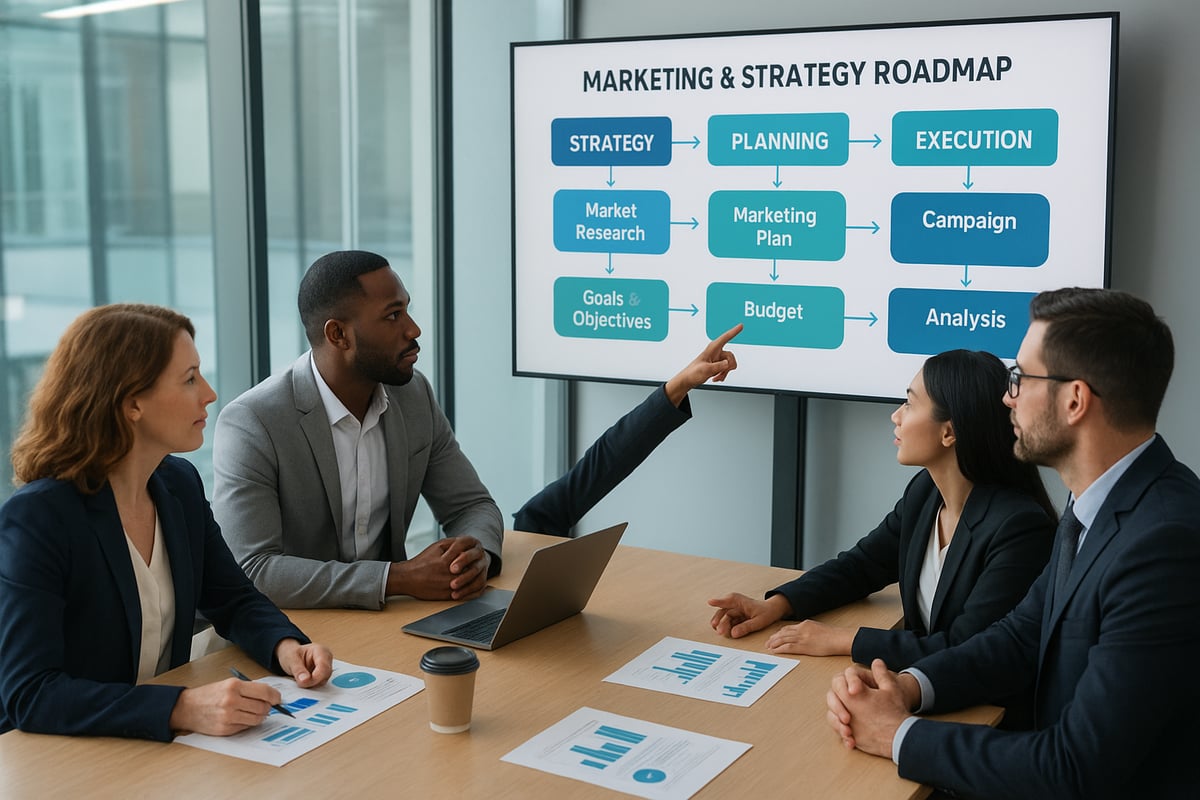
The distinction between marketing and strategy and a tactical marketing plan is critical for effective execution. While marketing and strategy define the "why" and "what," the tactical plan outlines the "how" and "when." Start by breaking down strategic objectives into actionable steps, assigning clear responsibilities, and setting milestones.
Use roadmaps to visualize timelines and dependencies. Resource planning is essential—allocate budget, staff, and technology thoughtfully. Consider whether to leverage internal expertise or seek external support. For example, understanding the pros and cons of DIY marketing vs professional services can inform smarter resource allocation.
Templates such as one-page strategy plans or Gantt charts help teams stay organized. For a product launch, outline tasks, assign owners, and establish review points. This structure ensures that marketing and strategy initiatives move forward efficiently and transparently.
Change Management and Team Alignment
Turning marketing and strategy into action requires strong internal alignment. Communicate plans clearly and foster buy-in across all departments. Regular updates, meetings, and shared dashboards keep everyone informed and accountable.
Invest in training and upskilling to prepare teams for new technologies and methodologies. Cross-functional workshops are effective for aligning sales, product, and marketing teams with the overarching strategy.
Agile feedback loops ensure that teams can adapt quickly. Encourage open discussion of what is working and where adjustments are needed. When everyone understands their role in the marketing and strategy process, execution becomes smoother and more impactful.
Overcoming Common Implementation Challenges
Many organizations face obstacles when bringing marketing and strategy plans to life. Resistance to change, legacy processes, and competing priorities can stall progress. Address these by fostering a culture receptive to innovation and continuous improvement.
Prioritize initiatives based on impact and feasibility to make the most of limited resources. Use checklists and regular audits to maintain consistency across channels and touchpoints.
When challenges arise, collaborate to identify root causes and implement solutions. For example, streamline workflows, clarify objectives, or adjust timelines as needed. By proactively addressing barriers, organizations can ensure that their marketing and strategy efforts remain on track and deliver lasting results.
Measuring, Optimizing, and Sustaining Success
Achieving lasting results in marketing and strategy requires more than a strong plan. It demands a commitment to measurement, optimization, and adaptability. By tracking the right metrics, fostering a culture of improvement, leveraging customer insights, and future-proofing your approach, businesses can sustain growth in an ever-evolving landscape.
Key Metrics for Marketing and Strategy Performance
To drive meaningful growth, organizations must track the right key performance indicators (KPIs). These metrics reveal the effectiveness of marketing and strategy initiatives, guiding decision-making for future campaigns.
Common KPIs include:
| Metric | Description | Why It Matters |
|---|---|---|
| Website Traffic | Number of site visits | Indicates brand reach |
| Conversion Rate | Percentage of visitors who take action | Measures campaign effectiveness |
| Customer Retention Rate | Percentage of customers who stay loyal | Reflects satisfaction and loyalty |
| Cost per Acquisition | Cost to acquire a new customer | Assesses marketing efficiency |
| Customer Lifetime Value | Revenue generated per customer over time | Informs long-term value |
Regularly monitoring these metrics ensures that marketing and strategy efforts align with business objectives. Data-driven analysis highlights areas for improvement and helps teams pivot quickly when needed.
Continuous Improvement and Iteration
Success in marketing and strategy is not a one-time achievement. Instead, it is a continuous process of learning, testing, and refining. Teams should conduct frequent reviews of campaign performance, using analytics tools to spot trends and identify underperforming areas.
Adopting a test-and-learn mindset enables organizations to optimize strategies in real time. Common techniques include:
- A/B testing for creative and messaging
- Experimenting with new channels or formats
- Iterative campaign adjustments based on results
By fostering a culture of agility, businesses empower teams to adapt their marketing and strategy approach, ensuring sustained relevance and competitiveness.
Leveraging Customer Feedback and Market Signals
Listening to customers is essential for refining marketing and strategy. Gathering feedback through surveys, online reviews, and social listening platforms uncovers valuable insights about preferences and pain points.
Steps to maximize customer input:
- Regularly deploy short, focused surveys after key interactions.
- Monitor social channels for brand mentions and sentiment.
- Analyze customer reviews to identify recurring themes.
Brands that act on market signals quickly can adjust messaging, offerings, and experiences to exceed expectations. This proactive use of feedback leads to stronger customer relationships and improved marketing and strategy outcomes.
Future-Proofing Your Marketing and Strategy
The pace of change in marketing and strategy accelerates each year. To stay ahead, organizations must anticipate trends and invest in ongoing development. Embracing innovation, such as AI-driven analytics and creative content, helps companies differentiate and thrive.
According to Top marketing trends for 2026, the future will be shaped by the rise of first-party data, retail media networks, and advanced automation. Meanwhile, Kantar’s 2026 marketing trends highlight the growing importance of creativity, inclusivity, and targeted technology.
To future-proof your marketing and strategy:
- Invest in team learning and upskilling.
- Stay informed on emerging trends and disruptive technologies.
- Build agility into organizational processes.
By taking these steps, businesses can ensure their marketing and strategy remain resilient, innovative, and growth-oriented in 2026 and beyond.
The Path Forward: Embracing Change for Lasting Success
In 2026, organizations face an environment where adaptability is not just an advantage but a necessity. To thrive, businesses must evolve their marketing and strategy playbooks, uniting teams, embracing innovation, and staying true to their core values. This section explores how integration, agility, leadership, and ethics form the cornerstone for sustainable growth.
The Importance of Strategic Integration Across the Organization
Siloed departments are a relic of the past. In today's landscape, marketing and strategy must operate as a unified force that transcends traditional boundaries. When marketing and strategy are aligned with sales, product, and customer service, organizations can respond faster to market shifts and customer demands.
Cross-functional collaboration ensures that data, insights, and resources flow freely between teams. This integration breaks down barriers, encourages shared accountability, and fosters innovation. For example, leading organizations have established cross-departmental task forces to accelerate go-to-market initiatives, resulting in faster launches and more cohesive messaging.
To embed marketing and strategy throughout the organization, leaders should:
- Promote open communication channels between teams
- Encourage joint planning sessions and shared KPIs
- Invest in collaborative tools and technology
By weaving marketing and strategy into the fabric of every function, businesses build a foundation for lasting success.
Adapting to the Shifting Consumer and Competitive Landscape
Consumers in 2026 are more empowered and informed than ever. They demand transparency, personalization, and seamless experiences across all touchpoints. At the same time, competitors are leveraging technology to disrupt markets at unprecedented speed.
To keep pace, organizations must continuously monitor market signals, experiment with emerging platforms, and anticipate changes in consumer behavior. The rise of AI-driven advertising, as seen in Meta’s AI-driven advertising by 2026, underscores the need for marketers to embrace automation and data-driven insights as central pillars of their marketing and strategy.
Regularly revisiting customer personas and updating value propositions enable brands to maintain relevance. Companies that adapt quickly by integrating feedback and leveraging new technologies will stand out in crowded markets.
Leadership, Talent, and Culture as Growth Drivers
Leadership is the catalyst that transforms marketing and strategy ambitions into reality. Organizations need leaders who can inspire teams, champion innovation, and navigate ambiguity. Investing in leadership development and ongoing learning ensures that teams have the skills to execute modern marketing and strategy initiatives.
Equally important is cultivating a culture of experimentation, resilience, and shared purpose. When employees feel empowered to test new ideas and learn from failures, organizations unlock creative solutions that drive growth.
Key actions to foster a growth-oriented culture:
- Offer training in data analytics and digital marketing
- Recognize and reward innovative thinking
- Create safe spaces for collaboration and feedback
A strong culture, fueled by capable leaders and engaged talent, is essential for marketing and strategy excellence.
Ethical Considerations and Purpose-Driven Marketing
Trust and transparency are now baseline expectations. Customers support brands whose marketing and strategy align with ethical practices and broader social values. Companies that prioritize purpose-driven marketing build lasting relationships and differentiate themselves in saturated markets.
Ethical marketing and strategy involve honest communication, responsible data usage, and a commitment to positive impact. Leading brands set clear guidelines for ethical conduct and integrate corporate responsibility into their strategic objectives.
Examples of purpose-driven initiatives include:
- Transparent supply chains and responsible sourcing
- Community engagement and social impact programs
- Inclusive marketing campaigns that reflect diverse perspectives
Aligning marketing and strategy with purpose not only drives loyalty but also supports long-term business sustainability.
Action Steps for 2026 and Beyond
To ensure ongoing success, organizations should take the following steps to future-proof their marketing and strategy:
- Regularly audit and update marketing and strategy frameworks.
- Monitor industry trends, such as those highlighted in Marketing trends for small businesses, to stay ahead of market shifts.
- Invest in leadership development and cross-functional training.
- Foster a culture of ethical, purpose-driven decision-making.
- Embrace technology and data analytics to inform every aspect of marketing and strategy.
By prioritizing these actions, businesses position themselves for both immediate wins and sustainable growth. The path forward demands embracing change, breaking down barriers, and committing to continuous improvement in marketing and strategy.
After exploring how strategic integration and digital innovation can drive real growth, it’s clear that understanding your business’s current visibility is a critical first step. If you’re ready to put these proven strategies into action and want expert insights tailored to your unique market position, I encourage you to take advantage of a powerful resource. Let’s work together to uncover hidden opportunities and accelerate your success in 2026. Start with a personalized assessment—get your Free Visibility Snapshot and see exactly where you stand, so you can build on a solid foundation for measurable results.