
The landscape of internet advertising has undergone a remarkable transformation, evolving from simple banner ads to sophisticated, data-driven campaigns that generate billions in revenue annually. According to the Interactive Advertising Bureau’s 2024 report, internet advertising revenues experienced a 14.9% year-over-year increase, demonstrating the channel's continuing dominance in marketing budgets. For businesses seeking measurable growth, understanding how to leverage internet advertising effectively represents a critical competitive advantage in today's digital marketplace.
The Current State of Digital Ad Spend
The internet advertising ecosystem has matured into a multi-faceted industry where businesses of all sizes compete for consumer attention. Digital channels now command the majority of advertising budgets, with digital media accounting for 53.7% of overall ad spend according to BIA Advisory Services' 2025 forecast. This shift reflects not just technological advancement but fundamental changes in consumer behavior and media consumption patterns.
Businesses working with specialized digital agencies recognize that internet advertising offers unparalleled targeting capabilities and measurement precision. Unlike traditional media, digital platforms enable advertisers to track every impression, click, and conversion, creating accountability that drives better strategic decisions.
Budget Allocation Trends
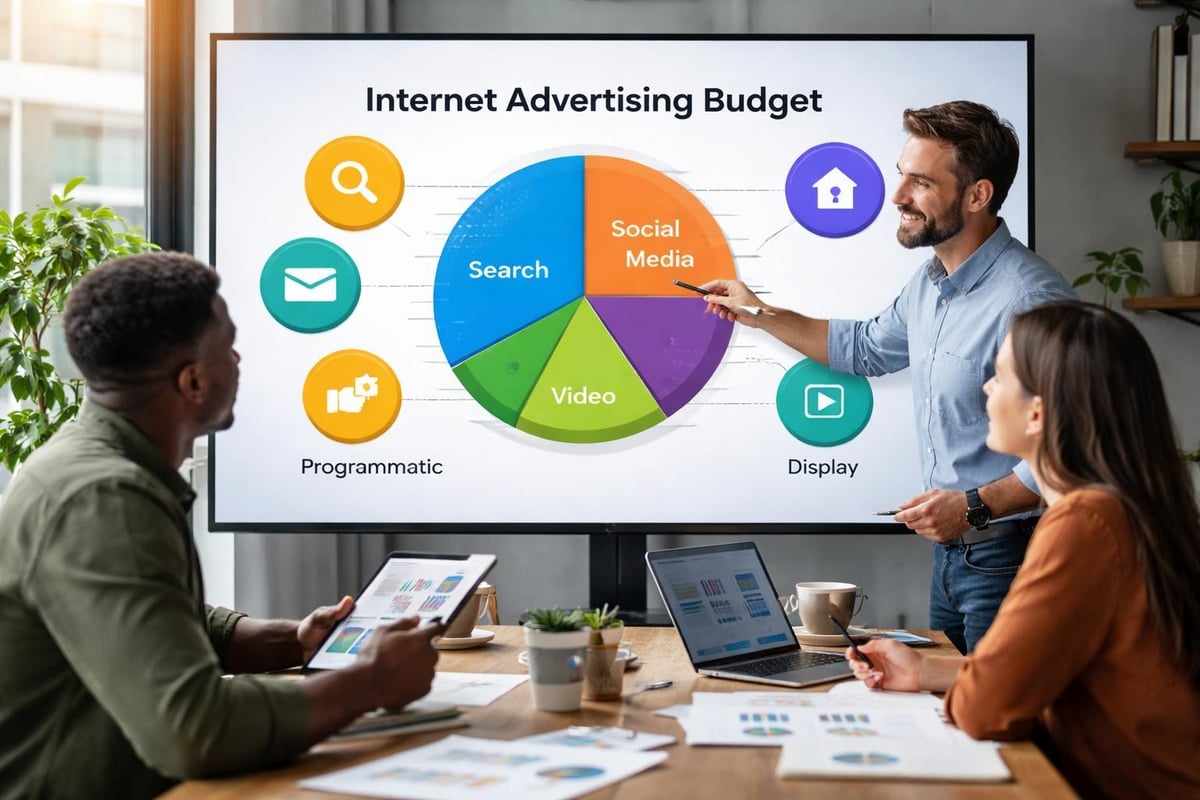
Modern marketing budgets reflect the growing confidence in digital channels:
- Search advertising remains the largest category, capturing consumer intent at the moment of need
- Social media ads leverage sophisticated audience targeting based on interests, behaviors, and demographics
- Display advertising builds brand awareness through visual storytelling across publisher networks
- Video campaigns engage audiences on streaming platforms and social channels
- Programmatic buying automates ad placement through real-time bidding systems
The rise of ad-supported streaming services has created new opportunities for advertisers. Comscore reports a 43% increase in time spent on major ad-supported streaming platforms, signaling a significant shift in where audiences consume content and where advertising dollars should follow.
Platform Selection and Strategy Development
Choosing the right platforms for your internet advertising campaigns requires a deep understanding of where your target audience spends time online. Each platform offers distinct advantages, audience demographics, and ad formats that align with specific business objectives.
Search Engine Advertising
Google Ads dominates search advertising, enabling businesses to appear when potential customers actively seek solutions. This intent-based targeting delivers high-quality leads because users have already expressed interest through their search queries. For local businesses, agencies like Pioneer Marketing specialize in optimizing search campaigns alongside local SEO to maximize visibility in target markets.
Key advantages of search advertising include:
- Intent-driven traffic from users actively searching for products or services
- Measurable ROI through detailed conversion tracking and attribution
- Flexible budgeting with pay-per-click models that control costs
- Geographic targeting to reach customers in specific locations
- Ad schedule optimization to run campaigns during peak conversion times
Social Media Advertising Platforms
Social platforms have revolutionized internet advertising by enabling businesses to reach users based on detailed demographic and psychographic profiles. Facebook, Instagram, LinkedIn, and TikTok each serve distinct audiences with unique content preferences and engagement patterns.
| Platform | Best For | Primary Ad Formats | Audience Strength |
|---|---|---|---|
| Broad B2C targeting | Image, video, carousel | Diverse age groups | |
| Visual storytelling | Stories, reels, shopping | 18-44 demographics | |
| B2B marketing | Sponsored content, InMail | Professional audiences | |
| TikTok | Youth engagement | Short-form video | Gen Z and millennials |
Businesses offering online advertising services recognize that successful social campaigns require more than just ad placement. They demand compelling creative, strategic audience segmentation, and continuous optimization based on performance data.
Programmatic Advertising and Automation
Programmatic advertising has transformed how internet advertising inventory gets bought and sold. Rather than negotiating directly with publishers, advertisers use automated platforms that purchase ad space through real-time bidding. This efficiency enables businesses to reach target audiences across thousands of websites simultaneously while maintaining cost control.
The programmatic advertising market continues its rapid expansion, driven by artificial intelligence and machine learning algorithms that optimize campaign performance in real time. These systems analyze user behavior patterns, contextual signals, and historical performance data to determine the optimal bid for each ad impression.
Benefits of Programmatic Campaigns
Automation in internet advertising delivers several competitive advantages:
- Scale: Reach audiences across extensive publisher networks without manual placement
- Precision: Target users based on hundreds of data points and behavioral signals
- Efficiency: Reduce manual work through automated bidding and placement
- Transparency: Access detailed reporting on where ads appear and how they perform
- Speed: Launch campaigns and adjust strategies in real time based on performance
However, programmatic advertising also introduces challenges around ad fraud, which includes various deceptive practices like bot traffic, click farms, and domain spoofing. Businesses must work with reputable platforms and implement verification tools to protect their advertising investments.

Targeting Strategies That Drive Results
The power of internet advertising lies primarily in its targeting capabilities. Unlike traditional media that reaches broad audiences with minimal segmentation, digital platforms enable precise audience definition based on multiple criteria.
Demographic and Geographic Targeting
Basic targeting parameters include age, gender, income level, education, and location. Geographic targeting proves particularly valuable for local businesses, allowing them to focus advertising spend on service areas where they can fulfill customer needs. Companies providing digital marketing in specialized local markets use these targeting features to maximize campaign efficiency.
Behavioral and Interest-Based Targeting
Modern internet advertising platforms track user behavior across websites and apps, building profiles based on browsing history, content engagement, and purchase patterns. The AdChoices program provides transparency around this interest-based advertising while giving consumers control over their data preferences.
Behavioral targeting categories include:
- Previous website visitors (retargeting/remarketing)
- Users who engaged with similar content or products
- Consumers in specific purchase journey stages
- People who match customer lookalike profiles
- Users with demonstrated interest in competitor offerings
Contextual and Content-Based Targeting
Following privacy regulations and the phase-out of third-party cookies, contextual targeting has regained prominence. This approach places ads based on the content users currently view rather than historical behavior tracking. European businesses increasingly rely on contextual advertising, with nearly one-third of enterprises using online advertising and contextual methods proving most popular.
Creative Development for Digital Success
Even the most sophisticated targeting cannot overcome poor creative execution. Internet advertising requires compelling visuals, persuasive copy, and clear calls-to-action that resonate with target audiences and drive desired behaviors.
Ad Format Considerations
Different internet advertising formats serve distinct purposes within the customer journey:
| Format Type | Best Use Case | Key Elements | Conversion Potential |
|---|---|---|---|
| Search text ads | Capturing intent | Headline, description, extensions | High |
| Display banners | Brand awareness | Visual design, messaging | Medium |
| Video ads | Engagement and storytelling | Hook, narrative, CTA | High |
| Native ads | Content integration | Relevant messaging, seamless design | Medium-High |
| Shopping ads | E-commerce sales | Product image, price, rating | Very High |
Effective internet advertising creative balances brand consistency with platform-specific best practices. What works on LinkedIn differs significantly from TikTok, requiring advertisers to adapt messaging and visual style to match platform norms and audience expectations.
Testing and Optimization
The digital nature of internet advertising enables continuous experimentation. A/B testing different headlines, images, calls-to-action, and landing pages reveals which elements drive the strongest performance. Successful campaigns typically test multiple variables simultaneously, using data to inform incremental improvements.
Businesses working with experienced marketing professionals understand that optimization never stops. Market conditions change, audience preferences evolve, and competitors adjust strategies, requiring ongoing refinement to maintain campaign effectiveness.

Compliance and Privacy Considerations
The regulatory landscape surrounding internet advertising continues to evolve as governments seek to protect consumer privacy while enabling legitimate business marketing. The EU Digital Services Act impacts online advertising through new transparency requirements and restrictions on profiling-based advertising using sensitive data or targeting children.
Industry Self-Regulation
Organizations like the Network Advertising Initiative have developed self-regulatory standards for online advertising to address privacy concerns and promote responsible practices. These voluntary frameworks help businesses navigate the complex intersection of effective marketing and consumer privacy protection.
Key compliance areas include:
- Obtaining proper consent for data collection and use
- Providing transparent information about advertising practices
- Respecting user opt-out preferences and privacy choices
- Avoiding discriminatory targeting based on protected characteristics
- Implementing age-appropriate advertising restrictions for children
Data Security and Protection
Internet advertising relies heavily on consumer data, creating responsibility to protect that information from breaches and misuse. Businesses must implement robust security measures, limit data collection to necessary elements, and ensure third-party partners maintain comparable protection standards.
Measurement and Attribution
One of internet advertising's greatest advantages lies in its measurability. Digital platforms provide detailed analytics showing exactly how campaigns perform across multiple metrics, enabling data-driven decision making and ROI calculation.
Essential Performance Metrics
Different campaign objectives require different measurement approaches:
- Awareness campaigns: Impressions, reach, brand lift studies
- Consideration campaigns: Click-through rates, engagement, time on site
- Conversion campaigns: Cost per acquisition, conversion rate, return on ad spend
- Retention campaigns: Customer lifetime value, repeat purchase rate
Advanced attribution models help businesses understand how different touchpoints contribute to conversions. Multi-touch attribution recognizes that customers typically interact with multiple ads across various channels before converting, distributing credit appropriately rather than attributing everything to the last click.
Analytics Integration
Connecting internet advertising platforms with analytics tools creates comprehensive visibility into the customer journey. Google Analytics, Adobe Analytics, and specialized marketing analytics platforms reveal how paid traffic behaves on websites, which landing pages convert effectively, and where friction points exist in the conversion funnel.
This integration proves particularly valuable for businesses managing complex service offerings. Organizations providing comprehensive digital marketing solutions across multiple specialties use analytics to understand which services generate the strongest response and allocate budgets accordingly.
Emerging Trends Shaping the Future
The internet advertising landscape continues evolving rapidly, with several trends poised to reshape strategies in coming years. Artificial intelligence increasingly automates campaign management, from bidding strategies to creative generation and audience targeting refinement.
Connected TV and Streaming Growth
The explosion of ad-supported streaming services creates new opportunities for video advertising that combines television's engaging format with digital advertising's precise targeting and measurement. This convergence enables businesses to reach cord-cutters and younger audiences who have largely abandoned traditional television.
Privacy-First Advertising
As third-party cookies disappear and privacy regulations tighten, internet advertising is shifting toward approaches that respect user privacy while maintaining effectiveness. First-party data strategies, contextual targeting, and privacy-preserving technologies like Google's Privacy Sandbox represent the industry's adaptation to this new reality.
Voice and Audio Advertising
Smart speakers and podcast popularity have driven growth in audio advertising. These formats offer unique engagement opportunities through voice-activated responses and companion display ads that appear on screen-enabled devices.
Budget Optimization Strategies
Maximizing return on internet advertising investment requires strategic budget allocation and ongoing optimization. Businesses should start with clear objectives, allocate budgets based on expected returns, and maintain flexibility to shift spending toward top-performing channels.
Seasonal and Timing Considerations
Consumer behavior varies throughout the year, with seasonal patterns affecting when advertising delivers optimal results. Retail businesses see peaks around holidays, while service providers might experience demand fluctuations based on weather or other factors. Adjusting internet advertising budgets to match these patterns improves efficiency.
Budget optimization tactics include:
- Analyzing historical performance data to identify high-value periods
- Testing new channels with small budgets before scaling investment
- Implementing dayparting to show ads during peak conversion times
- Using automated bidding strategies that adjust to real-time competition
- Maintaining budget reserves for unexpected opportunities or market shifts
Channel Mix Refinement
Diversification across multiple internet advertising channels reduces risk while enabling businesses to reach audiences at different journey stages. A balanced approach might combine search advertising for immediate demand capture, social media for awareness and consideration, and display remarketing for conversion optimization.
Regular portfolio reviews ensure the channel mix remains aligned with business objectives. As some channels mature and others emerge, strategic reallocation keeps campaigns fresh and effective. Companies exploring social media marketing opportunities benefit from expert guidance on platform selection and budget allocation.
Small Business Internet Advertising Tactics
While large corporations command substantial budgets, small businesses can compete effectively in internet advertising through smart strategies that maximize limited resources. Local targeting, niche audience focus, and careful measurement help smaller advertisers achieve strong returns.
Local Market Dominance
Geographic targeting enables small businesses to compete in specific service areas without wasting budget on irrelevant audiences. Local internet advertising tactics prove particularly effective for service-based businesses like healthcare providers, where specialized local marketing strategies drive measurable patient acquisition.
Long-Tail Keyword Strategies
Rather than competing for expensive, broad keywords, small businesses often succeed with long-tail search terms that indicate specific intent. These detailed queries typically cost less per click while attracting more qualified prospects ready to convert.
Internet advertising offers unprecedented opportunities for businesses to reach target audiences with precision, measure results accurately, and scale growth strategically. By understanding platform dynamics, implementing sophisticated targeting, creating compelling creative, and continuously optimizing based on performance data, businesses of all sizes can leverage internet advertising to achieve measurable success. Whether you're just beginning to explore digital channels or seeking to enhance existing campaigns, Mountain Mover Coaching and Digital Marketing provides the strategic guidance and hands-on expertise needed to transform your internet advertising into a powerful growth engine that delivers real, sustainable results.