Google AdWords PPC remains one of the most effective digital advertising platforms for businesses seeking immediate visibility and measurable growth. As we navigate through 2026, understanding how to leverage this powerful tool has become essential for companies looking to compete in increasingly crowded digital markets. Whether you're a small business owner or an established enterprise, mastering google adwords ppc can transform your marketing ROI and accelerate your path to profitability. The landscape of paid search advertising continues to evolve, demanding a strategic approach that balances budget allocation, audience targeting, and conversion optimization.
Understanding Google AdWords PPC Fundamentals
Google AdWords PPC, now officially known as Google Ads, operates on a pay-per-click model where advertisers bid on keywords to display their ads in search results. This auction-based system rewards advertisers who create relevant, high-quality campaigns that align with user intent.
The platform's strength lies in its ability to connect businesses with potential customers at the exact moment they're searching for products or services. Unlike traditional advertising methods, google adwords ppc delivers targeted traffic based on specific search queries, geographical locations, device types, and even time of day.
Campaign Structure and Organization
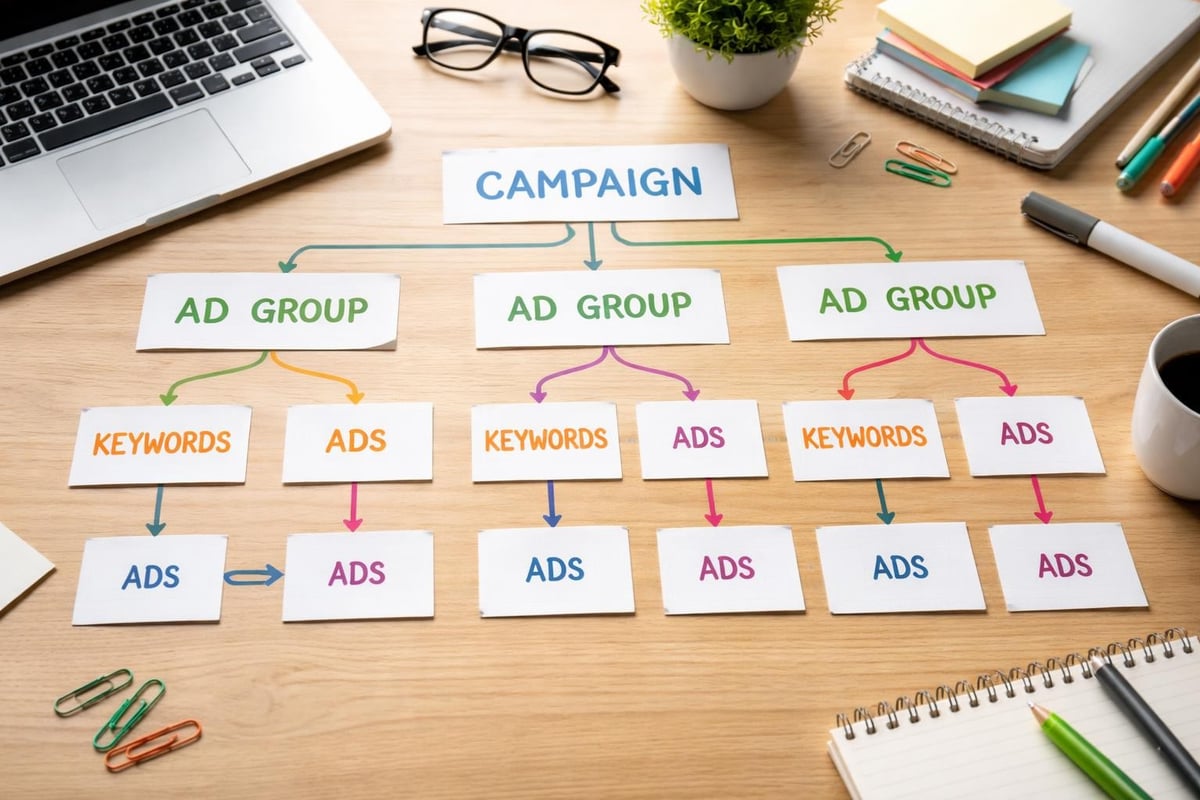
Proper campaign architecture forms the foundation of successful google adwords ppc management. A well-organized account hierarchy improves performance tracking, budget control, and optimization efficiency.
- Campaign Level: Define overarching goals, budgets, and geographical targeting
- Ad Group Level: Group related keywords and create targeted ad copy
- Keyword Level: Select specific search terms that trigger your advertisements
- Ad Level: Craft compelling messages that drive clicks and conversions
Each layer serves a distinct purpose in refining your targeting and messaging. Mountain Mover Coaching and Digital Marketing emphasizes the importance of strategic structure when working with clients to ensure campaigns deliver maximum impact.
Keyword Strategy and Match Types
Selecting the right keywords represents the cornerstone of effective google adwords ppc campaigns. The platform offers four match types, each serving different strategic purposes and controlling how broadly or narrowly your ads appear.
| Match Type | Symbol | Reach | Control | Best Use Case |
|---|---|---|---|---|
| Broad Match | keyword | Highest | Lowest | Discovery and reach expansion |
| Phrase Match | "keyword" | Medium | Medium | Balanced targeting with context |
| Exact Match | [keyword] | Lowest | Highest | Precise targeting and budget control |
| Negative Match | -keyword | N/A | Highest | Excluding irrelevant searches |
Understanding when to apply each match type requires experience and continuous testing. Advanced keyword strategy and match type optimization can significantly impact your campaign performance and cost efficiency.
Negative Keywords: The Unsung Heroes
While most advertisers focus on which keywords to target, equally important is identifying which searches to exclude. Negative keywords prevent your ads from showing for irrelevant queries, reducing wasted spend and improving overall campaign quality.
Regular negative keyword audits should become part of your optimization routine. Review search term reports weekly to identify patterns of unqualified traffic and add appropriate exclusions at both ad group and campaign levels.
Crafting High-Converting Ad Copy
Your ad copy serves as the bridge between user intent and your landing page experience. Effective google adwords ppc advertisements balance relevance, value proposition, and clear calls to action within strict character limits.
The standard text ad format includes:
- Headline 1: 30 characters (primary attention grabber)
- Headline 2: 30 characters (supporting benefit or feature)
- Headline 3: 30 characters (additional differentiation)
- Description 1: 90 characters (value proposition expansion)
- Description 2: 90 characters (call to action and urgency)
Dynamic Keyword Insertion
Dynamic keyword insertion automatically updates your ad copy to match the searcher's query, improving relevance and click-through rates. However, this feature requires careful implementation to avoid awkward or grammatically incorrect ads.
Use this technique strategically in headline positions where it enhances rather than detracts from your message. Always preview how ads will appear across your keyword list before activating dynamic insertion.
Testing multiple ad variations simultaneously helps identify which messaging resonates most effectively with your target audience. Many advertisers find that strategic PPC tips and performance optimization strategies accelerate their learning curve and improve results faster than trial and error alone.

Bidding Strategies and Budget Management
Google AdWords PPC offers numerous bidding strategies, each designed for different campaign objectives. Selecting the appropriate bidding method aligns your spend with specific business goals.
Manual CPC: Provides complete control over individual keyword bids, ideal for experienced advertisers who want granular optimization capabilities.
Enhanced CPC: Automatically adjusts manual bids based on conversion likelihood, balancing control with machine learning assistance.
Target CPA: Sets bids to achieve a specific cost per acquisition, requiring sufficient conversion history for algorithm optimization.
Target ROAS: Optimizes bids to reach a target return on ad spend percentage, best suited for e-commerce or businesses with clear revenue attribution.
Maximize Conversions: Automatically sets bids to generate the highest number of conversions within your budget constraints.
Budget Allocation Across Campaigns
Strategic budget distribution ensures your highest-performing campaigns receive adequate funding while testing initiatives have room to prove their value. When working with comprehensive digital marketing and coaching services, consider implementing a portfolio approach that balances brand, competitive, and long-tail campaigns.
Start new campaigns with conservative daily budgets, gradually increasing investment as performance data validates profitability. This measured approach prevents overspending on unproven strategies while allowing successful campaigns to scale.
Quality Score and Its Impact
Quality Score represents Google's assessment of your ad relevance, landing page experience, and expected click-through rate. This 1-10 rating directly influences your ad rank and cost per click, making it a critical performance factor.
Higher Quality Scores deliver multiple benefits:
- Lower costs per click for the same ad positions
- Better ad placement opportunities
- Increased impression share and visibility
- Improved return on advertising investment
Improving Your Quality Score
Focus on three primary components to enhance Quality Score across your google adwords ppc campaigns:
Expected CTR: Create compelling, relevant ad copy that encourages clicks. Test different value propositions and calls to action to identify top performers.
Ad Relevance: Ensure tight keyword-to-ad alignment by maintaining focused ad groups with closely related keywords. Avoid broad ad groups that force generic messaging.
Landing Page Experience: Direct traffic to pages specifically designed for the search query. Fast load times, mobile optimization, and clear conversion paths all contribute to positive landing page scores.
Regular quality score monitoring helps identify underperforming elements requiring attention. However, it's important to note that not all PPC best practices work for every business, so test recommendations against your specific business context.
Conversion Tracking and Attribution
Without proper conversion tracking, google adwords ppc becomes an exercise in spending money with no visibility into results. Implementing comprehensive tracking mechanisms transforms raw data into actionable business intelligence.
Essential Tracking Elements
Set up tracking for multiple conversion actions beyond just purchases or lead submissions. Consider tracking:
- Form completions and contact requests
- Phone calls from click-to-call extensions
- Newsletter signups and content downloads
- Product page visits or cart additions
- Video views or engagement milestones
Attribution modeling determines how credit is distributed across the customer journey. Google Ads offers several attribution models, each telling a different story about campaign contribution.
| Attribution Model | Credit Distribution | Best For |
|---|---|---|
| Last Click | 100% to final interaction | Direct response campaigns |
| First Click | 100% to initial interaction | Awareness campaigns |
| Linear | Equal across all touchpoints | Full funnel visibility |
| Time Decay | More recent interactions weighted higher | Longer sales cycles |
| Position-Based | 40% first, 40% last, 20% middle | Balanced perspective |
Understanding which touchpoints drive conversions enables smarter budget allocation and campaign optimization decisions.

Advanced Audience Targeting
Beyond keyword targeting, google adwords ppc offers sophisticated audience layering that enhances campaign precision and efficiency. These targeting options help you reach the right people with the right message at the right time.
Remarketing Lists: Re-engage users who previously visited your website but didn't convert. Segment audiences based on specific pages viewed or actions taken.
Customer Match: Upload email lists to target existing customers or high-value prospects with tailored messaging and offers.
In-Market Audiences: Reach users actively researching products or services in your category based on their browsing behavior.
Affinity Audiences: Target users based on their interests, habits, and lifestyle characteristics for broader awareness campaigns.
Similar Audiences: Expand reach by targeting users who share characteristics with your best customers or website visitors.
Combining Audiences with Keywords
The most powerful targeting combines keyword intent with audience signals. For example, showing premium product ads to high-value customer segments searching for relevant keywords maximizes conversion probability while controlling costs.
Layer multiple audience types within campaigns to create highly specific targeting combinations. This approach allows for customized bidding and messaging strategies based on user qualification level.
For businesses working with digital agencies specializing in strategic growth, audience segmentation often reveals unexpected opportunities within existing traffic patterns.
Ad Extensions and Enhanced Features
Ad extensions expand your advertisement's real estate and functionality without additional cost per click. These features improve visibility, provide additional information, and increase overall click-through rates.
- Sitelink Extensions: Direct users to specific pages beyond your main landing page
- Callout Extensions: Highlight key benefits, features, or offers in short phrases
- Call Extensions: Add click-to-call functionality with tracked phone numbers
- Location Extensions: Display business address and distance for local searchers
- Price Extensions: Showcase product or service pricing directly in search results
- Promotion Extensions: Feature current sales, discounts, or limited-time offers
Extensions automatically rotate and display based on relevance and predicted impact. Implement all applicable extension types to maximize ad performance and占领更多的搜索结果空间。
Common Mistakes and How to Avoid Them
Even experienced advertisers fall into traps that undermine google adwords ppc performance. Recognizing these pitfalls helps you maintain campaign effectiveness and avoid wasted budget.
Understanding common PPC advertising mistakes and optimization practices provides valuable perspective on what to avoid. Additionally, recognizing that popular Google Ads best practices can sometimes harm performance when applied without context helps you make informed decisions.
Frequent Errors to Address
Single Keyword Ad Groups (SKAGs) Overuse: While SKAGs offer maximum relevance, they create management overhead and may limit machine learning effectiveness with limited data.
Ignoring Search Term Reports: Failing to review actual search queries means missing optimization opportunities and allowing irrelevant traffic to consume budget.
Set-and-Forget Mentality: Google adwords ppc requires continuous monitoring, testing, and refinement. Markets change, competitors adjust, and algorithms evolve.
Poor Mobile Experience: With mobile searches dominating most industries, neglecting mobile optimization severely limits campaign potential.
Inadequate Testing: Running single ad variations or avoiding experimentation prevents performance improvement and competitive advantage development.
Performance Monitoring and Optimization
Successful google adwords ppc management requires systematic performance review and data-driven optimization. Establish regular reporting cadences that track meaningful metrics aligned with business objectives.
Key Performance Indicators
Focus on metrics that directly correlate with business success rather than vanity numbers:
Cost Per Acquisition (CPA): The average cost to generate a conversion action, essential for profitability assessment.
Return on Ad Spend (ROAS): Revenue generated per dollar spent on advertising, critical for e-commerce and businesses with clear revenue attribution.
Conversion Rate: Percentage of clicks resulting in conversions, indicating landing page and offer effectiveness.
Impression Share: The percentage of possible impressions your ads receive, revealing growth opportunities and competitive pressure.
Quality Score: Overall account health indicator affecting costs and ad positioning capabilities.
Optimization Workflow
Implement a structured optimization process that systematically improves performance over time:
- Weekly: Review search terms, add negative keywords, pause underperforming ads
- Bi-weekly: Adjust bids based on performance trends, test new ad variations
- Monthly: Analyze conversion paths, refine audience targeting, evaluate budget allocation
- Quarterly: Conduct comprehensive account audits, reassess strategy alignment, implement structural changes
This disciplined approach ensures consistent improvement while preventing knee-jerk reactions to short-term fluctuations. When partnering with experts like those at Mountain Mover Coaching and Digital Marketing, this systematic methodology becomes embedded in your marketing operations.
Integration with Broader Marketing Strategy
Google adwords ppc performs best when integrated with complementary marketing channels rather than operating in isolation. Coordinating paid search with SEO, content marketing, and social media creates synergistic effects that amplify overall results.
Use PPC data to inform organic strategy by identifying high-converting keywords worth pursuing through content development. Conversely, leverage SEO research to discover paid search opportunities with strong commercial intent.
Align messaging across channels to create consistent brand experiences. Users researching through multiple touchpoints should encounter cohesive value propositions that reinforce purchasing decisions.
Remarketing Across Platforms
Extend google adwords ppc remarketing beyond search networks to display and video placements. This multi-channel approach keeps your brand visible throughout the customer journey, increasing conversion probability.
Cross-platform remarketing works particularly well for considered purchases with longer sales cycles. Maintain presence across search, display, YouTube, and discovery campaigns to nurture prospects through decision-making processes.
For comprehensive strategies that align multiple marketing channels, resources like starting and optimizing Google Ads PPC campaigns provide valuable frameworks applicable across digital marketing initiatives.
Mastering google adwords ppc requires strategic planning, continuous optimization, and alignment with broader business objectives. The platform's complexity offers both challenges and opportunities for businesses willing to invest in proper implementation and management. Mountain Mover Coaching and Digital Marketing specializes in transforming digital advertising investments into measurable business growth through expert campaign management, strategic coaching, and data-driven optimization. Whether you're launching your first campaign or seeking to improve existing performance, partnering with experienced professionals accelerates your path to profitable paid search advertising.