2026 is set to transform what it means to be a digital marketing professional. Are you prepared to lead the charge, or will you watch others seize every new opportunity?
In this guide, you will discover a step-by-step blueprint designed for digital marketing professionals who want to thrive in a rapidly evolving landscape. We break down the latest trends, essential skills, career pathways, and certifications shaping the industry’s future.
Get ready to unlock actionable strategies for measurable growth. This is your moment to embrace change, gain a competitive edge, and start your transformation journey as a digital marketing professional.
The 2026 Digital Marketing Landscape: Trends and Challenges
The digital marketing professional faces a turning point as the industry races toward 2026. Over just two years, the field has evolved rapidly, driven by technological innovation, changing consumer expectations, and new regulatory pressures. Today’s digital marketing professional is required to master not only traditional tactics but also emerging technologies and strategies that are reshaping the landscape.

Digital Marketing’s Evolution: 2024 to 2026
From 2024 to 2026, the digital marketing professional has witnessed a dramatic shift in priorities and required skill sets. The adoption of data-driven strategies, the integration of advanced analytics, and the transition from single-channel to omnichannel campaigns have become standard practice. As organizations adapt, the digital marketing professional is now expected to combine creative storytelling with technical expertise to remain competitive.
The AI and Automation Revolution
AI and automation are transforming every aspect of the digital marketing professional’s workflow. With 87% of employers valuing AI skills (DMI Survey 2024), tools like predictive analytics, chatbots, and automated ad platforms are now industry standards. Companies leveraging AI-powered personalization are achieving up to 44% higher conversion rates, according to the DMI Alumni Survey 2024. The digital marketing professional must continuously upskill to harness these technologies for maximum impact.
Data Privacy, Trust, and Ethical Marketing
Heightened data privacy regulations and increased consumer awareness have made trust a top priority for every digital marketing professional. Stricter laws require marketers to collect, store, and use data transparently and ethically. This shift affects targeting, personalization, and campaign measurement. Ethical marketing not only safeguards brand reputation but also strengthens long-term customer relationships in a world where trust is currency.
| Trend | 2024 Status | 2026 Shift |
|---|---|---|
| AI & Automation | Emerging | Industry Standard |
| Data Privacy | Evolving Regulations | Strict Compliance & Ethics |
| Omnichannel Integration | Growing | Essential for All Campaigns |
| Content Saturation | Manageable | High, Requires Innovation |
| Voice/Visual Search | Niche | Mainstream, SEO Redefined |
| ROI Demand | High | Critical, Analytics Driven |
Omnichannel Integration and Content Saturation
Omnichannel integration has become non-negotiable for the digital marketing professional, as consumers expect seamless experiences across all platforms. However, content saturation presents a new challenge: standing out in a crowded digital world requires innovation and precision. According to the 2026 Digital Marketing Trends Report, marketers are optimizing channels and measurement to drive stronger performance, making strategic content planning more important than ever.
Voice, Visual Search, and ROI Demands
The rise of voice and visual search is rewriting the rules for SEO and content strategy, demanding that every digital marketing professional adapt quickly. Marketers must optimize for conversational queries and image-based searches, ensuring visibility across all modalities. Simultaneously, the pressure to deliver measurable ROI has never been greater, with analytics, attribution, and performance-driven marketing at the forefront of every decision.
The digital marketing professional who embraces these trends and challenges will be well-positioned for success in 2026. By staying agile, data-driven, and ethical, professionals can navigate the evolving landscape with confidence and deliver measurable results.
Core Competencies Every Digital Marketing Professional Needs in 2026
The digital marketing professional of 2026 faces a dynamic environment that demands a broad, yet specialized, skill set. Succeeding in this field means mastering technical tools, strategic thinking, and essential soft skills. Let us explore the core competencies shaping tomorrow’s leaders.

Technical Skills and Digital Tools
Every digital marketing professional must excel at technical skills to remain competitive in 2026. The landscape is evolving, with automation and AI-driven platforms now industry staples. Mastery of SEO and PPC is fundamental for optimizing visibility and driving targeted traffic.
Proficiency in analytics tools, such as Google Analytics and Data Studio, allows professionals to interpret complex data and make informed decisions. Automation platforms, including chatbots and predictive analytics, streamline campaign management and boost efficiency.
Social media management and content scheduling tools are crucial for maintaining a consistent online presence. Email marketing automation and segmentation enable professionals to deliver personalized content at scale.
Here is a snapshot of must-have tools:
| Skill Area | Leading Tools | Key Benefit |
|---|---|---|
| SEO/PPC | SEMrush, Google Ads | Enhanced visibility |
| Analytics | Google Analytics, Data Studio | Data-driven insights |
| Automation | HubSpot, Mailchimp | Streamlined marketing |
| Social Media | Hootsuite, Buffer | Efficient scheduling |
The DMI Pro curriculum, for example, provides hands-on training in AI, digital strategy, and analytics. Over 80,000 certified professionals have reported that these technical skills are central to their advancement as a digital marketing professional.
Strategic and Analytical Thinking
Strategic and analytical thinking is what transforms a digital marketing professional from a tactician into a true leader. The ability to make data-driven decisions is indispensable. Interpreting large datasets and extracting actionable insights can be the difference between campaign success and failure.
Developing a sound digital strategy means aligning every tactic with broader business objectives. Setting and tracking meaningful KPIs ensures that marketing efforts are measurable and goal-oriented. Trend forecasting and adaptability let professionals anticipate industry shifts and stay ahead of the curve.
Industry leaders at Google, Microsoft, and HubSpot consistently highlight the importance of strategic thinking. Analytical skills are just as critical as creative abilities for the digital marketing professional in 2026. This balance ensures not only effective execution but also innovative solutions to emerging challenges.
A digital marketing professional must always ask: Are my efforts contributing to long-term business growth? By consistently measuring performance and adapting strategies, professionals ensure they deliver real value.
Soft Skills and Leadership
Soft skills are the engine driving collaboration and innovation for every digital marketing professional. Effective communication and storytelling across digital channels help convey brand messages with clarity and impact.
Cross-functional team collaboration, especially in remote or hybrid environments, is vital. Professionals must also be adept at change management, guiding teams through rapid industry shifts while maintaining morale and productivity.
Building strong client relationships and practicing consultative selling are essential for earning trust and driving results. A continuous learning mindset sets apart those who rise quickly. Staying updated through resources like Digital marketing blog insights helps professionals maintain relevance and expertise.
Statistics show that 44 percent of DMI graduates received promotions within a year, largely due to improved leadership and soft skills. Emotional intelligence and resilience are what truly differentiate top performers in the crowded marketplace.
In summary, the digital marketing professional of 2026 must blend technical mastery, strategic vision, and strong interpersonal abilities. Developing these core competencies is the foundation for a thriving and future-ready career.
Step-by-Step Blueprint to Becoming a Digital Marketing Professional in 2026
Becoming a successful digital marketing professional in 2026 requires more than just technical knowledge. It demands a strategic approach, ongoing learning, and a commitment to personal growth. This step-by-step blueprint will help you navigate the evolving landscape with confidence and measurable results.
Step 1: Assess Your Current Skills and Set Career Goals
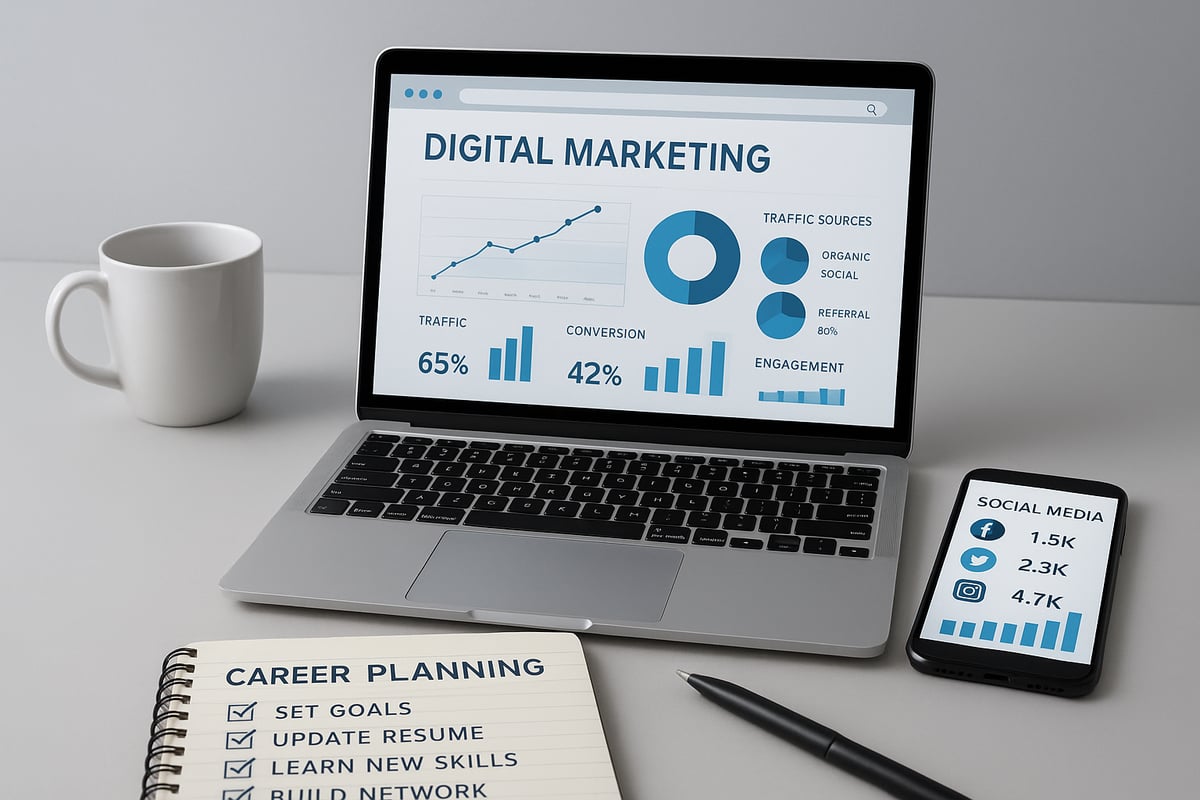
Begin your journey as a digital marketing professional by conducting a comprehensive skills audit. Evaluate your proficiency in areas such as SEO, analytics, content creation, and online advertising. Utilize free tools like business snapshot reports to identify strengths and opportunities for growth.
Set SMART goals—Specific, Measurable, Achievable, Relevant, Time-bound—for both short-term improvements and long-term career aspirations. For example, aim to master a new marketing automation tool within three months or achieve a recognized certification by year-end.
According to recent surveys, 74% of professionals who upskilled experienced salary increases, highlighting the tangible benefits of targeted development. For a deeper understanding of your current online presence and visibility, consider using resources like Can your customers find you online, which can guide your audit and help you benchmark against industry standards.
Step 2: Build a Future-Proof Learning Plan
A digital marketing professional must embrace continuous learning to stay ahead. Research and select industry-validated certifications such as DMI Pro, AMA, or Google credentials to establish credibility and enhance your skill set.
Adopt micro-learning strategies by engaging with webinars, podcasts, and short online modules. This approach allows you to acquire new knowledge efficiently, fitting education into your busy schedule. Combine both free and premium resources to broaden your expertise and remain agile as new trends emerge.
Remember, the most successful digital marketing professionals are those who proactively invest in their learning journey, adapting as the industry evolves. A future-proof learning plan will empower you to tackle the challenges of 2026 and beyond.
Step 3: Gain Practical Experience and Specialize
Practical experience is essential for every digital marketing professional aiming to stand out. Seek internships, freelance projects, or volunteer roles to apply your knowledge in real-world scenarios. Building a portfolio that demonstrates measurable results, such as increased traffic or engagement, is crucial.
Specialization can set you apart in a competitive market. Focus on high-demand niches like AI-driven marketing, advanced SEO, or social media strategy. The digital marketing professional who demonstrates expertise in these areas will be highly sought after by employers and clients alike.
The DMI curriculum, for example, emphasizes hands-on projects and real-world case studies, ensuring you develop the skills needed to excel. By immersing yourself in specialized tasks, you can showcase your unique value and drive your career forward.
Step 4: Network and Build Your Personal Brand
Expanding your professional network is vital for any digital marketing professional. Start by optimizing your LinkedIn profile and actively participating in relevant online communities. Engage with industry leaders, join discussions, and share your own insights through articles or case studies.
Attend conferences and virtual events to connect with peers, discover emerging trends, and stay visible in the industry. Employers increasingly value candidates who demonstrate thought leadership and active engagement within the digital marketing ecosystem.
Building a strong personal brand not only increases your visibility but also opens doors to new opportunities, partnerships, and career advancements. Consistent networking and brand development position you as a trusted expert in your field.
Step 5: Measure, Optimize, and Advance
Continuous improvement is the hallmark of a high-performing digital marketing professional. Regularly review your progress against established KPIs and career goals. Use analytics to identify areas for optimization, and seek constructive feedback from mentors or industry veterans.
Pursue advanced certifications or leadership development programs to further distinguish yourself. Many professionals who prioritize ongoing learning and mentorship report significant career growth, with 73% of promoted graduates attributing their success to this mindset.
By measuring your achievements, optimizing your strategies, and advancing your expertise, you ensure sustained relevance and growth in the ever-evolving digital marketing landscape. Each step you take builds a foundation for lasting success as a digital marketing professional.
Certifications and Qualifications That Matter in 2026
In 2026, the digital marketing professional landscape is shaped by rapid change and high expectations. Employers now require proof of up-to-date expertise, making certifications a non-negotiable asset for anyone serious about advancing their career.
Top Digital Marketing Certifications
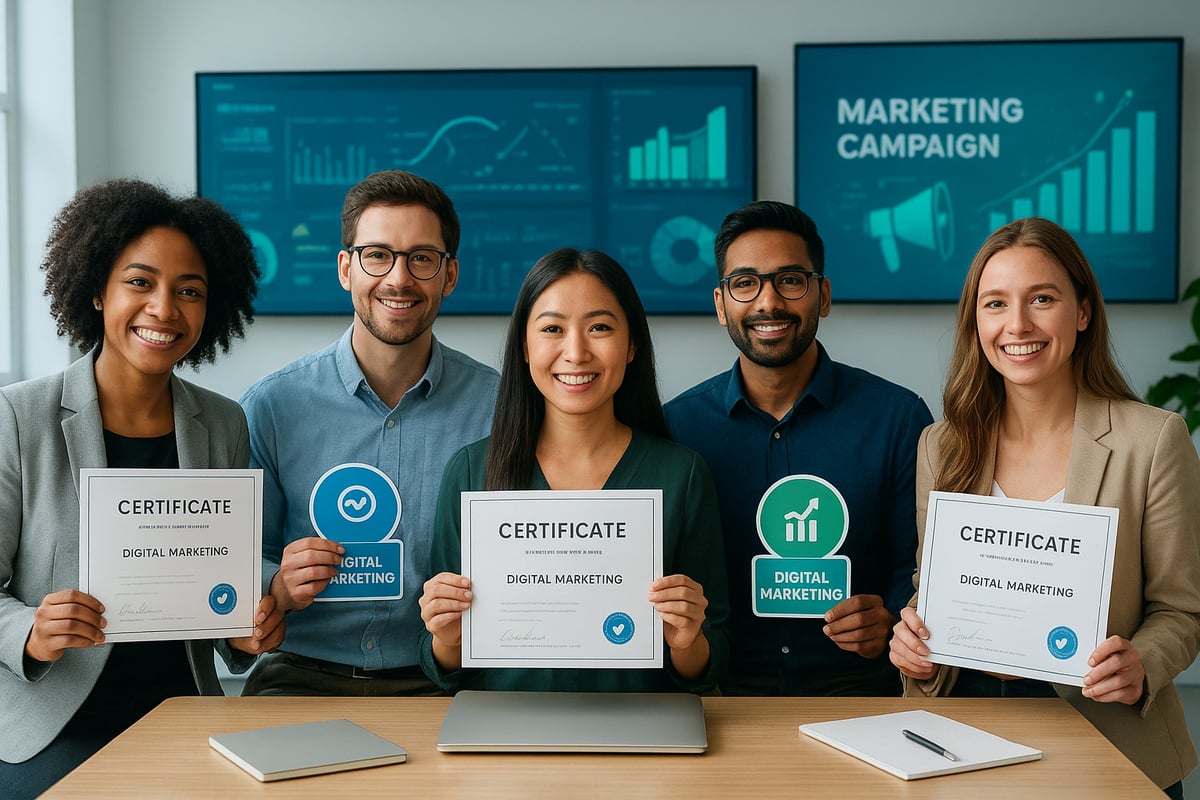
For the digital marketing professional, several certifications stand out. The Digital Marketing Institute (DMI) Pro, Google Analytics Individual Qualification, HubSpot Inbound Certification, AMA Digital Marketing, and Facebook Blueprint are among the most respected.
Each validates a unique set of skills, from analytics and strategy to content and paid media. Industry reports confirm that 87% of employers now favor candidates with at least one recognized certification. This trend is further supported by insights in the 2026 Future Trends in Marketing Report, which highlights the growing demand for up-to-date, validated expertise.
Why Certifications Matter
Certifications offer measurable proof of commitment, adaptability, and knowledge. For a digital marketing professional, they open doors to higher roles, better compensation, and greater job security.
DMI Pro graduates, for example, report average salary increases of $11,000 in Europe and £9,500 in the UK after earning their credential. Employers increasingly use certifications as a benchmark for credibility and readiness in a competitive market.
Comparing Key Certifications
Here is a quick comparison of leading programs for the digital marketing professional:
| Certification | Duration | Cost (USD) | Global Recognition | Focus Area |
|---|---|---|---|---|
| DMI Pro | 6 months | $1,500 | High | Comprehensive Digital |
| Google Analytics IQ | Self-paced | Free | High | Analytics |
| HubSpot Inbound | Self-paced | Free | High | Inbound/Content |
| AMA Digital Marketing | 3-6 months | $1,200 | Medium | Strategy/Analytics |
| Facebook Blueprint | Self-paced | Varies | High | Social/Paid Media |
Dual Certifications and Learning Pathways
To stand out, many digital marketing professional candidates now pursue dual certifications, such as DMI plus AMA, combining broad digital knowledge with specialized expertise. This approach increases credibility and marketability.
Flexible learning formats are also essential. Online courses, apprenticeships, and employer-sponsored programs offer options to suit every schedule and career goal. The ability to learn on-demand is now a minimum expectation.
The Bottom Line
For the digital marketing professional, certifications have shifted from optional to essential. They signal readiness for a future where skills, validation, and adaptability drive career mobility.
Career Pathways and Growth Opportunities for Digital Marketing Professionals
The career landscape for a digital marketing professional in 2026 is dynamic, offering more growth and specialization than ever before. As digital transformation accelerates, new opportunities appear at every level, and professionals must be ready to adapt and lead.
Entry-Level to Senior Roles: What’s Changing?
The traditional career ladder for a digital marketing professional begins with roles like Digital Marketing Assistant or Coordinator. Here, professionals build foundational skills in content creation, social media, and analytics.
As experience grows, progression moves to Specialist and Manager positions. At these levels, professionals focus on campaign execution, paid media management, and team leadership. By 2026, new roles are emerging alongside these, such as AI Marketing Specialist, Data Privacy Manager, and Omnichannel Strategist.
Below is a summary of the evolving pathway:
| Career Stage | Example Roles | Core Skills |
|---|---|---|
| Entry-Level | Assistant, Coordinator | Content, analytics, social media |
| Mid-Level | Specialist, Manager | PPC, SEO, campaign management |
| Senior-Level | Director, CMO, Omnichannel Strategist | Strategy, leadership, data-driven insights |
| Emerging Roles | AI Marketing Specialist, Data Privacy | AI, ethics, compliance, personalization |
A digital marketing professional aiming for senior leadership should consider advanced programs, such as DMI Expert or Postgraduate, to gain the strategic and technical expertise required in a competitive market.
The expanding ecosystem means that every digital marketing professional must continually evolve, building both depth and breadth in their expertise.
Salary Trends and Job Market Outlook
Compensation for a digital marketing professional in 2026 reflects both specialization and demand. Entry-level salaries remain competitive, while mid-level and senior roles see significant increases, particularly for those with certifications and expertise in high-demand areas.
| Role Level | Salary Range (USD) | Key Influencers |
|---|---|---|
| Entry-Level | $45,000–$60,000 | Location, certification |
| Mid-Level | $65,000–$90,000 | Specialization, experience |
| Senior/Director | $100,000–$180,000+ | Leadership, advanced skills |
According to recent surveys, 74% of certified professionals report salary increases after upskilling. Specialization in AI or data privacy can further boost earning potential. The job market continues to expand, as highlighted in the Digital Economy Trends 2026 Report, which notes rising demand for digital marketing expertise across sectors.
A digital marketing professional who invests in certifications and stays abreast of industry changes will be well-positioned for both higher compensation and job security.
Remote Work, Freelancing, and Entrepreneurship
The rise of remote work has transformed the daily reality for the digital marketing professional. Flexible, hybrid, and fully remote positions are now standard, enabling professionals to work for global brands or agencies without geographic restrictions.
Freelancing and consulting have also become popular pathways. Many digital marketing professionals choose to build their own agencies or offer specialized services as independent experts. Entrepreneurial success stories are increasingly common, with models like Mountain Mover Coaching and Digital Marketing demonstrating how founder-led agencies can thrive by offering tailored strategies and measurable results.
To excel, a digital marketing professional should:
- Build a strong personal brand and online presence
- Develop a diversified portfolio of work
- Engage in continuous learning and networking
Whether pursuing remote roles, freelancing, or entrepreneurship, the opportunities for growth and impact are greater than ever in 2026.
Essential Tools, Resources, and Communities for Ongoing Success
Staying competitive as a digital marketing professional in 2026 requires more than just expertise. The right mix of tools, resources, and communities is essential for consistent growth, adaptability, and measurable results.
Must-Have Tools for 2026
A digital marketing professional must leverage advanced tools to streamline campaigns, analyze data, and drive performance. AI-powered analytics platforms reveal deep consumer insights, while automation suites handle everything from email workflows to predictive targeting.
Key tool categories:
| Category | Examples | Purpose |
|---|---|---|
| AI Analytics | Google Analytics 4, Tableau | Data visualization, predictive trends |
| Automation Platforms | HubSpot, Marketo | Email, lead nurturing, chatbots |
| Content Management | WordPress, Contentful | Multichannel publishing |
| Social Scheduling | Hootsuite, Sprout Social | Automated posting, performance tracking |
| SEO & SEM | SEMrush, Ahrefs | Keyword research, competitor analysis |
Staying updated with the latest industry shifts is crucial. For insights on how AI and commerce media are reshaping marketing, review Experian’s 2026 Digital Trends and Predictions.
Top Resources for Continuous Learning
Keeping your edge as a digital marketing professional means embracing both structured and informal learning.
- Online Courses: Coursera, LinkedIn Learning, DMI modules
- Webinars & Podcasts: Marketing Over Coffee, Social Media Examiner
- eBooks & Industry Reports: HubSpot, Moz, DMI
- Skill Assessment Tools: Free online digital audits, Google Skillshop
Choose resources that align with your career stage and specialization. Micro-learning and on-demand formats are especially effective for busy professionals.
Professional Communities and Peer Networks
Communities are the backbone of career development for any digital marketing professional. Joining professional associations such as the Digital Marketing Institute’s global network, industry-specific forums, and mastermind groups provides access to mentorship, job leads, and peer support.
Engage with thought leaders, participate in discussions, and attend virtual or in-person events. For those specializing in content strategy, benchmarking against the best content marketing companies can provide valuable insights and connections.
Mentorship accelerates growth, while mastermind groups foster accountability and innovation. Regular participation in these communities ensures you never fall behind on trends or best practices.
Continuous learning and active involvement in professional networks distinguish high-performing digital marketing professionals. Invest in the right tools, seek out new knowledge, and connect with peers to secure your place at the forefront of digital marketing in 2026.
As you look ahead to building your digital marketing career for 2026, having a clear view of where you stand today is the best place to start. We’ve covered the skills, trends, and opportunities you’ll need to succeed, but understanding your current online presence can make all the difference. That’s why I recommend taking advantage of a practical first step—get a Free Visibility Snapshot. It’s a simple way to see your strengths and growth areas, so you can confidently chart your path forward and put this blueprint into action.