Selecting the right digital marketing partner can determine whether your business experiences exponential growth or stagnation. The landscape of the best digital marketing agencies has evolved dramatically in 2026, with firms offering increasingly specialized services ranging from AI-driven advertising campaigns to sophisticated customer journey mapping. Business leaders face the challenge of distinguishing truly exceptional agencies from those making empty promises. This comprehensive analysis examines what separates elite agencies from the rest, helping you make an informed decision that aligns with your specific growth objectives and budget constraints.
Understanding What Makes Agencies Elite
The best digital marketing agencies share several distinguishing characteristics that set them apart from mediocre competitors. Strategic thinking forms the foundation of their approach, rather than simply executing tactics without broader business context. These agencies invest substantial time understanding your industry, competitive landscape, and target audience before proposing any solutions.
Comprehensive Service Offerings
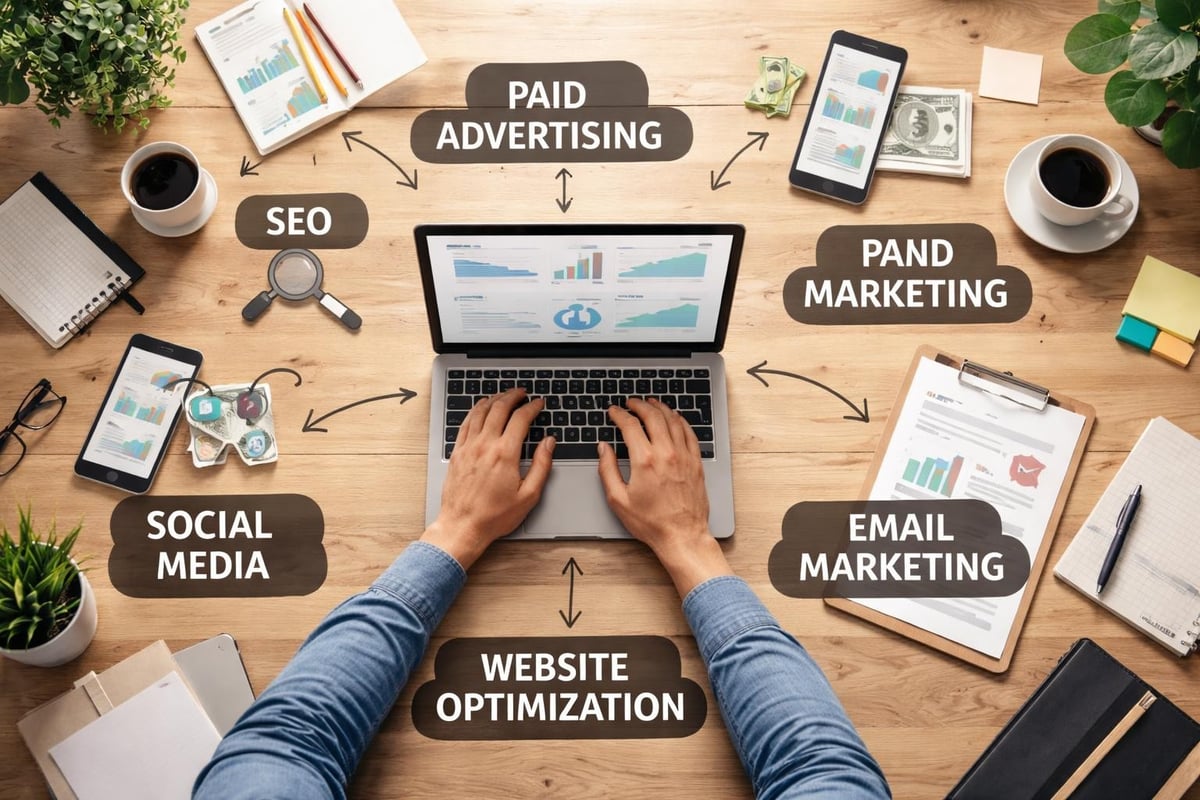
Elite agencies provide integrated solutions across multiple channels rather than siloing their expertise. This holistic approach ensures consistent messaging and maximizes the synergy between different marketing activities.
Core services typically include:
- Search engine optimization with technical and content strategies
- Paid advertising management across Google, Meta, and emerging platforms
- Social media strategy and community management
- Website design and conversion rate optimization
- Email marketing automation and nurture sequences
- Analytics implementation and data-driven reporting
The integration of these services allows digital agencies to create unified campaigns where each component reinforces the others. When your SEO content strategy aligns with your paid advertising messaging, and both connect to an optimized landing page experience, conversion rates typically increase by 30-50% compared to fragmented approaches.
Evaluating Agency Expertise and Credentials
Determining genuine expertise requires looking beyond polished websites and case studies. The best digital marketing agencies demonstrate their capabilities through measurable client results, industry recognition, and transparent communication about their methodologies.
Verification Methods
| Evaluation Criteria | What to Look For | Red Flags |
|---|---|---|
| Client Retention | 70%+ annual retention rate | Reluctance to share retention data |
| Case Studies | Specific metrics and timeframes | Vague results without numbers |
| Team Credentials | Certifications from Google, Meta, HubSpot | No team information available |
| Industry Experience | 5+ years in your specific sector | Generic approach for all industries |
When evaluating digital marketing agencies, request references from clients in similar industries or with comparable business models. Direct conversations with current clients reveal insights about communication quality, responsiveness, and the agency's ability to adapt strategies when market conditions change.
Leadership experience matters significantly. Agencies led by entrepreneurs who have built and scaled their own businesses bring practical insights that purely agency-focused leaders may lack. This entrepreneurial perspective often translates into more innovative problem-solving and a deeper understanding of ROI pressures.
Strategic Capabilities That Drive Results
The best digital marketing agencies excel at connecting marketing activities to bottom-line business outcomes. They speak the language of revenue, profit margins, and customer lifetime value rather than focusing solely on vanity metrics like impressions or followers.
Data-Driven Decision Making
Superior agencies build robust analytics frameworks that track customer journeys from initial awareness through purchase and retention. This comprehensive visibility enables continuous optimization based on actual performance data rather than assumptions.
Modern marketing requires sophisticated attribution modeling that accounts for multiple touchpoints across weeks or months. The agencies that deliver exceptional results invest in tools and expertise to understand which channels and campaigns truly drive conversions versus those that merely assist along the way.
Key performance indicators should include:
- Customer acquisition cost by channel
- Conversion rate at each funnel stage
- Revenue per marketing dollar invested
- Customer lifetime value trends
- Brand awareness and consideration metrics
When agencies can demonstrate how their strategies impact these fundamental business metrics, you can make informed decisions about budget allocation and strategic priorities. According to comprehensive rankings of top digital marketing agencies, firms that emphasize measurable business outcomes consistently outperform those focused on marketing metrics alone.
Specialized Expertise Versus Full-Service Capabilities
The debate between specialist agencies and full-service providers represents a critical decision point. The best digital marketing agencies often excel in specific areas while maintaining competency across the broader digital landscape.
Industry Specialization
Agencies focused on particular industries develop deep understanding of buyer behavior, regulatory constraints, and competitive dynamics specific to those sectors. A healthcare marketing agency understands HIPAA compliance and patient acquisition strategies in ways a generalist firm cannot match.
Benefits of specialized agencies include:
- Pre-existing knowledge of industry trends and challenges
- Established relationships with relevant media outlets and influencers
- Proven strategies that work within specific regulatory environments
- Faster onboarding with less need for education about your business
However, specialization should not come at the expense of innovation. The agencies producing breakthrough results often apply insights from adjacent industries to create competitive advantages their clients' competitors have not considered.

Pricing Models and Investment Considerations
Understanding how agencies structure their pricing helps you evaluate whether their business model aligns with your objectives. The best digital marketing agencies offer transparent pricing that reflects the value they deliver rather than simply billing for time spent.
Common Pricing Structures
Monthly retainer agreements provide predictable costs and ongoing strategic support. These arrangements work well for businesses seeking sustained growth rather than one-time projects. Retainer fees typically range from $3,000 to $25,000 monthly depending on scope and seniority of team members involved.
Performance-based pricing ties agency compensation directly to results achieved. While this model appears attractive, it requires careful contract structuring to ensure both parties have aligned incentives. Some agencies combine base retainers with performance bonuses for exceeding targets.
Project-based pricing suits specific initiatives like website redesigns or campaign launches. However, this model often fails to capture the iterative nature of digital marketing, where continuous testing and optimization drive superior results.
| Pricing Model | Best For | Typical Range |
|---|---|---|
| Monthly Retainer | Ongoing growth initiatives | $3,000-$25,000/month |
| Performance-Based | Agencies confident in their results | Variable with minimums |
| Project-Based | Discrete deliverables | $5,000-$100,000+ |
| Hybrid | Balancing predictability and performance | Combination of above |
When assessing proposals from various agencies, compare not just the fees but the expected return on investment. An agency charging $10,000 monthly that generates $100,000 in additional revenue provides far better value than a $3,000 monthly agency producing $15,000 in revenue.
Technology Stack and Tool Proficiency
The platforms and technologies agencies utilize significantly impact their ability to execute sophisticated strategies. The best digital marketing agencies invest in enterprise-grade tools and maintain certified expertise in their deployment.
Essential Technology Categories
Superior agencies leverage marketing automation platforms like HubSpot or Marketo to nurture leads systematically. These systems enable personalized communication at scale, delivering the right message to the right prospect at the optimal time based on their behavior and engagement patterns.
Analytics and reporting tools provide the visibility needed for data-driven optimization. Beyond basic Google Analytics, leading agencies implement heat mapping software, user session recording, and advanced attribution platforms that illuminate the complete customer journey.
Advertising platforms require constant attention to stay current with new features and algorithm changes. Agencies with Google Premier Partner status or Meta Business Partner credentials demonstrate commitment to platform expertise and receive early access to new capabilities.
For businesses seeking comprehensive support, exploring options through online advertising agencies can reveal firms with advanced platform certifications and proven track records across multiple advertising ecosystems.
Cultural Fit and Communication Standards
Technical capabilities matter, but the working relationship determines whether partnerships thrive or deteriorate. The best digital marketing agencies establish clear communication protocols and demonstrate cultural alignment with their clients' values and working styles.
Communication Expectations
Response times should be explicitly defined in service agreements. While agencies cannot provide instant responses to every inquiry, they should commit to acknowledging questions within specific timeframes and providing substantive answers on defined schedules.
Regular reporting cadences keep stakeholders informed without creating excessive meeting overhead. Monthly strategy reviews supplemented by automated weekly performance dashboards strike an effective balance for most client relationships.
The communication style should match your preferences. Some businesses want detailed explanations of every tactical decision, while others prefer high-level strategic guidance with agencies handling implementation details autonomously. Clarifying these expectations during the selection process prevents frustration later.
Questions to assess cultural fit:
- How do they handle disagreements about strategy?
- What is their policy on client access to team members?
- How frequently do they proactively suggest new initiatives?
- What level of transparency do they provide about challenges?
- How do they balance innovation with proven approaches?
Agencies that demonstrate intellectual humility, acknowledging what they do not know while showing eagerness to research and learn, often make better long-term partners than those projecting omniscience about every marketing channel and tactic.
Scaling Considerations and Growth Support
As your business expands, your marketing needs evolve. The best digital marketing agencies anticipate this growth trajectory and structure their services to scale alongside your organization rather than requiring you to outgrow their capabilities.
Growth-Ready Infrastructure
Elite agencies maintain relationships with specialized vendors and freelancers who can augment their core team when client needs expand beyond standard service offerings. This extended network allows them to tackle projects requiring niche expertise without forcing clients to manage multiple agency relationships.
Geographic expansion presents unique challenges that experienced agencies navigate successfully. Whether you are launching in new markets domestically or expanding internationally, agencies with multi-market experience understand localization requirements, regional platform preferences, and cultural nuances affecting campaign performance.
Budget scalability ensures your agency partner can effectively deploy increased investment as your business grows. An agency accustomed to managing $5,000 monthly budgets may struggle when your success enables $50,000 monthly advertising spend.

Examining Top Agency Characteristics in 2026
The competitive landscape of the best digital marketing agencies continues evolving as artificial intelligence, privacy regulations, and platform changes reshape effective strategies. Rankings of top digital marketing agencies consistently identify several characteristics that distinguish leaders from followers.
Innovation and Adaptation
Forward-thinking agencies experiment with emerging channels and tactics before they become mainstream. Early adoption of new platforms, advertising formats, or targeting capabilities often produces exceptional results before competition intensifies and costs increase.
However, innovation should be balanced with proven fundamentals. Agencies chasing every new trend without maintaining excellence in established channels often underperform those that selectively adopt innovations while executing core strategies flawlessly.
Artificial intelligence integration represents the most significant shift in digital marketing capabilities. Leading agencies leverage AI for audience insights, creative testing, bid optimization, and content personalization while maintaining the strategic thinking and creative direction that machines cannot replicate.
Privacy-first marketing strategies have become essential as cookie deprecation and regulatory requirements limit traditional tracking approaches. The agencies thriving in this environment develop first-party data strategies, implement server-side tracking, and build marketing programs that deliver results without invasive data collection.
Service Integration and Strategic Coordination
Fragmented marketing efforts waste resources and confuse prospects. The best digital marketing agencies orchestrate all activities around unified messaging and coordinated customer experiences that guide prospects smoothly from awareness to purchase.
Cross-Channel Synergy
When search advertising, organic content, social media, and email marketing reinforce consistent themes and value propositions, each channel's effectiveness multiplies. Prospects encountering your brand message across multiple touchpoints develop stronger recall and greater trust than those experiencing disconnected communications.
Content repurposing exemplifies effective integration. A comprehensive research report becomes blog posts, social media content, email sequences, advertising creative, and sales enablement materials. This approach maximizes return on content investment while maintaining message consistency.
Retargeting strategies connect paid and organic efforts by re-engaging visitors who discovered your brand through content marketing or social media. These coordinated journeys typically convert at 3-5 times the rate of isolated channel tactics.
For businesses particularly focused on content strategies, exploring partnerships with content marketing companies that understand integration requirements can accelerate results compared to agencies treating content as an isolated function.
Vetting Process and Selection Timeline
Choosing among the best digital marketing agencies requires structured evaluation rather than impulsive decisions based on impressive presentations. A thorough vetting process typically spans 4-6 weeks and involves multiple stakeholder perspectives.
Comprehensive Evaluation Steps
Initial research narrows the field to 8-10 candidates based on industry experience, service offerings, and preliminary budget alignment. Review their websites, case studies, and thought leadership content to assess expertise depth.
Discovery calls with 4-5 finalists should explore their strategic approach, team structure, and cultural fit. These conversations reveal whether agencies genuinely understand your challenges or offer generic solutions applicable to any business.
Request detailed proposals from 2-3 top candidates. Quality proposals demonstrate research into your business, competitive analysis, and specific strategic recommendations rather than boilerplate content with your company name inserted.
Reference checks provide unfiltered insights into agency performance. Ask references about responsiveness, strategic contributions beyond tactical execution, how the agency handles setbacks, and whether they would hire them again.
- Conduct internal needs assessment and define success metrics
- Research and identify 8-10 potential agency partners
- Schedule discovery calls with 4-5 finalists
- Request detailed proposals from 2-3 top candidates
- Check references and verify credentials
- Negotiate contract terms and finalize partnership
The selection timeline should balance thoroughness with decisiveness. Excessive deliberation creates opportunity costs as your competitors advance their marketing capabilities.
Contract Considerations and Partnership Terms
The contractual foundation of your agency relationship protects both parties and establishes clear expectations. The best digital marketing agencies present fair, transparent agreements that balance their need for commitment with your requirement for flexibility.
Essential Contract Elements
Performance guarantees should be realistic and mutually agreed upon. While agencies can commit to activity completion and best practices implementation, external factors like market conditions and competitive actions affect results beyond their control.
Termination clauses typically require 30-60 day notice periods, allowing orderly transitions without trapping clients in underperforming relationships indefinitely. Some agencies impose early termination fees for contracts ended before minimum commitment periods.
| Contract Component | Client-Favorable Terms | Agency-Favorable Terms |
|---|---|---|
| Contract Length | Month-to-month or quarterly | Annual with auto-renewal |
| Termination Notice | 30 days | 90 days |
| Performance Terms | Specific outcome guarantees | Activity and best practice commitments |
| IP Ownership | Client owns all created assets | Agency retains certain IP rights |
| Exclusivity | Non-exclusive relationship | Category exclusivity requirements |
Intellectual property ownership determines who controls creative assets, content, and strategic frameworks developed during the engagement. Client ownership of all deliverables provides maximum flexibility but may come at higher costs.
Scope creep provisions protect both parties from expectations expanding beyond original agreements without corresponding compensation adjustments. Clear change order processes maintain healthy relationships when project requirements evolve.
Measuring Agency Performance and ROI
Establishing robust measurement frameworks ensures you can objectively assess whether your agency partnership delivers expected value. The best digital marketing agencies welcome rigorous performance evaluation because they consistently produce measurable results.
Defining Success Metrics
Leading indicators provide early signals about campaign trajectory before final results materialize. These might include landing page conversion rate improvements, cost-per-click reductions, or engagement rate increases that eventually translate to revenue impact.
Lagging indicators measure ultimate business outcomes like revenue generated, customers acquired, or profit margins improved. While these metrics take longer to materialize, they represent the true measure of marketing effectiveness.
Balanced scorecards incorporate both leading and lagging indicators across multiple dimensions of marketing performance. This comprehensive view prevents over-optimization of narrow metrics at the expense of broader business objectives.
Monthly review agendas should address:
- Progress toward quarterly and annual objectives
- Performance trends across all active channels
- Competitive intelligence and market developments
- Strategic recommendations for the coming period
- Budget allocation optimization opportunities
Agencies that proactively identify underperforming initiatives and recommend reallocation to higher-performing opportunities demonstrate true partnership orientation rather than simply defending their existing approach.
The Evolving Role of Digital Marketing Leadership
As digital marketing complexity increases, the best digital marketing agencies function as strategic advisors rather than mere execution vendors. This elevated role requires them to challenge conventional thinking and provide perspectives that internal teams may not consider.
Strategic Advisory Capabilities
Agencies with broad client exposure across industries identify emerging trends and best practices faster than companies focused solely on their own market. This cross-pollination of ideas often produces breakthrough strategies that competitors have not yet adopted.
Change management support helps organizations implement the operational and cultural shifts required to capitalize on marketing opportunities. Agencies acting as change agents accelerate transformation by providing external validation for necessary adaptations.
Executive education ensures leadership teams understand digital marketing fundamentals sufficiently to make informed strategic decisions. While agencies handle tactical execution, business leaders must provide direction grounded in realistic understanding of capabilities and constraints.
Understanding whether your customers can find you online represents a fundamental starting point for digital marketing strategy, and superior agencies conduct thorough audits to identify visibility gaps before proposing solutions.
Regional Expertise and Local Market Knowledge
While digital marketing transcends geographic boundaries, local market nuances significantly impact campaign effectiveness. The best digital marketing agencies either maintain deep expertise in specific regions or partner with local specialists to ensure strategies account for regional differences.
Geographic Considerations
Consumer behavior, competitive intensity, and platform preferences vary considerably across markets. Campaigns optimized for urban coastal markets often require substantial modification for Midwest or Southern regions where demographic profiles and purchasing patterns differ.
Local search optimization demands understanding of specific geographic areas, including neighborhood characteristics, local competitors, and regional search behavior patterns. Agencies with established presence in target markets deliver superior local SEO results compared to those attempting to optimize remotely.
Media costs and competitive intensity vary dramatically by market. The same advertising strategy might cost $50 per lead in one region while requiring $200 per lead in highly competitive markets with different demographic profiles.
Businesses operating in specific communities benefit from agencies understanding those unique markets, whether through specialized local services or partnerships with regional experts who bring hyper-local knowledge to national campaigns.
Selecting from among the best digital marketing agencies requires balancing expertise, cultural fit, pricing, and strategic capabilities to find the partner aligned with your specific growth objectives. The right agency relationship transforms marketing from a cost center into a predictable growth engine that scales alongside your business. If you are ready to accelerate your business growth with proven strategies and expert guidance, Mountain Mover Coaching and Digital Marketing offers the comprehensive support and measurable results that drive real business transformation.