
Pay-per-click advertising represents one of the most powerful tools in digital marketing, offering businesses immediate visibility and measurable results. Advertising PPC campaigns enable companies to reach potential customers at the exact moment they're searching for products or services, creating opportunities for conversion that traditional marketing methods struggle to match. For business owners seeking rapid growth and profit acceleration, understanding how to leverage PPC effectively can transform marketing budgets into significant revenue streams. The precision targeting, real-time analytics, and scalability of advertising PPC make it an essential component of any comprehensive digital strategy.
Understanding the Fundamentals of Advertising PPC
Advertising PPC operates on a straightforward principle: advertisers pay only when users click their ads. This model creates efficiency that traditional advertising cannot replicate, ensuring marketing dollars directly correlate with user engagement. Platforms like Google Ads, Microsoft Advertising, and social media networks provide sophisticated systems that match ads to relevant searches and user interests.
The auction-based system determines which ads appear and in what position. Advertisers bid on keywords relevant to their business, but the highest bid doesn't always win. Ad quality, relevance, and expected click-through rate influence ad placement, rewarding well-crafted campaigns with better positions at lower costs.
Key components of successful advertising PPC campaigns include:
- Keyword research and selection aligned with business objectives
- Compelling ad copy that addresses user search intent
- Strategic bid management to maximize return on investment
- Landing page optimization for conversion rate improvement
- Continuous testing and refinement based on performance data

Building a Solid Campaign Foundation
Before launching advertising PPC campaigns, establishing clear objectives provides direction for all subsequent decisions. Whether driving website traffic, generating leads, increasing sales, or building brand awareness, each goal requires different strategies and success metrics. Mountain Mover Coaching and Digital Marketing emphasizes the importance of aligning PPC objectives with broader business goals to ensure marketing efforts contribute directly to bottom-line growth.
Campaign structure significantly impacts performance and management efficiency. Organizing campaigns by product line, service category, or geographic location creates logical divisions that simplify optimization. Within each campaign, ad groups should contain tightly themed keyword sets matched with relevant ad copy and landing pages.
| Campaign Element | Purpose | Best Practice |
|---|---|---|
| Campaign Level | Budget allocation and settings | Organize by business objective or product category |
| Ad Group Level | Keyword and ad relevance | 15-20 related keywords per ad group |
| Keyword Level | Search matching | Mix of exact, phrase, and broad match types |
| Ad Level | User engagement | Minimum 3 ad variations per ad group |
Mastering Keyword Strategy for Advertising PPC
Keyword selection forms the foundation of effective advertising PPC campaigns. The right keywords connect businesses with customers actively searching for their solutions, while poor keyword choices drain budgets without delivering results. Successful keyword strategies balance search volume, competition levels, and commercial intent.
Intent-Based Keyword Categories
Understanding search intent transforms keyword research from guesswork into strategic planning. Informational keywords attract users seeking knowledge, navigational keywords target specific brands or websites, and transactional keywords capture users ready to purchase or convert.
Transactional keywords typically include modifiers like:
- "Buy"
- "Price"
- "Quote"
- "Service near me"
- "Best deal"
Negative keywords prevent ads from appearing for irrelevant searches, protecting budget and improving campaign efficiency. Regularly reviewing search term reports reveals which queries trigger ads, enabling advertisers to add negative keywords that eliminate wasted spend. Following PPC best practices for optimization ensures campaigns remain focused on the most valuable traffic.
Long-tail keywords, despite lower individual search volumes, often deliver superior conversion rates and lower costs per click. These specific phrases indicate users further along the buying journey with clearer intent. A business offering website design services might target "custom website design for professional services firms" rather than just "website design."
Crafting High-Converting Ad Copy
Advertising PPC success depends heavily on ad copy that captures attention and compels clicks. Within the limited character counts imposed by platforms, every word must earn its place. Effective ads address user needs, highlight unique value propositions, and include clear calls to action.
Headlines carry the greatest weight in attracting clicks. Incorporating the search keyword in headlines improves relevance scores and catches user attention by directly addressing their query. Testing multiple headline variations identifies which messages resonate most strongly with target audiences.
Description lines provide space to elaborate on benefits, features, or offers. Rather than focusing solely on what a business does, successful advertising PPC copy emphasizes what customers gain. Specific numbers, timeframes, and benefits create credibility and urgency that vague statements cannot match.
Ad Extensions Enhance Visibility
Ad extensions expand advertising PPC real estate without additional costs per click, improving visibility and providing users with more reasons to choose your business. Sitelink extensions direct users to specific pages, callout extensions highlight key benefits, and structured snippets showcase service categories or product types.
Location extensions prove particularly valuable for local businesses, displaying addresses and enabling map interactions. Call extensions allow mobile users to contact businesses directly from search results, reducing friction in the conversion process.
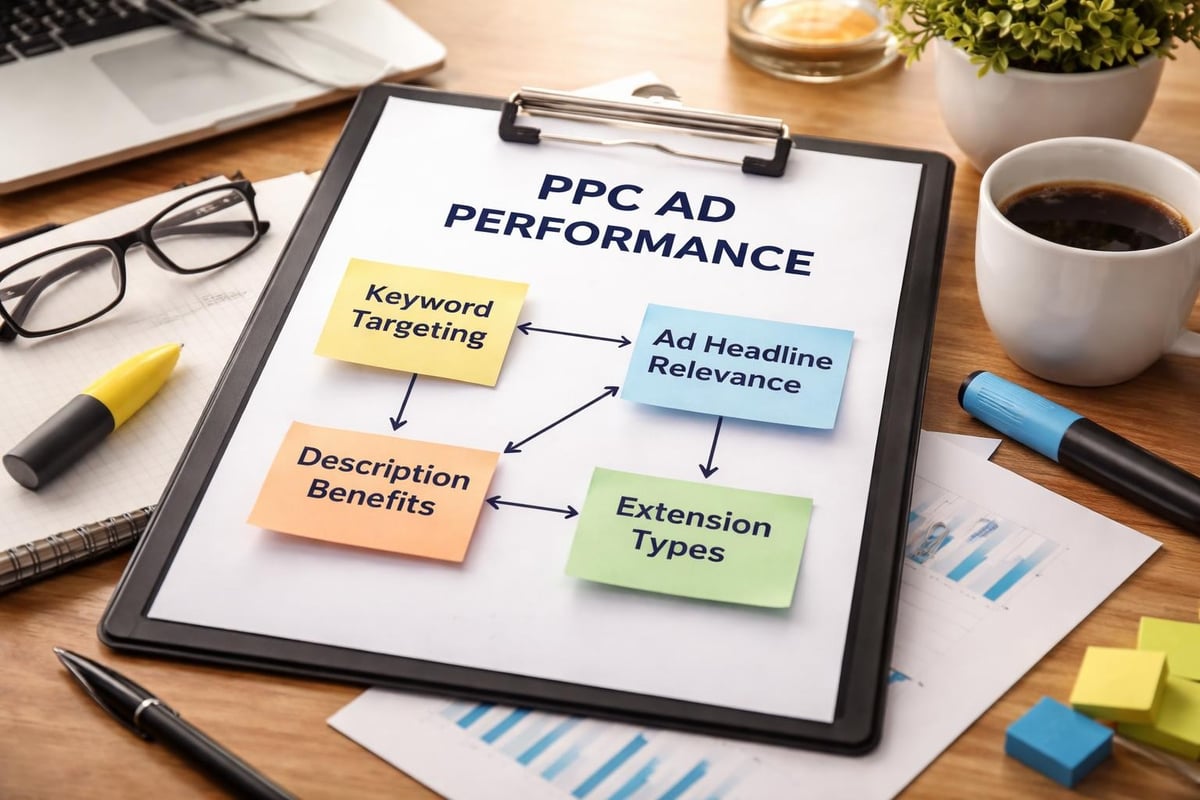
According to expert copywriting best practices, testing different combinations of extensions reveals which configurations drive the highest engagement rates. Mountain Mover Coaching and Digital Marketing implements comprehensive extension strategies that provide customers with multiple pathways to connect with businesses.
Budget Management and Bid Optimization
Effective budget allocation separates successful advertising PPC campaigns from those that consume resources without delivering returns. Starting with conservative budgets allows for testing and optimization before scaling investment. As campaigns demonstrate profitability, increased budgets amplify results while maintaining acceptable cost-per-acquisition ratios.
Bid strategies determine how much advertisers pay for clicks and which auctions they enter. Manual bidding provides maximum control, enabling precise adjustments based on performance data. Automated bidding strategies leverage machine learning to optimize bids toward specific goals like maximizing conversions or achieving target return on ad spend.
Popular automated bidding strategies include:
- Target CPA (Cost Per Acquisition) – Sets bids to achieve specified cost per conversion
- Target ROAS (Return On Ad Spend) – Optimizes bids based on conversion value
- Maximize Conversions – Spends budget to generate the highest number of conversions
- Maximize Clicks – Drives maximum traffic within budget constraints
| Bid Strategy | Best For | Control Level | Learning Period |
|---|---|---|---|
| Manual CPC | Experienced advertisers | High | None |
| Enhanced CPC | Moderate optimization | Medium | 1-2 weeks |
| Target CPA | Lead generation | Low | 2-4 weeks |
| Target ROAS | E-commerce | Low | 4-6 weeks |
The platform requires sufficient conversion data to optimize automated bidding effectively. Campaigns with fewer than 30 conversions per month may perform better with manual bidding until data volume increases.
Conversion Tracking and Performance Measurement
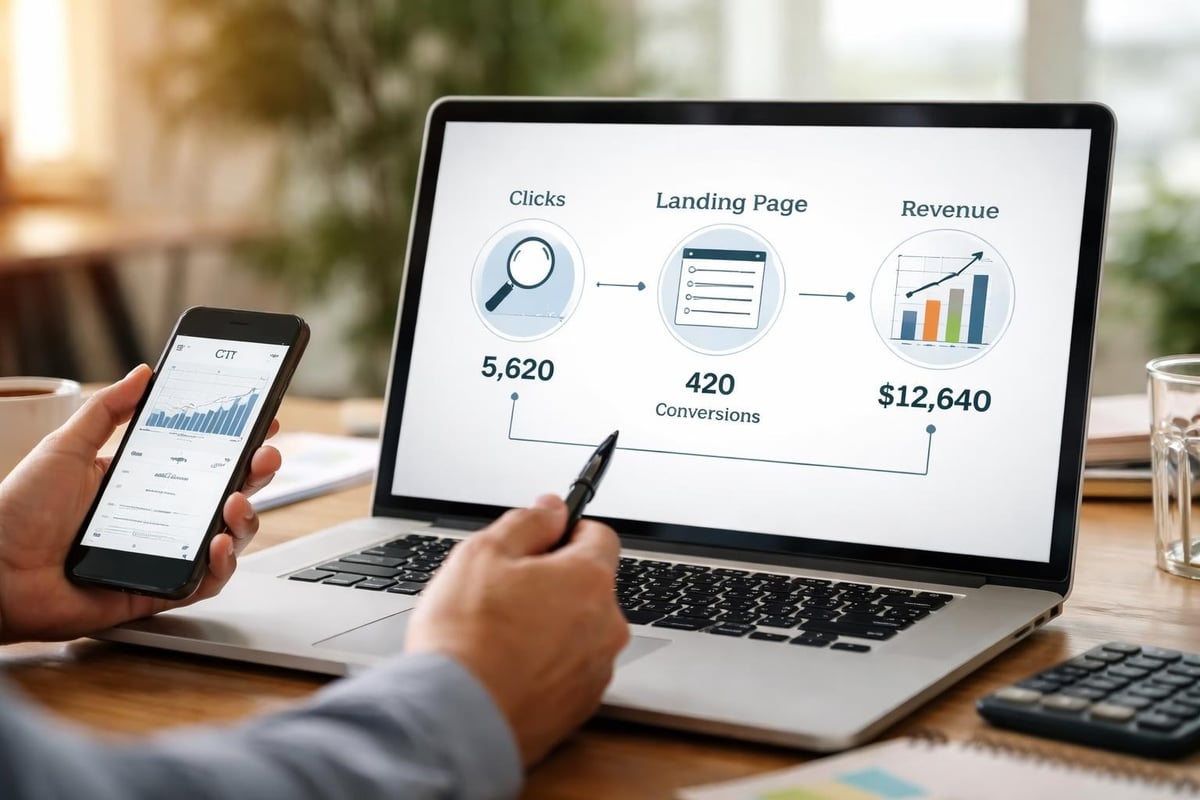
Advertising PPC generates extensive data, but without proper tracking, that information provides limited value. Conversion tracking connects ad clicks to desired actions, revealing which keywords, ads, and campaigns generate actual business results rather than just traffic.
Setting up conversion tracking requires installing tracking codes on websites or apps that fire when users complete valuable actions. These actions might include form submissions, phone calls, purchases, or content downloads depending on business objectives.
Key Metrics for Campaign Evaluation
Click-through rate (CTR) indicates ad relevance and appeal but doesn't tell the complete story. High CTR with low conversion rates suggests ads attract clicks from users who aren't finding what they expect on landing pages. Conversion rate reveals the percentage of clicks that complete desired actions, directly measuring campaign effectiveness.
Cost per conversion determines whether advertising PPC campaigns operate profitably. Comparing this metric against customer lifetime value or average transaction value reveals whether campaigns generate positive returns. Quality Score, a platform-specific metric combining expected CTR, ad relevance, and landing page experience, influences ad costs and positions.
Return on ad spend (ROAS) provides the clearest picture of campaign profitability, expressing revenue generated for every dollar invested in advertising. A ROAS of 400% means each dollar spent produces four dollars in revenue, yielding a 300% profit margin before considering other business costs.
Advanced Targeting Strategies
Beyond keyword targeting, advertising PPC platforms offer sophisticated audience targeting options that expand reach and improve efficiency. Remarketing campaigns reconnect with users who previously visited websites, targeting people already familiar with brands and offerings. These campaigns typically achieve higher conversion rates and lower costs per acquisition than cold traffic campaigns.
Customer match targeting uploads customer email lists to platforms, enabling campaigns that target existing customers with retention offers or cross-sell opportunities. Similar audience targeting identifies new prospects who share characteristics with current customers, expanding reach to high-potential prospects.
Demographic targeting refines audiences based on age, gender, household income, or parental status. While not appropriate for every business, demographic filters can dramatically improve efficiency when products or services appeal to specific population segments. Geographic targeting focuses budgets on locations where businesses operate or ship products, preventing wasted spend on clicks from areas they cannot serve.
Time-of-Day and Device Optimization
Analyzing performance data by hour and day reveals patterns in when target audiences search and convert. Bid adjustments can increase visibility during high-performing periods while reducing spend during times that generate clicks but few conversions. Device-level performance often varies significantly, with some businesses finding desktop users convert more frequently while others see mobile dominance.
However, it's crucial to recognize that standard PPC best practices don’t apply universally. Each business operates in unique circumstances requiring customized approaches rather than cookie-cutter strategies.
Landing Page Optimization for PPC Success
The best advertising PPC campaigns fail without effective landing pages that convert visitors into customers. Landing page relevance directly impacts Quality Scores, affecting both ad costs and positions. Pages must deliver on the promises made in ads, providing seamless user experiences that guide visitors toward conversion actions.
Essential landing page elements include:
- Headlines that match ad messaging and user intent
- Clear value propositions explaining benefits
- Compelling calls to action that stand out visually
- Trust signals like testimonials, certifications, or guarantees
- Mobile-responsive designs that work across devices
- Fast loading speeds that prevent user abandonment
A/B testing different landing page variations identifies which combinations of headlines, images, copy, and layouts produce the highest conversion rates. Even small improvements in conversion rate dramatically impact campaign profitability, as the same advertising spend generates more results.
Scaling Successful Campaigns
Once advertising PPC campaigns demonstrate consistent profitability, scaling becomes the logical next step. Gradual budget increases allow platforms to adjust while maintaining performance levels. Doubling budgets overnight often leads to temporary performance degradation as algorithms recalibrate.
Expanding into additional keyword themes reaches new audience segments while diversifying campaign risk. If relying solely on branded keywords, adding competitor terms or generic industry keywords broadens reach. Geographic expansion introduces campaigns to new markets where competition may differ from established territories.
Testing new ad platforms diversifies traffic sources and reduces dependence on single channels. While Google Ads dominates search advertising, Microsoft Advertising often delivers lower costs per click with strong conversion rates. Social media platforms like Facebook, Instagram, and LinkedIn provide targeting capabilities that complement search campaigns.
| Scaling Method | Risk Level | Time Investment | Potential Impact |
|---|---|---|---|
| Budget increase | Low | Minimal | Moderate |
| Keyword expansion | Medium | Moderate | High |
| New platforms | Medium | Significant | High |
| Geographic expansion | High | Significant | Very High |
Mountain Mover Coaching and Digital Marketing develops scaling strategies that balance growth ambitions with sustainable performance, ensuring businesses expand their advertising PPC presence without sacrificing profitability.
Common Pitfalls to Avoid
Many businesses waste advertising PPC budgets through avoidable mistakes. Neglecting negative keywords allows ads to appear for irrelevant searches, draining budgets while delivering poor-quality traffic. Sending all traffic to homepages rather than relevant landing pages creates friction that reduces conversion rates and increases customer acquisition costs.
Ignoring mobile users in 2026 represents a critical oversight, as mobile devices generate the majority of searches across most industries. Ads and landing pages must provide excellent mobile experiences or businesses forfeit substantial portions of potential customers. Failing to monitor campaigns regularly allows performance to deteriorate as competition changes, seasonal trends shift, or ad fatigue sets in.
Setting unrealistic expectations leads to premature campaign abandonment. Advertising PPC rarely produces immediate results at scale. Platforms require time to gather performance data and optimize delivery. Most campaigns need 30-90 days of testing and refinement before reaching full potential, though they often generate valuable traffic and conversions during this learning period.
Integration with Broader Marketing Strategy
Advertising PPC delivers maximum value when integrated with other marketing channels rather than operating in isolation. SEO and PPC create synergy, with PPC providing immediate visibility while organic rankings develop. Keyword data from PPC campaigns informs content creation priorities, revealing topics and terms that generate engagement and conversions.
Email marketing and PPC complement each other through remarketing strategies that reconnect with email subscribers who haven't recently engaged. Social media content can promote special offers featured in PPC campaigns, creating consistent messaging across channels that reinforces brand awareness and value propositions.
The comprehensive approach to digital marketing offered by experienced partners ensures all channels work together toward common business objectives. Rather than fragmented efforts that compete for attention and resources, integrated strategies amplify results across every marketing investment.
Mastering advertising PPC requires combining strategic planning, continuous optimization, and performance measurement to drive sustainable business growth. The platforms and tactics evolve constantly, demanding ongoing education and adaptation from businesses serious about maximizing their digital advertising returns. Whether you're launching your first campaigns or seeking to improve existing performance, partnering with experts who understand both the technical aspects and business strategy ensures your advertising investment generates meaningful results. Mountain Mover Coaching and Digital Marketing brings the expertise and proven methodologies needed to transform your PPC campaigns into powerful profit engines that scale your business.