
Marketing to businesses requires a fundamentally different approach than consumer marketing. The decision-making process involves multiple stakeholders, longer sales cycles, and a stronger emphasis on demonstrable ROI. As we navigate 2026, marketing b2b has evolved into a sophisticated discipline that blends traditional relationship-building with cutting-edge digital strategies. Understanding these dynamics is essential for any organization looking to grow its commercial client base and establish meaningful partnerships that drive revenue.
Understanding the Modern B2B Buyer Journey
The traditional sales funnel has transformed into a complex web of touchpoints. Today's business buyers conduct extensive research before ever contacting a vendor. According to recent industry analysis, five key trends are reshaping B2B marketing, with digital-first buying behaviors leading the charge.
Decision-makers now expect:
- Instant access to detailed product information
- Peer reviews and case studies
- Self-service resources and tools
- Personalized content that addresses specific pain points
- Data-backed proof of ROI
This shift means that marketing b2b professionals must create comprehensive content ecosystems that support buyers at every stage. The awareness phase demands thought leadership and educational content. Consideration requires detailed comparisons and demonstrations. The decision stage calls for pricing transparency and customer testimonials.
Mapping Content to Buyer Stages
| Buyer Stage | Content Types | Primary Goals |
|---|---|---|
| Awareness | Blog posts, whitepapers, industry reports | Build authority, attract traffic |
| Consideration | Case studies, webinars, product guides | Demonstrate expertise, nurture leads |
| Decision | Demos, consultations, ROI calculators | Convert prospects, close deals |
Organizations that align their marketing b2b content strategy with this journey see significantly higher conversion rates. The key lies in understanding where prospects are in their research process and delivering exactly what they need at that moment.

Essential Digital Marketing Tactics for B2B Success
Effective marketing b2b strategies leverage multiple channels working in concert. Each tactic serves a specific purpose in the broader ecosystem, and the most successful campaigns integrate these elements seamlessly.
Email Marketing That Converts
Email remains the highest-ROI channel for business marketing. However, generic blasts no longer suffice. Segmentation based on industry, company size, role, and behavioral data allows for precise targeting.
Successful email campaigns incorporate:
- Personalized subject lines that reference specific challenges
- Value-driven content rather than pure promotional messaging
- Clear calls-to-action aligned with the buyer stage
- Mobile optimization for executives reading on devices
- A/B testing to continuously improve performance
The U.S. Chamber of Commerce highlights effective B2B marketing tactics that emphasize email's continued dominance when executed strategically.
Content Marketing as Authority Building
Publishing valuable content establishes credibility in crowded markets. For companies like Mountain Mover Coaching and Digital Marketing, demonstrating expertise through educational resources attracts qualified prospects who already understand the value proposition.
High-performing content formats include:
- In-depth industry analysis and trend reports
- How-to guides solving specific business problems
- Video tutorials and product demonstrations
- Podcast interviews with industry leaders
- Interactive tools and calculators
Content marketing for businesses requires patience. Unlike consumer campaigns that might generate immediate sales, marketing b2b content builds trust over weeks or months. However, the long-term payoff includes higher-quality leads and stronger customer relationships.
Search Engine Optimization for Business Audiences
SEO strategies for business marketing differ significantly from consumer approaches. Commercial buyers use specific terminology and search with clear intent. Understanding this search behavior informs both keyword strategy and content development.
Technical and Local SEO Considerations
For businesses serving specific geographic markets, local optimization becomes critical. Columbus SEO company and Cleveland SEO company search patterns demonstrate how location-based queries drive qualified traffic.
Technical SEO elements for marketing b2b include:
- Site speed optimization because executives won't wait for slow pages
- Mobile responsiveness for research conducted during commutes
- Secure HTTPS to build trust with corporate browsers
- Structured data markup to enhance search visibility
- XML sitemaps ensuring all content gets indexed properly
These foundations support all other marketing efforts by making your digital presence discoverable when prospects search for solutions.

Social Media Strategy for Professional Audiences
While Facebook and Instagram dominate consumer marketing, marketing b2b thrives on platforms where professionals congregate. LinkedIn leads as the primary network, but Twitter (X), YouTube, and industry-specific forums also deliver results.
LinkedIn Marketing Best Practices
Company Page Optimization:
- Regular posting schedule with valuable insights
- Employee advocacy programs amplifying reach
- Showcase pages for different service lines
- Rich media including videos and SlideShares
Paid LinkedIn Advertising:
LinkedIn's targeting capabilities allow precision unavailable elsewhere. Filter by job title, company size, industry, and even specific companies. Sponsored content, InMail, and text ads each serve different campaign objectives.
The platform's professional context means decision-makers engage with content during work hours, often with immediate purchasing authority. This makes LinkedIn advertising particularly efficient for marketing b2b services with significant contract values.
Data-Driven Decision Making and Analytics
Successful marketing b2b campaigns rely heavily on measurement and optimization. Unlike consumer marketing where vanity metrics might suffice, business marketing demands proof of pipeline contribution and revenue impact.
Key Performance Indicators That Matter
| Metric Category | Specific KPIs | Why They Matter |
|---|---|---|
| Lead Generation | MQLs, SQLs, conversion rates | Pipeline health |
| Engagement | Time on site, pages per session, return visits | Content effectiveness |
| Revenue Attribution | Customer acquisition cost, lifetime value, influenced revenue | ROI justification |
| Channel Performance | Traffic sources, assisted conversions, multi-touch attribution | Budget allocation |
Advanced analytics platforms now track the entire customer journey across multiple touchpoints. Marketing automation systems attribute revenue to specific campaigns, emails, or content pieces. This transparency allows continuous refinement of marketing b2b strategies based on actual performance data rather than assumptions.
Artificial Intelligence and Marketing Automation
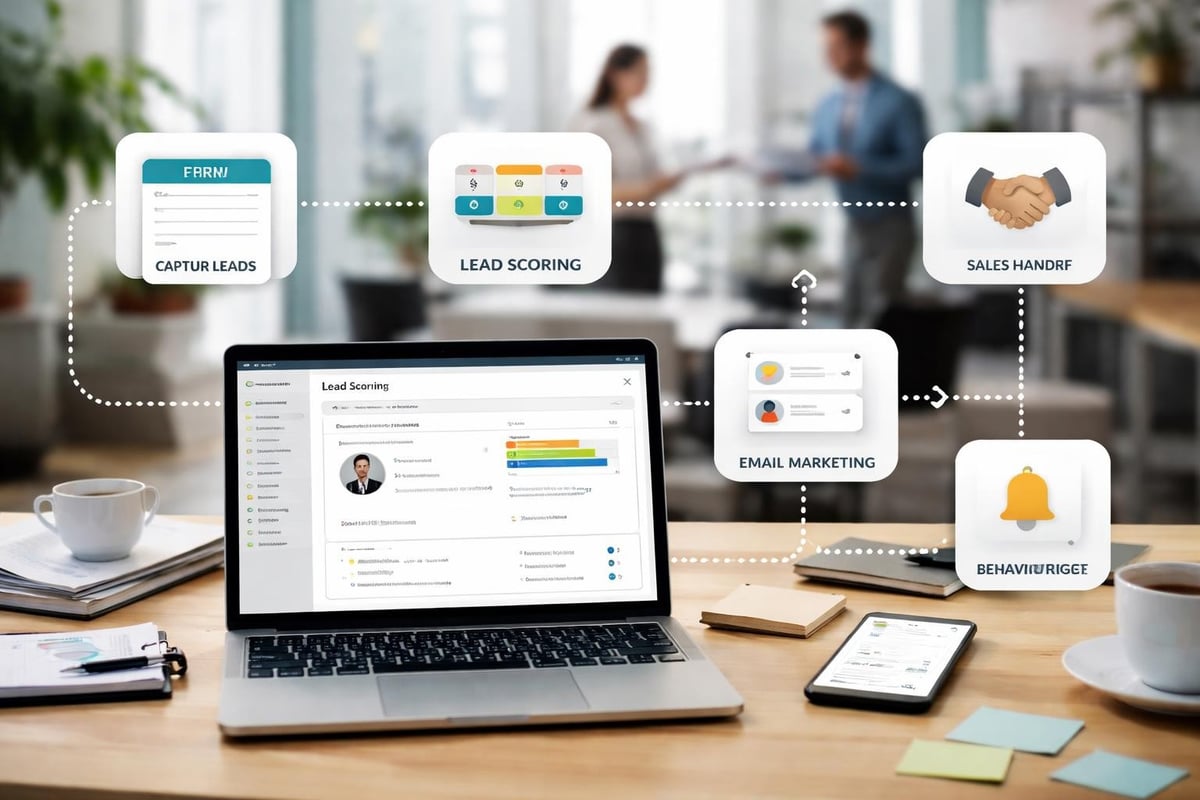
AI adoption in marketing b2b has accelerated dramatically in 2026. From predictive lead scoring to content personalization, artificial intelligence enhances virtually every aspect of business marketing. Research shows that AI adoption is finally driving ROI for B2B teams across markets.
Practical AI Applications
Lead Qualification:
Machine learning algorithms analyze behavioral signals to identify prospects most likely to convert. This allows sales teams to prioritize outreach and marketing teams to segment audiences more effectively.
Content Personalization:
AI-powered systems dynamically adjust website content, email messaging, and ad creative based on visitor characteristics and behavior. A manufacturing prospect sees different case studies than a healthcare decision-maker.
Chatbots and Conversational Marketing:
Sophisticated chatbots handle initial inquiries, qualify leads, and schedule meetings without human intervention. They operate 24/7, capturing opportunities that might otherwise be lost.
However, responsible innovation in AI adoption requires attention to data integrity and trust. Businesses must balance automation efficiency with the personal relationships that define successful B2B partnerships.
Account-Based Marketing Strategies
For companies targeting specific high-value accounts, account-based marketing (ABM) delivers superior results compared to broad lead generation. This approach treats individual companies as markets of one, creating personalized campaigns for decision-making committees.
Implementing ABM Programs
- Identify target accounts based on ideal customer profiles
- Research decision-makers and organizational structure
- Develop personalized content addressing specific challenges
- Coordinate multi-channel outreach across marketing and sales
- Measure account engagement rather than individual lead metrics
ABM requires tight alignment between marketing and sales teams. When executed properly, it shortens sales cycles and increases deal sizes by focusing resources on accounts with the highest potential value.
Marketing b2b through ABM means creating customized landing pages, industry-specific case studies, and even personalized video messages for key stakeholders. This level of personalization demonstrates commitment and understanding that generic campaigns cannot match.
Video Marketing for Complex Products
Video content has become essential for explaining complex business solutions. Product demonstrations, customer testimonials, and explainer videos help prospects understand value propositions quickly.
Effective video types for marketing b2b:
- Executive interviews establishing thought leadership
- Product walkthroughs showing actual functionality
- Customer success stories with measurable results
- Educational series addressing common challenges
- Behind-the-scenes content humanizing your brand
Short-form video works for social media awareness, while longer formats support consideration-stage research. The key is matching video length and depth to where prospects are in their journey.
Strategic Partnerships and Co-Marketing
Collaboration with complementary businesses expands reach and adds credibility. Co-marketing initiatives allow companies to access each other's audiences while sharing production costs.
Partnership opportunities include:
- Joint webinars combining expertise from both organizations
- Co-authored research reports providing broader industry insights
- Bundled service offerings creating comprehensive solutions
- Guest blogging on each other's platforms
- Shared booth space at industry conferences
These relationships work best when partners serve the same audience without competing directly. A web design firm and a copywriting agency, for example, complement each other perfectly in marketing b2b contexts.
Website Optimization for Lead Generation
Your website serves as the hub for all marketing b2b activities. Every campaign, email, and social post ultimately drives traffic to your site, making conversion optimization critical.
Essential Website Elements
Clear Value Proposition:
Visitors should understand what you do and why it matters within seconds of landing on your homepage. Ambiguity kills conversions in business marketing.
Compelling Calls-to-Action:
Every page should guide visitors toward a specific next step, whether downloading a resource, requesting a demo, or contacting sales. Organizations offering digital marketing and coaching services must make engagement options immediately obvious.
Trust Signals:
Client logos, certifications, awards, and testimonials build credibility. Security badges and privacy policies address corporate compliance concerns.
Resource Libraries:
Gated content like whitepapers and guides capture contact information while providing value. Ungated content like blog posts support SEO and demonstrate expertise.
Measuring and Optimizing Campaign Performance
Continuous improvement separates successful marketing b2b programs from stagnant efforts. Regular analysis identifies what works, what doesn't, and where opportunities exist.
Testing and Refinement Process
Systematic testing should cover:
- Email subject lines and send times
- Landing page headlines and form fields
- Ad creative and targeting parameters
- Content topics and formats
- Call-to-action wording and placement
Even small improvements compound over time. A 10% increase in landing page conversion rates, combined with a 10% improvement in email open rates, creates a 21% overall lift in campaign performance.
Tools like a marketing snapshot report provide comprehensive analysis of current performance and identify specific areas for improvement. This data-driven approach ensures resources focus on activities delivering actual results.
Building Long-Term Customer Relationships
Acquiring new clients costs significantly more than retaining existing ones. Post-sale marketing maintains engagement and creates opportunities for expansion, referrals, and renewals.
Customer retention strategies include:
- Regular check-ins assessing satisfaction and needs
- Exclusive content and early access to new offerings
- User communities facilitating peer connections
- Continuing education on maximizing product value
- Recognition programs celebrating customer successes
When clients become advocates, they essentially become an extension of your marketing b2b team. Their referrals carry more weight than any advertising could achieve, making relationship investment highly profitable.
Adapting to Industry-Specific Requirements
Different industries require tailored approaches in marketing b2b contexts. Healthcare companies face HIPAA compliance. Financial services must navigate strict advertising regulations. Manufacturing buyers prioritize technical specifications.
Understanding these nuances informs everything from keyword selection to content tone. SEO services in Ohio targeting manufacturing companies would emphasize different keywords than those targeting healthcare providers, even within the same geographic market.
Industry expertise becomes a competitive advantage. When prospects recognize that you understand their specific challenges and regulatory environment, trust develops more quickly. This specialized knowledge shortens sales cycles and increases close rates.
Mastering marketing b2b requires integrating multiple strategies into a cohesive system that attracts, nurtures, and converts business prospects. The landscape continues evolving with new technologies and buyer expectations, making continuous learning essential. Mountain Mover Coaching and Digital Marketing helps businesses navigate these complexities through expert coaching and strategic marketing services designed to accelerate growth and deliver measurable results. Whether you need comprehensive digital marketing support or focused guidance on specific channels, partnering with experienced professionals ensures your B2B marketing investments generate maximum return.