
The landscape of businesses advertising has undergone remarkable transformation in recent years, with companies now navigating an increasingly complex ecosystem of channels, technologies, and consumer behaviors. Today's business leaders must balance traditional advertising methods with cutting-edge digital strategies while managing budgets, measuring return on investment, and staying ahead of competitors. Understanding the full spectrum of advertising options and how to leverage them effectively can mean the difference between stagnant growth and exponential business expansion.
The Current State of Businesses Advertising in 2026
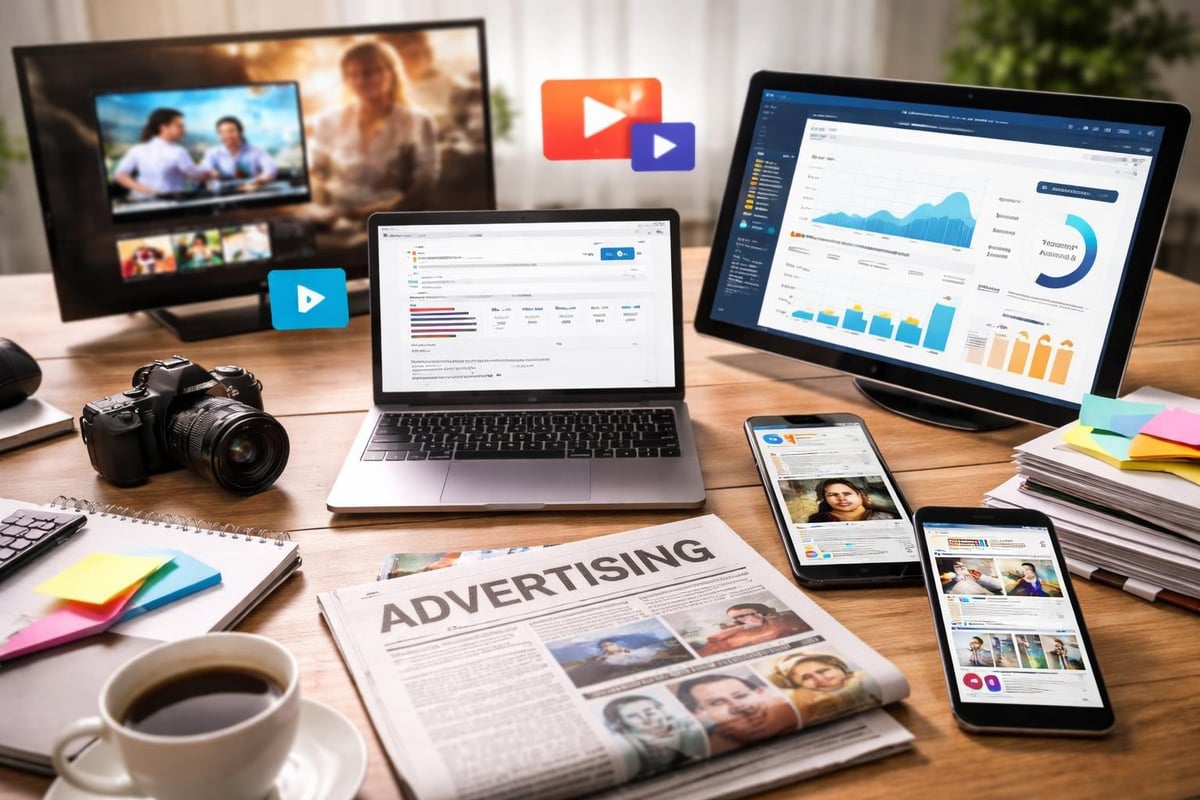
Businesses advertising has evolved into a sophisticated discipline requiring strategic planning, data analysis, and continuous optimization. According to comprehensive digital marketing statistics, companies are allocating larger portions of their budgets to digital channels while still maintaining presence in traditional media.
The advertising landscape shows interesting trends. Research from Samba TV indicates that 68% of top brands increased TV ad impressions in early 2025, demonstrating that television remains relevant alongside digital platforms. This multi-channel approach reflects the reality that consumers interact with brands across numerous touchpoints.
Budget Allocation and Spending Patterns
Smart budget allocation stands as one of the most critical decisions in businesses advertising. Companies must determine how much to invest and where those dollars deliver the highest returns.
Key Budget Considerations:
- Overall advertising spend as percentage of revenue
- Distribution across digital versus traditional channels
- Testing budget for experimental campaigns
- Reserved funds for seasonal opportunities
- Emergency allocation for competitive responses
The 2025 Small Business Advertising Trends Report provides valuable insights into how small businesses allocate their advertising budgets and the expected returns on those investments. Understanding these benchmarks helps companies gauge whether their spending aligns with industry standards or requires adjustment.
Economic factors continuously influence advertising decisions. BIA Advisory Services’ revised forecast highlights how economic pressures affect local advertising budgets, pushing businesses to become more strategic and selective with their investments.
Digital Advertising Strategies That Drive Results
Digital channels have become the cornerstone of effective businesses advertising campaigns. These platforms offer unprecedented targeting capabilities, real-time performance tracking, and flexibility that traditional media cannot match.
Search Engine Marketing
Search engine marketing combines paid search advertising with organic search optimization. When potential customers actively search for solutions, your business needs visibility at that critical decision-making moment.
Paid search campaigns through platforms like Google Ads allow businesses to appear at the top of search results for relevant keywords. The beauty of this approach lies in intent-based targeting: you reach people already interested in what you offer.
| Search Marketing Type | Primary Benefit | Typical Timeline | Cost Structure |
|---|---|---|---|
| Paid Search (PPC) | Immediate visibility | Hours to days | Pay per click |
| Organic SEO | Long-term authority | 3-6 months | Time investment |
| Local SEO | Geographic targeting | 2-4 months | Mixed approach |
| Shopping Ads | Product showcase | Immediate | Cost per acquisition |
Social Media Advertising
Social platforms provide businesses advertising opportunities that combine targeting precision with creative storytelling. These channels excel at building brand awareness, engaging communities, and driving specific actions.
Facebook and Instagram advertising allows businesses to target users based on demographics, interests, behaviors, and even life events. LinkedIn serves the B2B market with professional targeting options. TikTok and emerging platforms offer access to younger demographics through video-first content.
Social Advertising Best Practices:
- Define clear campaign objectives before launching
- Create platform-specific content rather than recycling the same creative
- Test multiple ad variations to identify top performers
- Implement retargeting to recapture interested prospects
- Monitor frequency to avoid ad fatigue
Targeted advertising techniques have revolutionized how businesses reach their ideal customers, moving beyond broad demographic categories to precise behavioral and psychographic segments.
Traditional Advertising Methods Still Delivering Value
Despite the digital revolution, traditional businesses advertising channels continue providing value for specific objectives and audiences. The key lies in understanding when and how to deploy these tactics effectively.
Print and Direct Mail
Physical advertisements create tangible connections with audiences. Direct mail campaigns, when properly targeted, generate strong response rates particularly among certain demographic groups. Local newspapers and industry publications offer credibility and focused reach.
Print advertising works exceptionally well for local businesses targeting specific geographic areas or professional services building authority within niche markets.
Radio and Television
Broadcast media delivers mass reach and repetition that builds brand recognition. Television advertising, though expensive, creates emotional connections through sight, sound, and motion. Radio offers cost-effective frequency and the ability to target specific times when your ideal customers are listening.
Local broadcast advertising can be particularly effective for businesses serving defined geographic markets. The Better Business Bureau outlines 20 advertising ideas that include both traditional and digital approaches, helping businesses create comprehensive marketing strategies.
Measuring Advertising Effectiveness and ROI
Successful businesses advertising requires rigorous measurement and analysis. Without tracking performance, companies waste money on ineffective campaigns while missing opportunities to scale successful initiatives.
Key Performance Indicators
Different advertising objectives require different metrics. Brand awareness campaigns track impressions, reach, and frequency. Lead generation focuses on cost per lead and conversion rates. E-commerce advertising monitors return on ad spend and customer acquisition costs.
Essential Advertising Metrics:
- Impressions: How many times your ad was displayed
- Click-through rate: Percentage of viewers who clicked
- Conversion rate: Percentage of clickers who took desired action
- Cost per acquisition: Total cost divided by conversions
- Return on ad spend: Revenue generated divided by ad cost
- Customer lifetime value: Total value of customer relationship
Attribution Modeling
Understanding which advertising touchpoints deserve credit for conversions presents one of the biggest challenges in businesses advertising. Customers rarely convert after a single exposure; they typically interact with multiple ads across various channels before purchasing.
Attribution models help allocate credit appropriately. First-touch attribution credits the initial interaction. Last-touch attributes everything to the final touchpoint. Multi-touch models distribute credit across the customer journey.
| Attribution Model | Best For | Limitation |
|---|---|---|
| First Touch | Understanding awareness sources | Ignores nurturing impact |
| Last Touch | Direct response campaigns | Overlooks early influences |
| Linear | Balanced view | Equal weight may not reflect reality |
| Time Decay | Long sales cycles | Complex to implement |
| Data-Driven | Comprehensive insights | Requires significant data volume |
Content Marketing as Advertising
Content marketing blurs the line between advertising and value creation. Rather than interrupting audiences with promotional messages, businesses create genuinely useful content that attracts and engages potential customers.
Blog posts, videos, podcasts, infographics, and guides serve as advertising vehicles that provide real value. This approach builds trust and positions businesses as authorities in their fields.
The strategic implementation of digital marketing services can help businesses develop content strategies that drive measurable results while building long-term brand equity.
Video Content Dominance
Video has emerged as the dominant content format across businesses advertising channels. YouTube serves as the world's second-largest search engine. Short-form videos on TikTok, Instagram Reels, and YouTube Shorts capture attention in seconds.
Professional video production costs have decreased dramatically, making high-quality video accessible to businesses of all sizes. Live streaming creates authentic connections with audiences in real-time.
Video Content Types:
- Explainer videos demonstrating products or services
- Customer testimonials building social proof
- Behind-the-scenes content humanizing your brand
- Educational tutorials establishing expertise
- Live Q&A sessions engaging communities
Targeting and Personalization in Modern Advertising
Generic mass advertising has given way to highly targeted, personalized messages. Modern businesses advertising leverages data and technology to deliver relevant messages to specific audience segments at optimal times.
Audience Segmentation Strategies
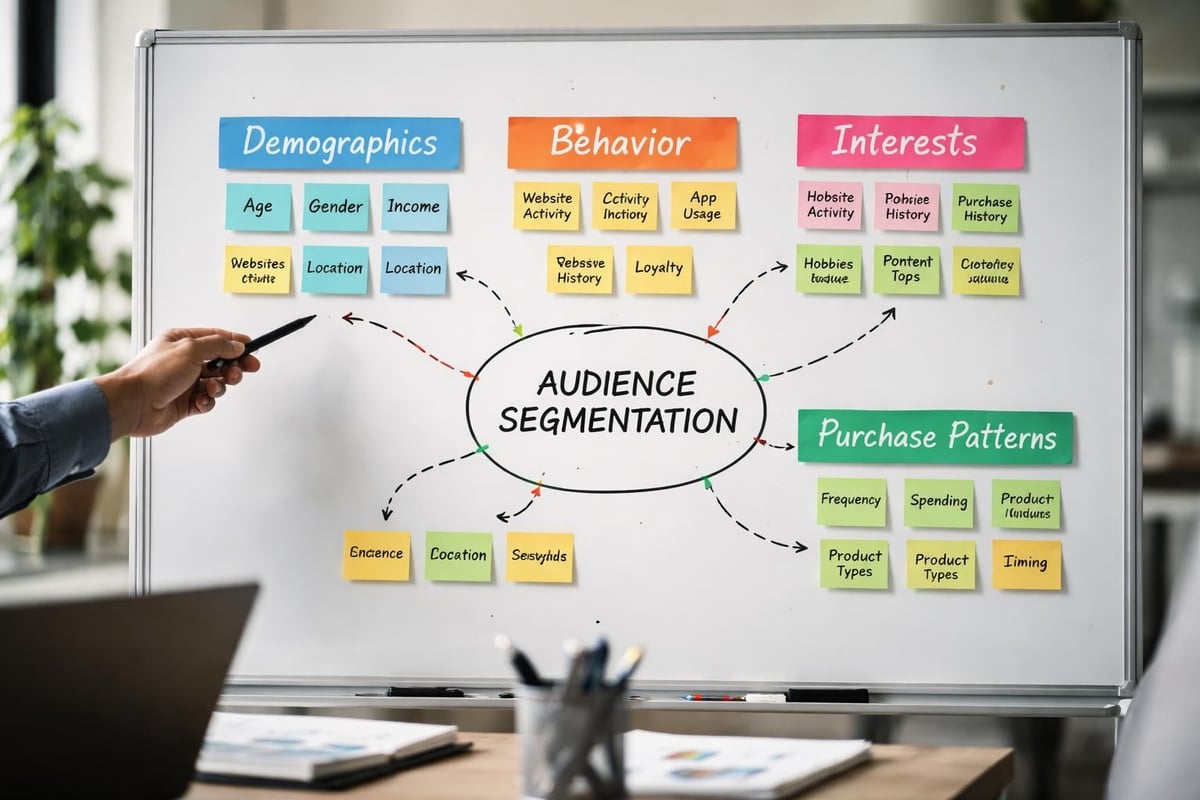
Effective segmentation divides your market into distinct groups sharing common characteristics, needs, or behaviors. This enables crafting messages that resonate with each segment's specific interests and pain points.
Demographic segmentation considers age, gender, income, education, and occupation. Geographic segmentation targets specific locations. Psychographic segmentation explores values, interests, and lifestyles. Behavioral segmentation focuses on purchasing patterns and product usage.
- Analyze existing customer data to identify common patterns
- Create detailed buyer personas representing each segment
- Develop segment-specific messaging addressing unique needs
- Choose appropriate channels where each segment spends time
- Test and refine based on performance data
Dynamic Creative Optimization
Advanced advertising platforms now automatically adjust creative elements based on individual viewer characteristics. Dynamic creative optimization tests thousands of combinations to determine which headlines, images, calls-to-action, and formats work best for each audience member.
This technology maximizes relevance while minimizing creative production requirements. Instead of creating separate ads for every segment, businesses produce modular components that assemble automatically based on viewer profiles.
Mobile-First Advertising Imperatives
Mobile devices now account for the majority of internet usage and advertising impressions. Businesses advertising without mobile optimization miss massive opportunities and frustrate potential customers.
Mobile advertising requires different approaches than desktop. Smaller screens demand concise messaging and clear calls-to-action. Touch interfaces replace clicks. Location-based targeting enables hyper-local campaigns.
Mobile Advertising Considerations:
- Responsive design adapting to all screen sizes
- Fast loading speeds preventing abandonment
- Thumb-friendly button placement and sizing
- Vertical video optimized for mobile viewing
- Click-to-call functionality for immediate contact
According to marketing industry statistics, mobile advertising continues growing as consumer behavior shifts increasingly toward smartphone-based browsing and purchasing.
Emerging Advertising Technologies and Trends
Businesses advertising continues evolving as new technologies and platforms emerge. Staying informed about trends helps companies maintain competitive advantages and reach audiences through innovative channels.
Artificial Intelligence and Automation
AI-powered tools now handle bidding, targeting, creative optimization, and performance analysis. Machine learning algorithms process vast datasets to identify patterns humans would miss, continuously improving campaign performance.
Chatbots provide instant customer service within advertising campaigns. Predictive analytics forecast which prospects are most likely to convert. Natural language processing generates ad copy variations for testing.
Voice Search and Smart Speakers
Voice-activated devices change how consumers search for information and make purchases. Optimizing for voice search requires different keyword strategies focusing on natural language and question-based queries.
Audio advertising through smart speakers and streaming platforms provides new channels for reaching audiences during activities where screens aren't available.
Augmented and Virtual Reality
AR and VR technologies create immersive advertising experiences. Furniture retailers let customers visualize products in their homes. Automotive companies offer virtual test drives. Beauty brands enable virtual makeup try-ons.
These technologies reduce purchase anxiety by letting customers experience products before buying, particularly valuable for high-consideration purchases.
Compliance and Ethical Considerations
Responsible businesses advertising requires understanding and adhering to regulations while maintaining ethical standards. Legal compliance protects companies from penalties while ethical practices build consumer trust.
Privacy Regulations
Data privacy laws like GDPR, CCPA, and emerging regulations restrict how businesses collect, store, and use consumer data for advertising purposes. Companies must obtain proper consent, provide transparency about data usage, and honor opt-out requests.
Third-party cookie deprecation forces advertisers to develop new tracking and targeting methodologies. First-party data collection becomes increasingly important for maintaining advertising effectiveness.
Truth in Advertising
Advertising claims must be truthful, substantiated, and not misleading. Testimonials must reflect genuine customer experiences. Comparative advertising requires factual accuracy. Disclosures must be clear and conspicuous.
Regulatory bodies actively monitor advertising practices and enforce compliance, making it essential for businesses to review campaigns carefully before launch.
| Regulation Area | Key Requirement | Penalty for Violation |
|---|---|---|
| Data Privacy | Consent and transparency | Significant fines |
| Truthfulness | Substantiated claims | Legal action, fines |
| Disclosures | Clear material connections | FTC enforcement |
| Accessibility | ADA compliance | Lawsuits, remediation |
Integration and Omnichannel Approaches
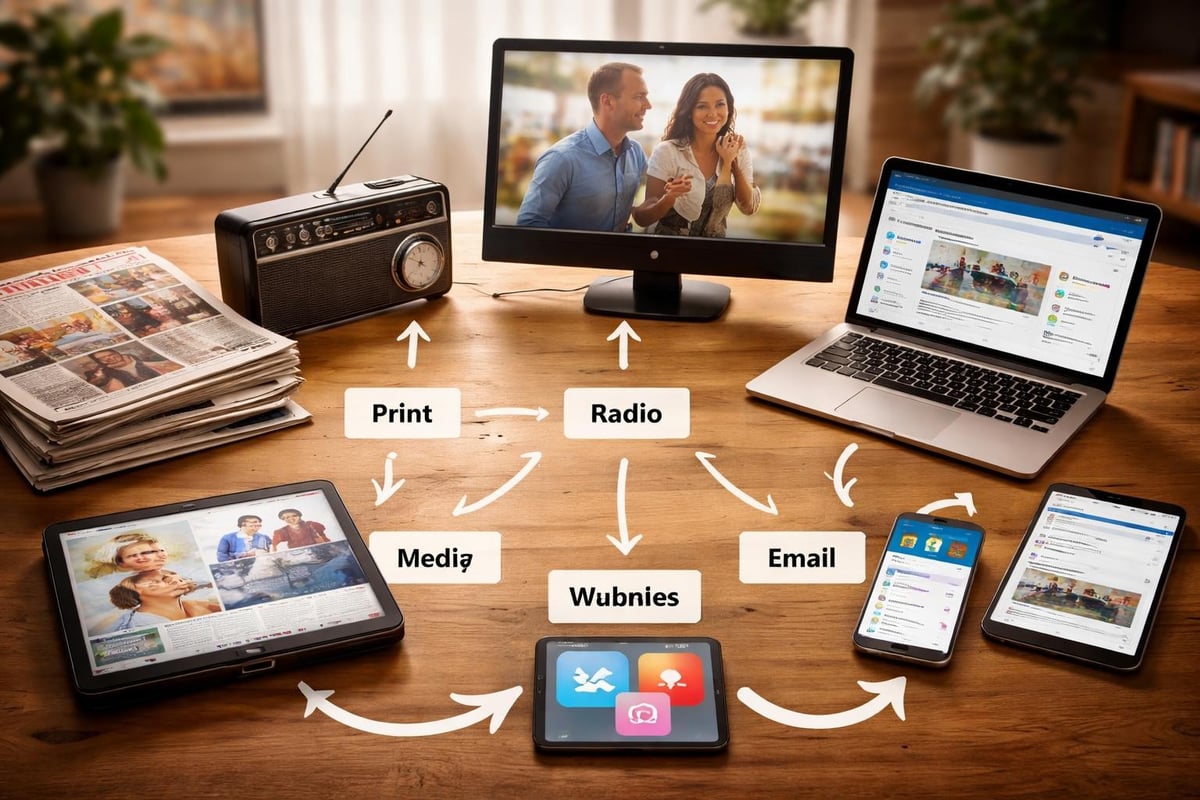
The most effective businesses advertising strategies integrate multiple channels into cohesive campaigns where each touchpoint reinforces others. Omnichannel approaches recognize that customers move fluidly between online and offline environments, expecting consistent experiences.
A potential customer might see a social media ad, visit your website, receive retargeting ads, search for reviews, visit your physical location, and finally make a purchase online. Each interaction should feel connected rather than disjointed.
Omnichannel Integration Elements:
- Consistent branding across all touchpoints
- Unified customer data platforms tracking cross-channel behavior
- Coordinated messaging that builds progressive narratives
- Seamless transitions between channels
- Attribution systems recognizing multi-channel contributions
Successful integration requires breaking down organizational silos between teams managing different channels. Marketing, sales, customer service, and operations must collaborate around unified customer experiences.
Building Long-Term Brand Equity Through Advertising
While direct response advertising generates immediate results, brand-building advertising creates long-term value. Strong brands command premium pricing, enjoy customer loyalty, and weather competitive pressures better than weak brands.
Brand advertising invests in awareness, perception, and emotional connections. These campaigns may not generate immediate conversions but build mental availability so customers think of your brand when purchase needs arise.
The balance between brand and performance advertising varies by business stage, industry, and objectives. Mature companies with established customer bases might invest more heavily in performance marketing, while newer businesses need brand awareness to enter consideration sets.
Effective brand advertising tells compelling stories, evokes emotions, and creates associations between brands and desirable attributes. Consistency over time allows these associations to strengthen and become embedded in consumer consciousness.
Mastering businesses advertising requires strategic thinking, continuous learning, and willingness to adapt as technologies and consumer behaviors evolve. The most successful companies combine data-driven decision making with creative excellence, testing new approaches while maintaining focus on measurable results. Whether you're just beginning to develop your advertising strategy or looking to optimize existing campaigns, expert guidance can accelerate your progress and help avoid costly mistakes. Mountain Mover Coaching and Digital Marketing specializes in helping businesses transform their advertising efforts through strategic planning, implementation, and ongoing optimization that drives real growth and measurable returns on your investment.