Every business leader faces the same fundamental challenge: how to grow sustainably while maintaining operational excellence. The strategies of growth you implement today determine whether your organization thrives or stagnates in an increasingly competitive marketplace. Understanding which growth approaches align with your resources, market position, and long-term vision separates successful enterprises from those that struggle to gain traction. The digital landscape offers unprecedented opportunities for businesses willing to adopt strategic frameworks that combine traditional business fundamentals with modern marketing tactics.
Understanding the Foundation of Business Expansion
The strategies of growth available to modern businesses extend far beyond simple revenue increases. Strategic growth encompasses market expansion, customer base development, product innovation, and operational efficiency improvements. Each approach requires careful consideration of your current position, available resources, and competitive landscape.
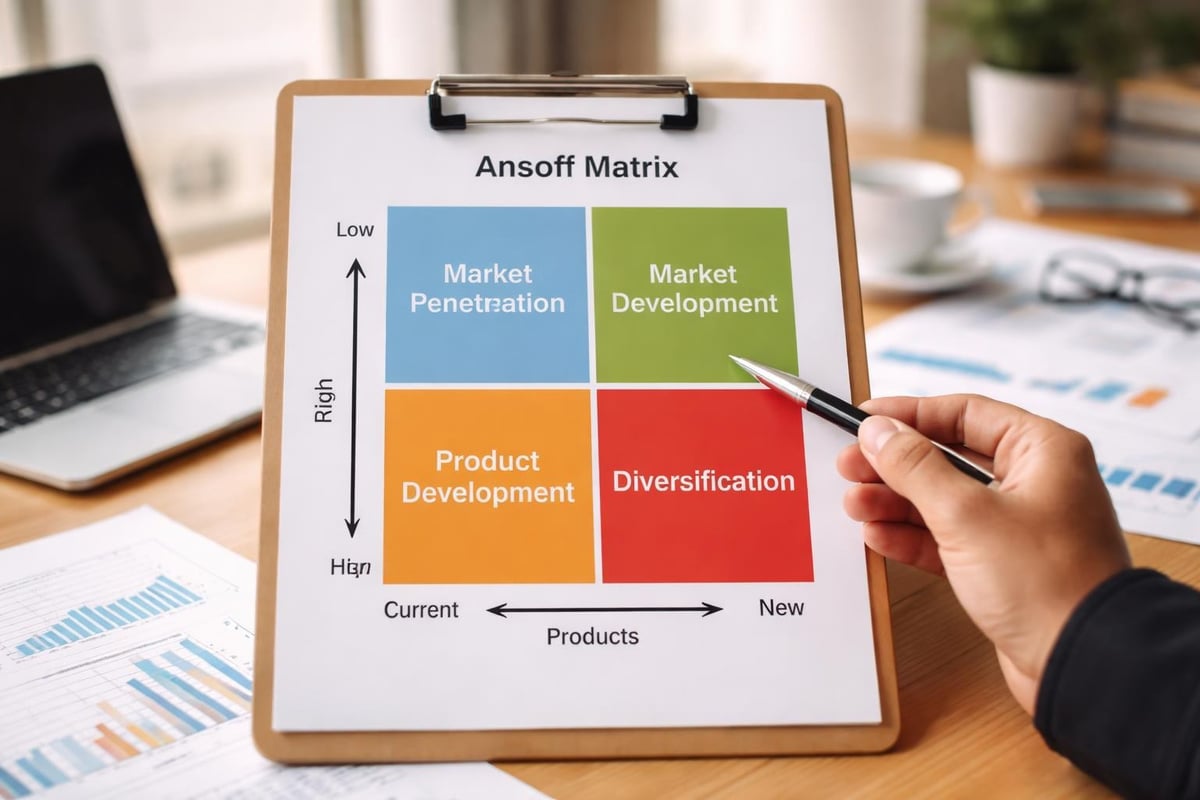
Market penetration focuses on increasing your share within existing markets through enhanced marketing efforts and competitive positioning. This strategy typically requires less capital than expansion into new territories but demands sophisticated understanding of customer behavior and competitor dynamics. Digital marketing plays a crucial role in penetration strategies by enabling precise targeting and measurable campaign performance.
Market development involves taking existing products or services to new geographic regions or demographic segments. This approach offers substantial growth potential while leveraging proven offerings. Organizations pursuing market development must invest in understanding new customer segments and adapting their messaging accordingly.
The Four Primary Growth Pathways
The Ansoff Matrix provides a foundational framework for categorizing strategies of growth. This strategic planning tool outlines four distinct pathways: market penetration, market development, product development, and diversification. Each quadrant represents different risk levels and resource requirements.
| Growth Strategy | Risk Level | Resource Intensity | Time to Results |
|---|---|---|---|
| Market Penetration | Low | Moderate | 3-6 months |
| Market Development | Moderate | High | 6-12 months |
| Product Development | Moderate-High | Very High | 12-18 months |
| Diversification | High | Very High | 18-24 months |
Product development requires organizations to innovate their offerings while serving existing markets. This strategy demands significant investment in research, development, and testing. However, it strengthens customer relationships by providing additional value to established clients. Businesses that excel at product development often create sustainable competitive advantages through continuous innovation.
Diversification represents the highest-risk growth strategy, involving new products in new markets. While potentially lucrative, this approach requires substantial resources and expertise across multiple domains. Most organizations should pursue diversification only after exhausting lower-risk growth opportunities.
Leveraging Digital Channels for Accelerated Growth
Modern strategies of growth increasingly rely on digital marketing capabilities. The ability to reach targeted audiences, measure campaign performance, and optimize spending in real-time creates unprecedented opportunities for businesses of all sizes. Organizations that master digital channels gain significant advantages over competitors relying solely on traditional marketing methods.
Search Engine Optimization as a Growth Driver
Search engine optimization establishes long-term organic visibility that compounds over time. Unlike paid advertising, which stops generating leads when spending ceases, SEO investments continue delivering results months and years after implementation. SEO services in Columbus and Cleveland demonstrate how localized search optimization drives qualified traffic for businesses targeting specific geographic markets.
The compound effect of SEO makes it one of the most cost-effective strategies of growth available. Each piece of optimized content attracts visitors, some of whom convert to customers. Those customers generate revenue that funds additional content creation, establishing a virtuous cycle of growth.
Key SEO Growth Tactics:
- Comprehensive keyword research identifying high-intent search terms
- Technical optimization ensuring search engines can crawl and index your site efficiently
- Content development addressing customer questions and pain points
- Link building from authoritative sources within your industry
- Local optimization for businesses serving specific geographic regions
Social Media and Content Marketing Integration
Social media platforms provide direct access to potential customers while enabling relationship building at scale. The strategies of growth that incorporate social media leverage these platforms for brand awareness, customer engagement, and lead generation. Effective social media marketing requires consistent content creation, community management, and strategic advertising.
Content marketing supports multiple growth objectives simultaneously. High-quality content attracts organic search traffic, establishes thought leadership, nurtures prospects through the sales funnel, and provides value to existing customers. Content marketing companies specialize in developing comprehensive strategies that align content creation with business objectives.
The integration of social media and content marketing creates synergistic effects. Blog posts provide material for social sharing, social engagement identifies topics for content development, and both channels drive traffic to conversion-optimized landing pages.
Customer-Centric Growth Strategies
The most sustainable strategies of growth prioritize customer retention and expansion alongside new customer acquisition. Existing customers cost significantly less to serve than new ones and typically generate higher lifetime value. Organizations that excel at customer retention allocate resources proportionally between acquisition and retention activities.
Maximizing Customer Lifetime Value
Customer lifetime value (CLV) represents the total revenue a business expects from a single customer account. Increasing CLV drives growth without proportional increases in acquisition costs. Research on business growth strategies emphasizes the importance of customer development in sustainable expansion.
CLV Enhancement Methods:
- Upselling premium features or service tiers
- Cross-selling complementary products or services
- Implementing subscription or recurring revenue models
- Creating loyalty programs that incentivize repeat purchases
- Developing customer success programs that ensure value realization
The economics of CLV optimization are compelling. A 5% increase in customer retention rates can increase profits by 25% to 95%, according to research across multiple industries. This makes retention-focused strategies of growth among the highest-return investments available.
Referral and Partnership Programs
Customer referrals represent one of the most cost-effective acquisition channels. Referred customers typically have higher conversion rates, lower acquisition costs, and greater lifetime value than customers acquired through other channels. Formal referral programs systematize this natural growth mechanism.
Strategic partnerships enable businesses to access new customer segments through established relationships. The right partnership can accelerate growth by years compared to organic development. However, successful partnerships require aligned incentives, clear communication, and mutual value creation.

Data-Driven Decision Making for Growth
Effective strategies of growth require measurement systems that track progress and identify opportunities. Organizations that implement comprehensive analytics frameworks make better strategic decisions and allocate resources more efficiently. The ability to measure what matters separates high-growth businesses from those that operate on intuition alone.
Establishing Key Performance Indicators
Key performance indicators (KPIs) translate strategic objectives into measurable metrics. Different growth strategies require different measurement approaches. Market penetration efforts might track market share percentage, while customer development initiatives focus on retention rates and expansion revenue.
| Growth Focus | Primary KPIs | Secondary KPIs |
|---|---|---|
| Acquisition | Cost per acquisition, conversion rate | Traffic sources, landing page performance |
| Retention | Churn rate, retention rate | Customer satisfaction, engagement metrics |
| Revenue | Monthly recurring revenue, average contract value | Upsell rate, payment terms |
| Market | Market share, brand awareness | Competitive win rate, pricing position |
The marketing snapshot report provides businesses with comprehensive visibility into current performance and growth opportunities. Regular performance reviews using established KPIs enable course corrections before small issues become major problems.
Predictive Analytics and Growth Planning
Advanced analytics enable predictive modeling that forecasts growth trajectories under different scenarios. Understanding how changes in conversion rates, average deal size, or sales cycle length affect overall growth helps prioritize improvement efforts. Research on backward growth accounting provides frameworks for structured planning and assessment of growth drivers.
Predictive analytics also identify early warning signs of potential problems. Declining engagement metrics, increasing customer acquisition costs, or lengthening sales cycles signal issues requiring immediate attention. Addressing these problems proactively prevents them from undermining growth momentum.
Scaling Through Technology and Automation
Technology infrastructure enables strategies of growth that would be impossible through manual processes. Marketing automation, customer relationship management systems, and analytics platforms allow small teams to execute sophisticated growth programs. The businesses that leverage technology most effectively achieve disproportionate results relative to their size.
Artificial Intelligence in Growth Strategy
Artificial intelligence transforms multiple aspects of growth execution. AI-powered tools optimize advertising campaigns, personalize customer experiences, predict churn risk, and automate routine tasks. Research on AI as a catalyst for strategic growth demonstrates how small and medium-sized enterprises can leverage these technologies for competitive advantage.
AI Applications in Growth Marketing:
- Predictive lead scoring identifying prospects most likely to convert
- Dynamic pricing optimization based on demand and competitive factors
- Chatbots handling initial customer inquiries and qualification
- Content personalization delivering relevant messaging to each visitor
- Campaign optimization adjusting bids and targeting in real-time
The democratization of AI technology means these capabilities are no longer exclusive to enterprise organizations. Cloud-based platforms provide sophisticated AI functionality at accessible price points, enabling businesses of all sizes to implement advanced strategies of growth.
Marketing Technology Stack Optimization
The average marketing department uses dozens of software tools across various functions. While technology enables growth, poorly integrated systems create inefficiency and data silos. Optimizing your marketing technology stack requires balancing capability with complexity.
Effective technology stacks integrate seamlessly, allowing data to flow between systems automatically. Customer interactions in one system should inform activities in others, creating unified customer experiences. The goal is amplifying team productivity rather than simply adding tools.

Organic Versus Inorganic Growth Approaches
Strategic leaders must decide whether to pursue organic growth through internal development or inorganic growth through acquisitions and partnerships. Each approach offers distinct advantages and challenges. The optimal strategy often combines both approaches based on market conditions and organizational capabilities.
Building Organic Growth Capabilities
Organic growth develops capabilities internally through hiring, training, and process development. This approach typically requires longer timeframes but builds sustainable competitive advantages. Organizations pursuing organic strategies of growth invest heavily in talent development and systems refinement.
The advantages of organic growth include maintaining company culture, developing deep expertise, and retaining full control over strategic direction. However, organic development may prove too slow in rapidly evolving markets where first-mover advantages determine long-term success. Comprehensive guides on developing business growth strategies outline systematic approaches to organic expansion.
Strategic Acquisitions and Partnerships
Inorganic growth through mergers, acquisitions, and strategic partnerships accelerates market entry and capability development. Rather than building expertise from scratch, organizations acquire existing businesses or form partnerships with established players. This approach suits businesses with access to capital and experienced integration teams.
Successful acquisitions require thorough due diligence, realistic integration planning, and cultural compatibility. Many acquisitions fail to deliver expected value due to integration challenges, cultural misalignment, or overvaluation. Organizations pursuing inorganic strategies of growth must develop rigorous evaluation processes and disciplined execution capabilities.
Operational Excellence as a Growth Enabler
Growth strategies succeed or fail based on operational execution. The best strategic plans mean little without operational systems capable of delivering consistent results. Organizations that scale successfully invest in operational infrastructure that supports growth without proportional cost increases.
Process Standardization and Documentation
Documented, standardized processes enable consistent delivery as organizations scale. Without clear processes, quality varies based on which team member handles each task. Standardization also facilitates training, allowing new team members to contribute productively faster.
Critical Processes Requiring Documentation:
- Customer onboarding and implementation
- Sales qualification and proposal development
- Content creation and publication workflows
- Customer support and issue resolution
- Performance reporting and analysis
Process documentation need not be elaborate. Clear step-by-step instructions, decision trees, and templates often suffice. The goal is capturing institutional knowledge so growth doesn't require proportional expertise development.
Building Scalable Team Structures
Team structure significantly impacts growth potential. Flat organizational structures work well for small teams but create bottlenecks as organizations scale. Developing specialized roles and clear reporting structures enables delegation and focuses expertise where it creates maximum value.
Successful growth requires balancing generalists and specialists. Early-stage businesses benefit from versatile team members who handle multiple functions. As organizations mature, specialists in areas like SEO, paid advertising, and analytics deliver superior results in their domains. The strategies of growth you pursue should inform hiring priorities and organizational design.
Financial Management for Sustainable Growth
Growth consumes capital. Whether investing in marketing, hiring team members, or developing infrastructure, expansion requires financial resources. Organizations that manage growth finances effectively avoid the cash flow crises that derail otherwise successful businesses.
Unit Economics and Profitability
Understanding unit economics-the revenue and costs associated with each customer-provides crucial insights for growth planning. Positive unit economics mean each additional customer increases profitability, while negative unit economics require subsidy. Many high-growth businesses intentionally operate with negative unit economics during market capture phases, but sustainable strategies of growth ultimately require profitable customer acquisition.
Key Unit Economic Metrics:
- Customer acquisition cost (CAC)
- Customer lifetime value (CLV)
- CLV to CAC ratio
- Months to recover CAC
- Gross margin per customer
A healthy business typically maintains a CLV to CAC ratio above 3:1, meaning each customer generates at least three times their acquisition cost over their lifetime. Ratios below 1:1 indicate unsustainable economics requiring immediate attention. Guidance on strategic growth approaches emphasizes the importance of profitable customer acquisition in sustainable expansion.
Capital Allocation for Maximum Growth Impact
Limited resources require strategic allocation across competing growth opportunities. The projects receiving funding determine growth trajectory and competitive positioning. Effective capital allocation balances short-term revenue generation with long-term capability development.
Portfolio approaches to growth investment spread risk across multiple initiatives while maintaining focus on core priorities. Rather than betting everything on a single strategy, diversified investment enables learning and adjustment based on results. Organizations should regularly review their growth portfolio, doubling down on successful initiatives while cutting underperforming ones.
Competitive Differentiation and Market Positioning
Sustainable strategies of growth require clear differentiation from competitors. In crowded markets, businesses need compelling reasons for customers to choose them over alternatives. Differentiation can emerge from product features, service quality, pricing, brand positioning, or customer experience.
Developing Unique Value Propositions
Your value proposition communicates why customers should choose your business. Effective value propositions address specific customer pain points while highlighting unique capabilities. Generic messaging about "quality" or "service" fails to differentiate because every competitor makes similar claims.
Testing different value propositions through digital campaigns provides empirical evidence of messaging effectiveness. The messages that drive highest conversion rates reveal what resonates most strongly with your target audience. This data should inform all marketing materials and sales conversations.
Strategic Positioning in the Market
Market positioning defines where your business sits relative to competitors on dimensions customers care about. Premium positioning emphasizes quality and results, while value positioning highlights affordability. Positioning between these extremes requires careful differentiation to avoid becoming indistinguishable from alternatives.
Successful positioning aligns with operational capabilities and target customer preferences. Attempting premium positioning without service delivery to match creates customer dissatisfaction and negative word-of-mouth. Similarly, value positioning with cost structures suited for premium segments undermines profitability. The strategies of growth you implement must align with your chosen market position.
Implementation and Execution Excellence
Strategy means nothing without execution. The gap between strategic planning and operational results determines which businesses achieve their growth objectives. Organizations that excel at implementation develop systems ensuring accountability, maintaining momentum, and adapting based on results.
Setting Milestones and Accountability Systems
Breaking long-term growth objectives into quarterly milestones creates accountability and enables progress tracking. Clear milestones also maintain team motivation by providing regular achievement opportunities. Each milestone should include specific metrics defining success and responsibilities assigning ownership.
Regular reviews comparing actual results to planned milestones identify gaps requiring attention. When results fall short, rapid diagnosis and adjustment prevent small shortfalls from becoming major problems. Conversely, exceeding targets may indicate opportunities to accelerate investment in successful initiatives. Modern approaches to business expansion emphasize continuous optimization based on performance data.
Maintaining Strategic Flexibility
Market conditions change, requiring strategy adjustments. Organizations that rigidly adhere to original plans despite shifting circumstances often miss opportunities or pursue failing strategies longer than warranted. Strategic flexibility balances commitment to long-term vision with tactical adaptation to current reality.
Building flexibility into growth plans means establishing decision triggers that prompt strategy reviews. Significant market changes, unexpected competitor moves, or dramatic performance variations should all trigger reassessment. The goal is informed adaptation rather than reactive pivoting based on temporary fluctuations.
Implementing effective strategies of growth requires combining strategic frameworks with operational excellence and continuous optimization. The most successful businesses maintain focus on customer value while building scalable systems that support expansion. Whether you're pursuing market penetration, developing new offerings, or exploring acquisition opportunities, the fundamentals of measurement, execution, and adaptation determine results. Mountain Mover Coaching and Digital Marketing specializes in helping businesses develop and implement customized growth strategies that deliver measurable results through expert coaching, proven digital marketing tactics, and strategic guidance tailored to your unique market position and objectives.