
The intersection of branding and marketing represents one of the most critical components of business success in 2026. While many entrepreneurs treat these disciplines as separate entities, the reality is that they work together as a powerful engine for growth, credibility, and market dominance. Understanding how to leverage both effectively can mean the difference between a business that struggles for attention and one that commands authority in its industry. For companies seeking measurable results, mastering the synergy between brand development and strategic marketing initiatives creates sustainable competitive advantages that drive long-term profitability.
The Foundation of Strategic Brand Identity
Every successful marketing campaign begins with a strong brand foundation. Your brand encompasses far more than a logo or color scheme. It represents the complete experience customers have with your business, from their first interaction to long-term relationship building.
Brand identity includes several critical components:
- Core values and mission statement
- Visual elements (logo, typography, color palette)
- Voice and messaging tone
- Customer experience touchpoints
- Unique value proposition
The most effective approach to branding and marketing starts with clarity about who you serve and what problems you solve. When businesses invest time in defining their brand positioning, they create a framework that guides every marketing decision moving forward. This strategic alignment ensures consistency across all channels and touchpoints.

Building Brand Authority Through Content
Building brand authority has become essential for businesses competing in crowded digital markets. Authority translates directly to trust, and trust converts to revenue. Companies that position themselves as industry experts through valuable content creation see significantly higher conversion rates than those focused solely on promotional messaging.
Content marketing serves as the bridge between branding and marketing objectives. When you consistently publish expert-level information that addresses your audience's challenges, you build credibility that paid advertising alone cannot achieve. This approach aligns perfectly with creating authoritative content that resonates with both search engines and readers.
| Content Type | Brand Building Impact | Marketing Effectiveness | Resource Investment |
|---|---|---|---|
| Blog Articles | High | Medium-High | Medium |
| Video Content | Very High | High | High |
| Social Media Posts | Medium | High | Low-Medium |
| Email Campaigns | Medium-High | Very High | Low |
| Podcasts | High | Medium | Medium-High |
Strategic Marketing Channels for Brand Growth
Selecting the right marketing channels requires understanding where your target audience spends time and how they prefer to consume information. The landscape of branding and marketing has evolved dramatically, with digital platforms offering unprecedented opportunities for precise targeting and measurement.
Digital Marketing Foundations
Website design serves as your digital headquarters. Every marketing effort should drive traffic to a platform you control, where visitors can experience your brand fully. Modern websites must deliver fast loading speeds, mobile responsiveness, and clear conversion paths. Digital agencies understand that your website represents the central hub connecting all marketing activities.
Social media management extends your brand presence into platforms where conversations happen naturally. Rather than treating social channels as broadcasting tools, successful businesses use them for relationship building and community engagement. The key lies in selecting platforms that align with your audience demographics and business objectives.
Effective social media strategy includes:
- Platform selection based on audience research
- Consistent posting schedule with valuable content
- Active engagement with followers and industry peers
- Strategic use of hashtags and trending topics
- Performance tracking and continuous optimization
Search engine optimization (SEO) represents one of the most cost-effective long-term investments in branding and marketing. When potential customers search for solutions you provide, appearing at the top of results establishes immediate credibility. SEO success requires technical excellence, quality content creation, and strategic link building.
Integrating Paid Advertising With Organic Growth
While organic strategies build sustainable authority, paid advertising accelerates visibility and generates immediate results. The most successful businesses blend both approaches, using paid campaigns to amplify brand messages while organic efforts build lasting equity.
Online advertising agencies recognize that effective campaigns require clear targeting, compelling creative, and continuous optimization. Whether using Google Ads, Facebook advertising, or LinkedIn sponsored content, the principles remain consistent: reach the right people with the right message at the right time.
Digital advertising platforms offer sophisticated targeting capabilities that traditional media cannot match. You can reach specific demographics, interests, behaviors, and even life events. This precision ensures your marketing budget focuses on prospects most likely to convert.
Measuring Marketing ROI and Brand Impact
Understanding which efforts drive results separates successful businesses from those wasting resources on ineffective tactics. Modern analytics tools provide detailed insights into customer behavior, campaign performance, and conversion paths.
| Metric Category | Key Indicators | Brand vs Marketing Focus |
|---|---|---|
| Awareness | Impressions, reach, traffic | Brand |
| Engagement | Time on site, social interactions | Both |
| Conversion | Leads, sales, signup rate | Marketing |
| Loyalty | Repeat purchases, referrals | Brand |
| Revenue | Customer lifetime value, ROI | Both |
The challenge in branding and marketing measurement lies in attributing results correctly. Brand building creates cumulative effects that may not show immediate returns, while direct response marketing generates trackable conversions. Smart businesses measure both short-term wins and long-term brand health.

Content Marketing as a Branding Powerhouse
Content marketing companies understand that consistent, valuable content creation serves dual purposes: educating audiences while establishing expertise. When you publish information that genuinely helps people solve problems, you build trust that traditional advertising cannot buy.
The content you create becomes a permanent asset that continues delivering value long after publication. A well-optimized blog article can generate traffic and leads for years, while paid advertising stops working the moment you stop paying. This durability makes content marketing one of the highest-ROI activities in branding and marketing.
Successful content strategies incorporate:
- Keyword research aligned with customer search intent
- Mix of educational, inspirational, and promotional content
- Multiple formats to reach different learning preferences
- Strategic internal linking to guide user journeys
- Regular updates to maintain relevance and accuracy
Understanding how to identify and utilize authoritative sources strengthens your content's credibility. When you cite reputable research and expert opinions, you demonstrate thoroughness and build associations with recognized authorities in your field.
Local Marketing Strategies for Service Businesses
Service-based businesses benefit enormously from localized branding and marketing approaches. Whether you operate in one community or serve multiple regions, tailoring messages to specific geographic markets increases relevance and conversion rates.
Local SEO optimization ensures your business appears when nearby customers search for your services. This includes claiming and optimizing Google Business Profile listings, building local citations, and earning reviews from satisfied clients. Geographic targeting in paid advertising prevents wasting budget on audiences outside your service area.
Industry-Specific Branding Considerations
Different industries require unique approaches to branding and marketing. Healthcare providers like chiropractors, dentists, and massage therapists face distinct regulatory considerations and trust-building challenges. These businesses must balance professional credibility with approachability.
For healthcare practitioners, patient education content demonstrates expertise while addressing common concerns. Video testimonials provide social proof, while clear explanations of services reduce anxiety about new patient experiences. The blog format allows practitioners to address frequently asked questions comprehensively.
Email Marketing and Customer Retention
While acquiring new customers drives growth, retaining existing ones multiplies profitability. Email marketing remains one of the most effective channels for nurturing relationships and encouraging repeat business. The return on investment for email marketing consistently outperforms most other digital channels.
Building an email list creates a direct communication channel you own completely. Unlike social media platforms that can change algorithms or disappear, your email list represents a valuable business asset. Effective email strategies segment audiences based on behavior and preferences, delivering personalized messages that drive engagement.
Email marketing best practices include:
- Clear value proposition for subscribing
- Welcome series that sets expectations
- Regular newsletters with valuable content
- Automated sequences triggered by specific actions
- Testing subject lines and send times for optimization
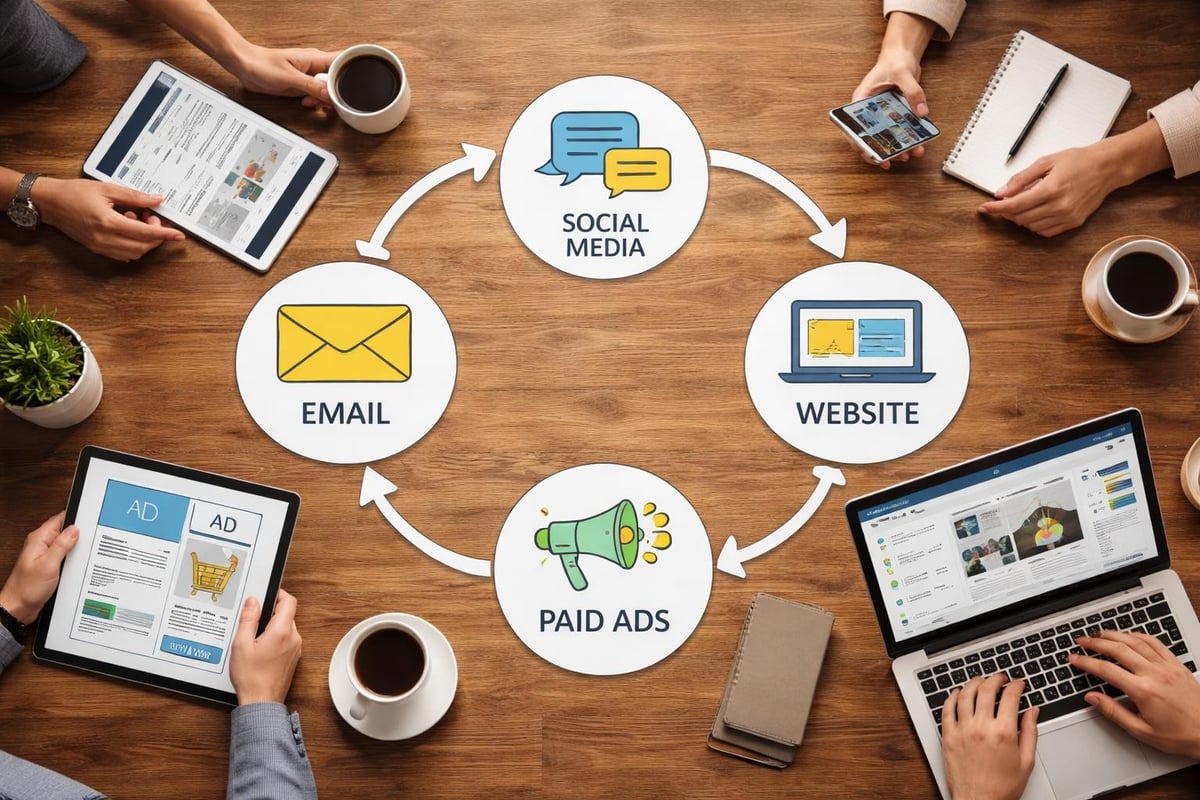
The integration of email with broader branding and marketing efforts creates multiple touchpoints that reinforce your message. Someone might discover you through social media, visit your website, subscribe to your list, and eventually become a customer after receiving several valuable emails.
Building Trust Through Transparency and Consistency
Modern consumers value authenticity above polished perfection. The psychology of trust in authoritative content reveals that people respond to genuine expertise demonstrated through helpful information rather than self-promotion.
Your branding and marketing should reflect your actual capabilities and values. Overpromising to attract attention creates short-term gains but long-term damage when you cannot deliver. Businesses that align their marketing messages with operational reality build sustainable reputations that weather competitive pressures.
Consistency across all channels reinforces brand recognition and reliability. When your website, social media, email communications, and advertising all reflect the same visual identity and messaging tone, audiences develop clear expectations about who you are and what you deliver.
Leveraging Technology and Automation
Marketing automation tools enable small businesses to execute sophisticated campaigns without large teams. From scheduling social media posts to nurturing leads through automated email sequences, technology amplifies your efforts and ensures consistency.
The key to successful automation lies in maintaining the human element. While systems handle repetitive tasks, personalization and genuine relationship building still require human attention. The best approach combines efficient automation with strategic personal touchpoints.
Technology enhances branding and marketing through:
- Customer relationship management (CRM) systems
- Marketing automation platforms
- Analytics and reporting dashboards
- Social media scheduling tools
- Email service providers with segmentation capabilities
Selecting appropriate tools requires assessing your specific needs, budget, and technical capabilities. Starting with fundamental platforms and expanding as you grow prevents overwhelming complexity while building sustainable systems.
Competitive Differentiation Through Strategic Positioning
Standing out in crowded markets requires clear differentiation. Your branding and marketing must communicate not just what you do, but why you do it differently and better than alternatives. This unique positioning becomes the foundation for all messaging and campaign development.
Effective differentiation often focuses on specific niches or specialized expertise rather than trying to be everything to everyone. When you become known as the best solution for a particular type of customer or problem, you command premium pricing and attract ideal clients who value your specialized approach.
Analyzing competitor positioning reveals gaps and opportunities. What messages dominate your industry? Which audience segments receive less attention? Where can you bring unique perspectives or methodologies? These insights guide strategic decisions about how to position your brand distinctively.
Scaling Marketing Efforts for Growth
As businesses grow, branding and marketing strategies must evolve. What works at startup scale often becomes insufficient as revenue and ambitions expand. Developing scalable systems and processes ensures marketing keeps pace with business growth.
Documented processes create consistency and enable delegation. When your marketing activities rely on specific individuals' knowledge, you create bottlenecks that limit growth. Systems and standard operating procedures allow teams to execute strategies reliably.
Investing in professional expertise accelerates growth beyond what generalist efforts can achieve. Specialized knowledge in areas like SEO, paid advertising, and conversion optimization delivers results that justify the investment. Digital tools and expert guidance combine to create competitive advantages.
Mastering the synergy between branding and marketing creates sustainable competitive advantages that drive measurable business growth. By building strong brand foundations, implementing strategic marketing across appropriate channels, and maintaining consistency in all customer interactions, businesses position themselves for long-term success in increasingly competitive markets. Mountain Mover Coaching and Digital Marketing specializes in helping businesses develop and execute comprehensive strategies that transform visibility into revenue, combining expert coaching with proven digital marketing tactics to accelerate profit and scale operations effectively.