
The world of marketing and growth is changing at a speed never seen before. As 2026 approaches, businesses face a landscape shaped by emerging technologies, shifting consumer expectations, and fierce competition for attention.
This essential guide provides you with actionable insights and proven frameworks to unlock breakthrough marketing and growth. Did you know that 71% of consumers now expect personalized interactions, and 75% are ready to switch if their expectations are not met?
You will discover the latest trends, the transformative power of AI, evolving customer behaviors, integrated strategies, and methods to measure sustainable success. Get ready to move ahead—embrace forward-thinking approaches and make 2026 the year your marketing and growth strategy leads the way.
The Marketing and Growth Landscape in 2026
The marketing and growth landscape in 2026 is transforming at a record pace. Businesses are navigating a world where technology, consumer expectations, and market dynamics shift rapidly. To succeed, organizations need to understand key trends, harness AI, adapt to evolving behaviors, break down silos, and capitalize on new opportunities.
Key Trends Shaping Marketing and Growth
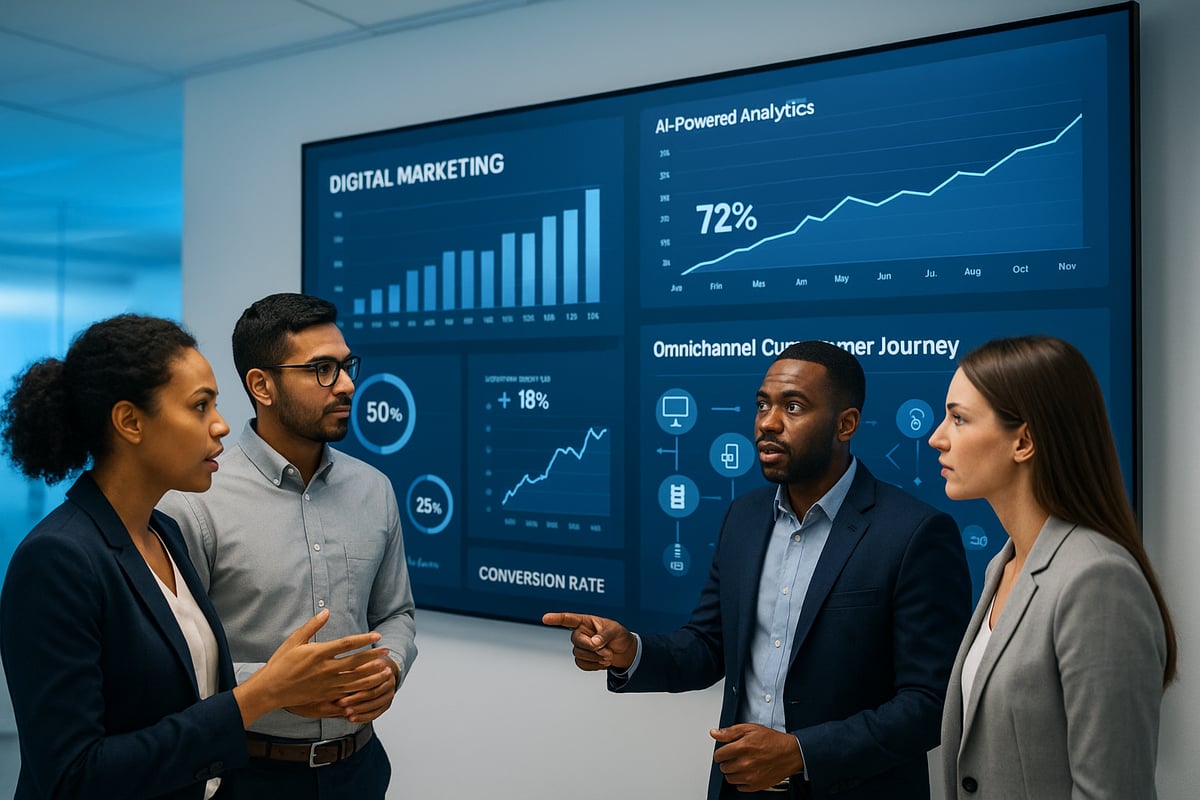
Several pivotal trends are reshaping marketing and growth strategies as 2026 approaches. Generative and agentic AI are accelerating traditional marketing efforts, enabling faster, more precise campaigns. Consumers increasingly demand hyper-personalized experiences—71% expect tailored interactions, and 75% will switch brands if not satisfied.
Martech is evolving from a cost center to a true growth engine, with performance and brand marketing lines blurring. Omnichannel, data-driven approaches are now essential, while customer experience and loyalty have become primary growth drivers. The competition for attention is fiercer than ever in fragmented media markets. For deeper insights, see McKinsey’s ‘Past Forward’ Report.
The New Role of AI and Automation
AI is now central to marketing and growth, driving predictive pricing, profit optimization, and campaign management. Companies use AI to transform customer interactions at scale, from chatbots to AI-powered call centers. Collaboration between humans and AI is becoming a key differentiator, empowering teams to create, segment, and optimize campaigns more effectively.
Notably, AI-driven revenue management is delivering measurable results, as seen in leading case studies. However, challenges remain, including data privacy, transparency, and workforce adaptation. Companies that embrace AI as a core part of their marketing and growth strategy consistently outperform their peers in both speed and scale.
Evolving Consumer Behaviors and Expectations
Post-pandemic consumers are pragmatic, value-driven, and optimistic yet cautious. They want seamless, empathetic, and personalized experiences across all touchpoints. With attention spans more fragmented, brands must find creative ways to bridge the "attention gap" and engage customers meaningfully.
Experience-driven purchasing is on the rise, and loyalty is harder to earn as customers readily switch for better service. Leaders in marketing and growth, such as Cava, are investing in technology to enhance both digital and in-person experiences. Data shows that personalization is no longer optional—it is a decisive factor for retention and advocacy.
The Convergence of Marketing, Sales, and Growth Functions
The boundaries between marketing, sales, and growth teams are dissolving. Organizations now integrate these functions to deliver unified customer journeys and drive shared metrics like revenue, retention, and customer lifetime value. Cross-functional teams and the emergence of roles like Chief Growth Officer reflect this shift.
Communities such as GrowthX exemplify holistic approaches to acquisition and monetization. Performance marketing is just one part of a broader marketing and growth ecosystem. This convergence impacts organizational structure, demanding agile talent and collaborative processes for sustainable success.
Market Challenges and Opportunities
Rising customer acquisition costs and saturated markets present significant hurdles for marketing and growth leaders. Agility and rapid experimentation have become necessary for staying ahead. There are also regulatory and privacy challenges, with frameworks like GDPR and CCPA shaping how data is used.
Despite these obstacles, opportunities abound in underserved segments and emerging channels. Trust and reputation management are critical, especially as companies leverage AI and personalization to unlock new avenues for growth. Success in 2026 will depend on balancing innovation with ethical responsibility and long-term value creation.
Building a Future-Proof Marketing Strategy
To achieve breakthrough marketing and growth in 2026, businesses must construct a robust strategy that adapts to rapid changes, leverages data, and places the customer at the center of every decision. The path forward is not linear; it requires a holistic approach, blending technology, creativity, and continuous measurement.

Laying the Foundation: Data, Insights, and Segmentation
A future-proof marketing and growth strategy begins with data. In a privacy-focused world, first-party data is essential for building trust and understanding customer needs. Companies must gather, clean, and connect data from both online and offline sources.
Advanced analytics unlock deep insights, allowing businesses to segment audiences not just by demographics, but by behaviors and predictive signals. For example, using AI-powered tools, marketers can identify micro-segments and tailor outreach in real time.
Actionable insights drive smarter decisions, enabling marketing and growth teams to anticipate trends and personalize campaigns at scale.
Crafting a Unified Brand and Growth Narrative
A unified narrative is the backbone of effective marketing and growth. Brands need to align their purpose with growth objectives, ensuring every touchpoint tells a consistent story. High-impact storytelling resonates across channels, fostering emotional connections with customers.
Balancing short-term performance with long-term brand building is crucial. Engaged employees amplify the brand message, while consistent visual identity and messaging reinforce trust.
Measuring brand health alongside growth KPIs helps organizations sustain momentum and adjust strategies as needed for ongoing marketing and growth success.
Omnichannel Experience and Customer Journey Mapping
Customers today expect seamless experiences across digital and physical touchpoints. Mapping the complete journey—from acquisition to retention and advocacy—reveals areas for improvement and opportunities to personalize.
Personalization at every stage is a cornerstone of effective marketing and growth. Retailers, for instance, use AI to optimize both in-store and online interactions, creating frictionless paths to purchase.
By tracking metrics like NPS and journey completion rates, teams can fine-tune each step, ensuring that the customer experience remains engaging and cohesive throughout the entire marketing and growth process.
Agile Experimentation and Growth Loops
In 2026, agility separates leaders from laggards in marketing and growth. Embracing a test-and-learn culture empowers teams to experiment rapidly, pivoting based on real-time data.
Growth loops—such as acquisition, engagement, retention, and monetization—form a self-sustaining cycle. Cross-functional squads execute campaigns, analyze results, and scale what works.
Agile workflows and performance tracking tools enable quick feedback, allowing organizations to continuously refine their marketing and growth efforts and maximize return on investment.
Martech Stack Optimization and Integration
Selecting and integrating the right technology stack transforms martech from a cost center into a growth engine. AI-powered automation streamlines campaign management and analytics, while interoperability ensures smooth data flow between platforms.
Regular audits and stack optimization are essential as marketing and growth needs evolve. Training teams for martech adoption maximizes ROI and future-proofs operations.
To stay ahead, organizations can explore digital tools for marketing growth that enhance analytics, customer engagement, and workflow efficiency within their marketing and growth strategy.
Measurement, Attribution, and ROI
Measuring what matters is fundamental to sustainable marketing and growth. Clear KPIs aligned with business goals provide direction, while multi-touch attribution models capture the full impact of each channel.
Real-time dashboards and predictive analytics guide budget allocation, linking spend directly to revenue outcomes. This approach ensures both short-term wins and long-term value creation.
Continuous improvement through data-driven insights allows marketing and growth teams to adapt, optimize, and scale what works, driving ongoing success in 2026 and beyond.
Step-by-Step Playbook for Breakthrough Growth in 2026
In 2026, achieving breakthrough marketing and growth demands a clear, actionable playbook. The landscape is fiercely competitive, and only those who adapt quickly, leverage data, and foster cross-functional collaboration will stand out. Below, you will find a seven-step roadmap, each designed to help you navigate complexity, unlock new opportunities, and build a resilient foundation for sustainable success.

Step 1: Audit and Align Your Current Strategy
Start with a comprehensive audit of your marketing and growth activities. Evaluate existing campaigns, channels, and customer touchpoints. Identify gaps, redundancies, and overlooked opportunities.
Benchmark your efforts against industry leaders using proven frameworks like McKinsey’s “Seven tests for B2B growth.” Align your teams around shared metrics such as revenue, retention, and customer lifetime value. This alignment ensures every department pulls in the same direction.
Engage leadership early to secure buy-in and resources. A unified vision and transparent communication set the stage for meaningful transformation. This initial audit will reveal where your marketing and growth engine needs recalibration.
Step 2: Invest in Data, AI, and Analytics Capabilities
Building robust data infrastructure is non-negotiable for modern marketing and growth. Leverage first-party data and advanced analytics for actionable insights. Deploy AI to automate segmentation, personalization, and campaign management.
Integrating predictive analytics into decision-making accelerates performance. For example, Reckitt’s AI-Driven Revenue Management showcases how AI can optimize pricing and profitability at scale.
Upskill your teams in data literacy and ensure privacy compliance. Track improvements with clear KPIs, making data and AI the backbone of your marketing and growth strategy.
Step 3: Personalize and Humanize the Customer Experience
Today’s customers expect more than generic messages. Use dynamic content and tailored offers to create truly personalized experiences across all channels.
Empathetic, human-centered communication is crucial, even when powered by agentic AI. For instance, call centers using AI to enhance empathy see significant improvements in customer satisfaction.
Build trust through transparency and responsive service. Implement feedback loops to drive continuous improvement. Personalization and human connection fuel retention, advocacy, and overall marketing and growth momentum.
Step 4: Integrate Omnichannel and Multichannel Strategies
Breakthrough marketing and growth in 2026 requires seamless integration across web, mobile, social, and in-person touchpoints. Deliver unified messaging and a consistent experience, regardless of channel.
Coordinate campaigns to leverage each channel’s strengths. UK brands, for example, bridge the attention gap with synchronized online and offline initiatives. Use real-time optimization to adjust tactics based on customer behavior.
Adopt attribution models to measure cross-channel impact. Consistency in value proposition and branding ensures your marketing and growth efforts resonate everywhere your customers are.
Step 5: Foster Cross-Functional Collaboration and Growth Mindset
Eliminate silos between marketing, sales, product, and customer success. Foster a culture where shared accountability for marketing and growth outcomes is the norm.
Host regular cross-departmental workshops and alignment sessions. The emergence of the Chief Growth Officer role exemplifies the shift toward unified teams. Encourage experimentation, reward innovation, and learn from both successes and failures.
A growth mindset across all levels of your organization accelerates adaptation to changing market conditions.
Step 6: Optimize for Agility, Speed, and Continuous Improvement
Agility is essential for effective marketing and growth. Implement agile methodologies for campaign execution, enabling rapid prototyping and iteration.
Adopt a “fail fast, iterate faster” approach, as seen in the GrowthX framework. Use short feedback loops and regular retrospectives to refine strategies. Scale successful experiments quickly across the organization.
Leverage workflow automation tools to boost efficiency. Continuous training and upskilling ensure your teams stay ahead in a fast-evolving landscape.
Step 7: Measure, Analyze, and Scale What Works
Establish a robust measurement framework with clear KPIs and OKRs aligned to your marketing and growth objectives. Analyze performance data regularly to identify high-performing campaigns and tactics.
Use predictive analytics to guide budget allocation and resource deployment. Share successes and insights across teams to foster a culture of continuous learning.
Adapt rapidly to market shifts by scaling what works and adjusting or discontinuing underperforming initiatives. Relentless optimization sustains long-term marketing and growth.
AI, Personalization, and the Human Touch: The 2026 Imperative
The future of marketing and growth will be defined by the seamless integration of artificial intelligence, hyper-personalization, and genuine human connection. As technology evolves, businesses must balance automation with empathy to meet rising consumer expectations and unlock breakthrough potential.
The Rise of Gen AI and Agentic AI in Marketing
Generative AI and agentic AI are revolutionizing marketing and growth strategies by delivering unprecedented speed, scale, and insight. Gen AI creates dynamic content and optimizes campaigns in real time, while agentic AI enables empathetic, context-aware conversations across digital touchpoints.
Companies leveraging these technologies see significant advantages, from AI-driven call centers that resolve issues faster to predictive analytics that anticipate customer needs. Human–AI collaboration is now a key differentiator, fostering creativity and operational efficiency. According to recent studies, organizations at the forefront of AI adoption consistently outperform their peers in marketing and growth outcomes.
For a deeper dive on how AI powers personalized customer interactions and retention, see AI-Powered Customer Retention Strategies, which highlights best practices for integrating AI into the customer journey.
Hyper-Personalization at Scale
Personalization is no longer a luxury—it is a necessity for marketing and growth in 2026. AI enables brands to deliver real-time recommendations, dynamic offers, and tailored messaging across every channel. Consumers now expect brands to recognize their preferences and anticipate their needs.
Research shows that 71 percent of consumers expect personalized interactions, and 75 percent are willing to switch to brands that deliver better experiences. Overcoming challenges like data silos and privacy concerns is critical. The impact of hyper-personalization is clear: increased retention, higher conversion rates, and stronger loyalty.
Empathy, Trust, and Brand Authenticity
Empathy is at the heart of modern marketing and growth. Digital interactions must be humanized, transparent, and responsive to build lasting trust. Brands that prioritize security, open communication, and authentic storytelling stand out in crowded markets.
For example, Cava’s investment in technology to enhance in-person dining experiences demonstrates how digital tools can foster genuine connections. Employee advocacy and visible leadership further reinforce brand credibility, driving positive sentiment and loyalty among customers.
Overcoming the Attention Gap
The battle for consumer attention is fiercer than ever. Fragmented media habits and shrinking attention spans challenge marketers to create content that resonates quickly and memorably. High-value, creative storytelling—across video, interactive, and AR/VR formats—helps brands cut through the noise.
UK brands, for instance, are using sophisticated data analysis to optimize their media mix and maximize engagement. Real-time community building and leveraging influencers are essential tactics. Measuring engagement rates, dwell time, and share of voice ensures a brand’s marketing and growth efforts are truly effective.
Humanizing Digital Growth
Technology should amplify, not replace, human creativity and intuition in marketing and growth. Frontline employees play a vital role in delivering memorable experiences that technology alone cannot replicate. Continuous feedback and co-creation with customers keep brands agile and relevant.
Hospitality leaders, for example, focus on creating “memorable moments” that blend digital convenience with personal touch. Training teams for digital empathy and adaptability is key to sustaining growth. Ultimately, organizations that foster a culture of innovation and authentic relationships will drive enduring value in 2026.
Measurement, Optimization, and Sustainable Success
As 2026 approaches, businesses face increasing complexity in marketing and growth measurement. Success hinges on establishing robust frameworks, leveraging advanced analytics, and maintaining adaptability. Let us explore the essential pillars that drive sustainable results in today’s competitive landscape.
Setting the Right Growth Metrics for 2026
Selecting the right metrics is the cornerstone of effective marketing and growth. Align your key performance indicators (KPIs) with both business objectives and customer value. Metrics such as revenue, retention rates, Net Promoter Score (NPS), and customer lifetime value offer a balanced view of progress.
Customize your measurement approach based on your industry and business model. Review metrics regularly to adapt to evolving priorities. Integrate both qualitative and quantitative data to capture the full impact of your marketing and growth strategies. Benchmark against industry leaders to maintain a competitive edge.
Attribution and Advanced Analytics
Understanding which efforts drive results is crucial for marketing and growth. Multi-touch attribution models allow you to track customer journeys across channels, revealing which touchpoints contribute most to conversions.
Leverage AI-driven analytics for deeper insights and accurate forecasting. Predictive analytics can guide budget allocation and resource planning. To address complex attribution challenges, integrate offline and online data, and visualize findings through dashboards. For advanced strategies, explore frameworks like Dynamic Retail Pricing via Q-Learning to refine decision-making and optimize outcomes.
Invest in analytics literacy across teams to empower smarter, faster decisions.
Continuous Optimization and Growth Loops
Continuous improvement is essential for sustained marketing and growth. Implement ongoing A/B and multivariate testing to experiment with new ideas. Growth loops—acquisition, engagement, retention, and monetization—should be embedded into daily operations.
Adopt iterative frameworks to scale successful strategies and phase out underperformers. Real-time monitoring tools and agile feedback loops enable quick pivots. Partnering with best content marketing companies can further accelerate optimization by ensuring your content drives measurable results.
Embed a culture of experimentation and learning across all teams.
Risk Management and Adaptability
Proactively managing risk is vital in the marketing and growth arena. Identify regulatory, technological, and reputational risks that could impact performance. Develop contingency plans to prepare for unexpected changes, such as evolving privacy laws or market disruptions.
Scenario planning helps organizations remain resilient and responsive. Monitor market signals and consumer sentiment to detect shifts early. Ethical and responsible practices are fundamental for long-term trust and compliance.
Consistent adaptation ensures your marketing and growth efforts remain effective regardless of external pressures.
Building for Long-Term, Sustainable Growth
True marketing and growth success requires balancing quick wins with strategic, long-term investments. Focus on talent development, organizational learning, and fostering a culture of innovation.
Companies that integrate marketing and growth outpace peers by leveraging ecosystem partnerships and continuous improvement. Measure and report on both financial and sustainability outcomes to demonstrate impact.
By prioritizing enduring relationships and responsible growth, you can create a legacy of success for 2026 and beyond.
As you look ahead to 2026, it’s clear that breakthrough marketing and growth require not just vision but also actionable insights and a clear understanding of where your business stands today. We’ve covered emerging trends, AI’s expanding role, and the importance of unified strategies, but the first step is knowing your current level of visibility and impact. If you’re ready to see how your business measures up—and identify powerful opportunities for growth—I encourage you to get your Free Visibility Snapshot. This quick, no-obligation assessment can be the catalyst for your next big leap forward.