Did you know global digital ad spend is projected to soar past $700 billion by 2026? This explosive growth highlights why businesses of every size must prioritize their online presence. As we move into a fast-changing digital landscape, organizations encounter both incredible opportunities and new challenges.
This guide will explain digital marketing, demystifying its key concepts and equipping you with the latest strategies for success. You will discover how digital marketing has evolved, explore core components, learn about 2026’s top trends, build a winning strategy, and find essential tools to stay ahead.
What is Digital Marketing? Definition, History & Evolution
In today's connected world, it is crucial to explain digital marketing as it stands in 2026. Digital marketing means leveraging online platforms, tools, and strategies to reach, engage, and convert audiences. Unlike traditional marketing, which relies on print or broadcast media, digital marketing thrives on an omnichannel presence. For example, a brand can interact with customers through social media in real time, while print advertising remains static. This dynamic approach allows businesses to build relationships, gather feedback, and personalize experiences across multiple touchpoints.

Defining Digital Marketing in 2026
To explain digital marketing in 2026, it is the practice of using digital channels such as search engines, social networks, email, and mobile apps to promote products, services, or brands. The main difference between digital and traditional marketing is interactivity and reach. Digital marketing enables two-way communication, precise targeting, and real-time analytics, while traditional methods are often one-way and less measurable. An omnichannel presence is now essential, allowing businesses to create seamless experiences across multiple platforms. For instance, social media advertising offers instant engagement, whereas print ads provide limited feedback and reach.
The Evolution: From Email to AI-Driven Campaigns
The journey to explain digital marketing begins with the early days of email campaigns and static web banners. Over the years, significant milestones have shaped the industry:
- The rise of search engines and Google Ads, revolutionizing pay-per-click (PPC) advertising
- The explosive growth of social media platforms, changing how brands interact with audiences
- The shift to mobile-first strategies as smartphones became ubiquitous
- The adoption of programmatic advertising for automated, data-driven ad placements
Today, AI and automation drive personalized campaigns, making digital marketing more efficient and effective than ever. Google Ads, for example, transformed PPC by enabling businesses to target users based on intent and behavior.
Why Digital Marketing Matters More Than Ever
Modern consumer behavior reinforces the need to explain digital marketing. Over 80% of purchases now start online, emphasizing the importance of digital channels for both small and large businesses. Data-driven decision making empowers brands to optimize strategies and maximize ROI. Small businesses can scale rapidly by leveraging cost-effective digital tools, while global brands maintain relevance through ongoing engagement.
For the latest statistics on global ad spend and digital behavior, see the Digital Marketing Statistics 2026. These insights highlight the rapid growth and evolving landscape that businesses must navigate.
The Digital Marketing Ecosystem
When we explain digital marketing, it is essential to understand the ecosystem of channels that work together for maximum impact. Key components include:
- Search engine optimization (SEO) and search engine marketing (SEM)
- Social media marketing and influencer partnerships
- Content marketing, email campaigns, and affiliate programs
Successful digital strategies integrate these channels for synergy and consistency. For example, launching a new product involves coordinated efforts across paid ads, organic social posts, email announcements, and influencer collaborations, ensuring broad reach and a unified brand message.
Core Components of Digital Marketing in 2026
As we explain digital marketing, it becomes clear that its effectiveness in 2026 hinges on a blend of foundational pillars and innovative approaches. Each core component works in concert, forming a robust ecosystem that propels brands forward in a competitive digital landscape.

Search Engine Optimization (SEO)
To explain digital marketing in 2026, start with SEO, which remains the backbone of organic brand visibility. Search engines have evolved, now integrating voice and AI-powered search, making optimization more complex yet rewarding.
Key trends include:
- Voice search queries, often in natural language
- AI-driven ranking algorithms
- Featured snippets and zero-click searches
For example, brands now target conversational keywords to appear in voice results. With 68% of online experiences beginning with a search engine, optimizing for both traditional and AI-enhanced searches is non-negotiable.
Content Marketing
When you explain digital marketing, content marketing stands out as a strategic driver of engagement and trust. In 2026, high-quality, relevant content comes in many formats, from blogs and podcasts to interactive videos.
Popular formats:
- Educational blog posts
- Short-form and live videos
- Interactive quizzes and infographics
A viral video campaign can boost brand awareness overnight. In fact, 82% of marketers use content marketing as a core strategy. For businesses seeking expert support, exploring the best content marketing companies can provide a competitive edge.
Social Media Marketing
Social media is essential when you explain digital marketing’s reach and influence. Platforms like TikTok, Instagram, and emerging networks drive both organic and paid engagement, with social commerce becoming a dominant force.
Notable features:
- Shoppable posts and livestream sales
- Algorithm-driven feeds for personalized discovery
- Brand storytelling via Stories and Reels
Brands excel by fostering real connections. For instance, interactive Instagram Stories often double engagement rates, making social media a vital channel in every digital marketing mix.
Email and Marketing Automation
To thoroughly explain digital marketing, one must highlight email and automation. Personalized, segmented emails deliver high ROI, while automation streamlines customer journeys with timely, relevant messages.
Key automation tactics:
- Cart abandonment recovery
- Welcome and nurture sequences
- Dynamic content based on user behavior
A well-timed abandoned cart email can recover lost sales efficiently. With an average ROI of $42 for every $1 spent, email remains a powerhouse in the digital marketer’s toolkit.
Paid Advertising (PPC, Programmatic, Social Ads)
Paid advertising is a critical lever as we explain digital marketing’s measurable impact. In 2026, AI-driven bidding and targeting have revolutionized how brands reach audiences across search, display, and social channels.
Types of paid ads:
- Search (PPC) campaigns
- Programmatic display ads
- Native and social media ads
Programmatic ad buying now accounts for over 90% of digital display ad spend, offering efficiency and advanced targeting capabilities that maximize return on investment.
Analytics & Data-Driven Marketing
No effort to explain digital marketing is complete without analytics and data-driven strategy. Marketers depend on real-time analytics, robust attribution models, and clear KPIs to optimize campaigns and prove ROI.
Common tools and practices:
- Google Analytics 4 for cross-channel insights
- Automated dashboards for real-time reporting
- Multi-touch attribution to track conversions
With 76% of marketers relying on data for decision making, analytics is the compass guiding every digital marketing initiative toward measurable success.
Top Digital Marketing Trends and Predictions for 2026
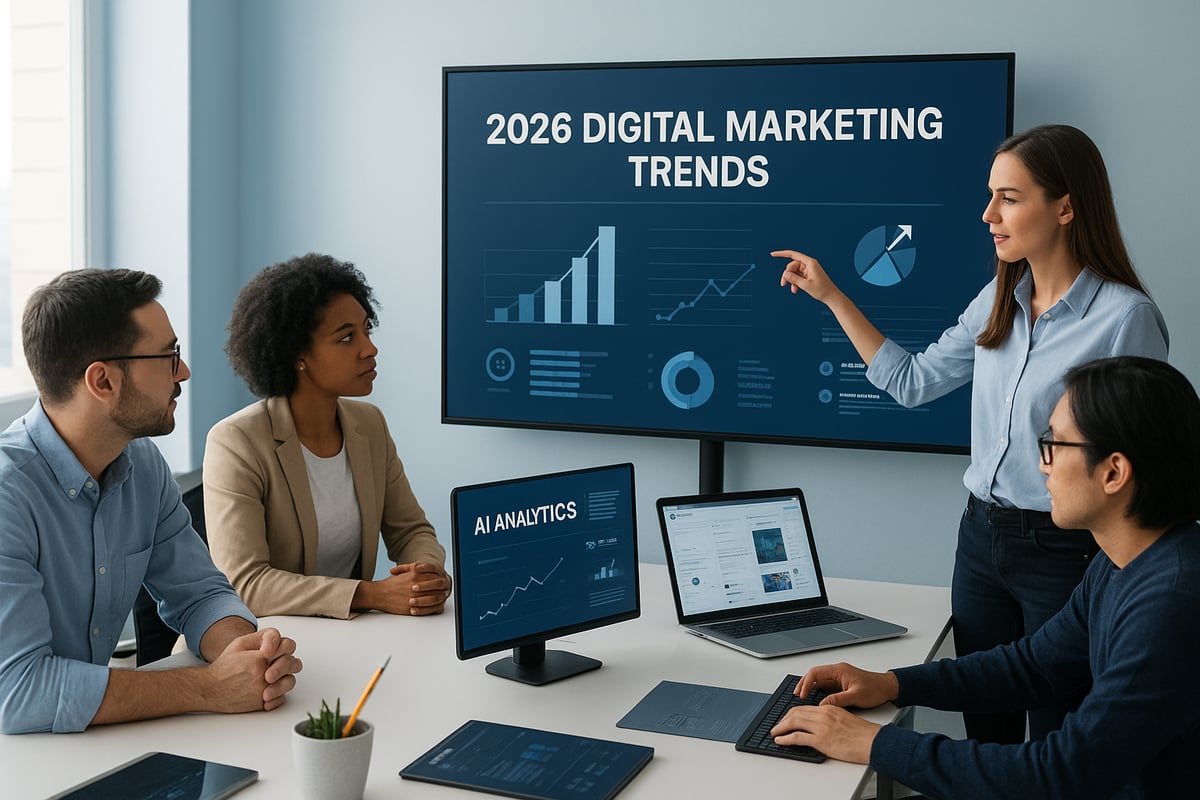
Staying ahead in digital marketing means understanding the trends shaping the industry. As we approach 2026, businesses must adapt quickly to remain competitive. In this section, we explain digital marketing’s most important shifts and what they mean for your strategy.
Artificial Intelligence and Automation
Artificial intelligence is fundamentally changing how we explain digital marketing strategies. In 2026, marketers increasingly rely on AI for content creation, chatbots, and advanced campaign optimization. AI-driven ad targeting ensures that marketing budgets are spent efficiently, reaching the right audiences at the right time.
For example, platforms now use machine learning to predict which creatives will perform best before campaigns even begin. According to the 2026 Digital Marketing Trends Report, 61% of marketers already leverage AI to automate and personalize their campaigns. This trend is only accelerating, making AI skills essential for every digital marketer.
Voice and Visual Search
Voice and visual search tools are rapidly changing the way we explain digital marketing to clients and teams. With smart speakers and advanced image recognition, consumers now search for products and information in more intuitive ways. Optimizing content for voice queries and image-based search is essential.
For instance, Google Lens allows users to find products by snapping a photo, while Alexa and other assistants process complex voice commands. Adapting your SEO and content strategies to include these formats can significantly boost organic visibility in 2026’s competitive landscape.
Video and Interactive Content
Short-form video and interactive content are dominating how we explain digital marketing effectiveness. Consumers prefer engaging formats like live video, AR filters, and interactive quizzes, which drive deeper connections and longer engagement times.
For example, TikTok challenges and Instagram Reels provide brands with viral opportunities. Research shows that 92% of marketers consider video a key part of their strategy. By using creative, interactive content, businesses can stand out and foster loyal communities across digital platforms.
Privacy, Data Protection, and Cookieless Future
In 2026, privacy regulations are transforming how we explain digital marketing compliance and data strategies. New laws like updated GDPR and CCPA mean marketers must prioritize first-party data and transparent user consent.
Apple’s privacy changes have already impacted platforms like Facebook Ads, reducing access to third-party data. Successful brands now focus on building trust by collecting and using data ethically. Marketers must stay updated on regulations to maintain effective, compliant campaigns in a cookieless world.
Social Commerce and Influencer Marketing
Social commerce is reshaping how we explain digital marketing’s impact on sales. Consumers increasingly shop directly on platforms such as Instagram and TikTok, blurring the line between social engagement and e-commerce.
Micro-influencers bring authenticity, helping brands connect with niche audiences. Instagram Checkout and TikTok Shop are prime examples, streamlining the buying journey. Social commerce sales are projected to reach $2.9 trillion by 2026, underlining the importance of integrating these channels into your marketing mix.
Sustainability and Ethical Marketing
Today’s consumers expect brands to act responsibly, which influences how we explain digital marketing values and ethics. In 2026, transparency and sustainability are not just trends—they are requirements for building trust and loyalty.
Brands highlight their eco-friendly efforts and ethical sourcing in campaigns, resonating with environmentally conscious audiences. Clear, honest messaging about sustainability initiatives can differentiate your brand and strengthen long-term customer relationships in a crowded digital marketplace.
Step-by-Step: Building a Winning Digital Marketing Strategy for 2026
Building a successful strategy to explain digital marketing in 2026 requires a structured, step-by-step approach. Each phase is designed to maximize results in a fast-changing digital environment. Follow these essential steps to create a blueprint that delivers measurable growth and adaptability.

Step 1: Define Clear Goals and KPIs
To effectively explain digital marketing, start by setting specific, measurable, achievable, relevant, and time-bound (SMART) goals. This clarity ensures your entire team aligns their efforts with desired business outcomes.
For example, aim to increase qualified leads by 30 percent within six months. Identify key performance indicators (KPIs) such as website traffic, conversion rates, or customer acquisition cost. Mapping objectives to metrics helps prioritize actions and track progress.
A well-defined goal acts as a compass, guiding every decision in your digital strategy. Without this foundation, even the most creative campaigns may drift off course.
Step 2: Understand and Segment Your Audience
To explain digital marketing in a way that drives results, deeply understand who your customers are. Conduct research to build detailed buyer personas, considering demographics, behaviors, and motivations.
Leverage analytics tools to segment your audience. This enables you to personalize content for different groups, such as tailoring offers to Gen Z compared to Millennials. Use surveys, web analytics, and social listening for insights.
Effective segmentation allows you to reach the right people with the right message, increasing engagement and conversion rates across all digital channels.
Step 3: Choose the Right Digital Channels
Choosing the right mix of platforms is crucial as you explain digital marketing strategy options. Evaluate where your audience spends time—B2B brands may focus on LinkedIn, while B2C brands prioritize Instagram or TikTok.
Decide between an omnichannel approach, which integrates touchpoints for a seamless user experience, or a multichannel approach, which uses separate channels independently. Align your channel choices with your business goals and audience preferences.
Selecting the proper channels ensures your message reaches customers where they are most likely to engage.
Step 4: Develop Compelling Content and Messaging
Content is the heart of any effort to explain digital marketing. Plan a diverse content calendar with blogs, videos, podcasts, and interactive elements. Storytelling builds trust and drives action.
Adapt your messaging to suit each platform. For instance, educational blog posts work well for SEO, while short videos can go viral on TikTok. Use visuals and concise copy to capture attention quickly.
Compelling content not only attracts but also nurtures leads, supporting every stage of the marketing funnel.
Step 5: Implement, Test, and Optimize Campaigns
With your strategy in place, launch campaigns and monitor their performance. To explain digital marketing best practices, emphasize the importance of A/B testing different creatives, headlines, and calls to action.
Use agile marketing principles to make real-time adjustments based on analytics. For example, test two versions of an ad to see which generates a higher click-through rate. Optimization is a continuous process, not a one-time task.
Testing and adjusting ensures you maximize return on investment and adapt to changing market dynamics.
Step 6: Measure, Analyze, and Report Results
Accurate measurement is essential as you explain digital marketing impact. Track KPIs using dashboards and automated reporting tools. Analyze data to understand which tactics are working and where improvements are needed.
Monthly performance reviews help you identify trends, allocate budget more effectively, and refine your approach. Use attribution models to trace conversions back to specific actions or channels.
Transparent reporting fosters accountability and empowers data-driven decision making at every level.
Step 7: Stay Agile and Adapt to Change
Digital marketing never stands still. To explain digital marketing success in 2026, highlight the need for agility. Monitor industry trends, competitor moves, and technology shifts.
Continuous learning is key—join industry communities, attend webinars, and read resources like the digital marketing blog insights for the latest updates. Upskill your team to stay ahead of algorithm changes or new platform features.
Agility ensures your strategy evolves with the landscape, keeping your business competitive and resilient.
Essential Tools & Resources for Digital Marketers in 2026
Staying ahead in digital marketing requires leveraging the right tools and resources. As we explain digital marketing for 2026, it is clear that adopting advanced platforms empowers marketers to work smarter, not harder. Each tool category below addresses a crucial aspect of modern strategy, ensuring your campaigns remain effective and competitive.
SEO and Content Tools
Optimizing visibility in search engines remains foundational as we explain digital marketing’s evolving landscape. Leading platforms like SEMrush, Ahrefs, and Surfer SEO provide comprehensive keyword research, site audits, and competitor analysis. AI-driven features now help identify content gaps and suggest improvements in real time.
- SEMrush: All-in-one suite for SEO, PPC, and content.
- Ahrefs: Deep backlink analysis and keyword tracking.
- Surfer SEO: AI-powered content optimization.
For a broader overview of top solutions, explore this curated list of essential digital marketing tools. These resources empower marketers to adapt strategies as algorithms and user behavior shift.
Social Media Management Tools
A robust social presence is vital when you explain digital marketing strategies to stakeholders. Scheduling, analytics, and engagement platforms such as Hootsuite and Buffer simplify campaign management across multiple networks. Social listening tools monitor brand sentiment and trending topics, helping marketers respond quickly.
- Hootsuite: Centralizes scheduling and reporting.
- Buffer: Streamlines content planning and publishing.
- Sprout Social: Offers advanced analytics and audience insights.
Effective use of these tools ensures your brand maintains consistent voice and presence, regardless of platform changes or new market entrants.
Email and Automation Platforms
Personalized outreach and automated workflows are essential as you explain digital marketing’s ROI potential. Platforms like Mailchimp, HubSpot, and ActiveCampaign enable advanced segmentation, dynamic content, and drip campaigns.
- Mailchimp: User-friendly for small businesses.
- HubSpot: Integrates CRM and automated marketing.
- ActiveCampaign: Powerful for lead nurturing and scoring.
Marketers can set up abandoned cart recovery, onboarding sequences, and real-time triggers, improving customer engagement and conversion rates.
Analytics & Reporting Solutions
Understanding what works is non-negotiable when you explain digital marketing performance to leadership. Google Analytics 4, Data Studio, and Tableau provide real-time dashboards, custom reports, and in-depth attribution modeling.
| Tool | Key Feature | Best Use Case |
|---|---|---|
| Google Analytics 4 | Real-time, privacy-focused | Website and app performance analysis |
| Data Studio | Custom data visualization | Executive dashboards |
| Tableau | Advanced analytics | Complex data exploration |
These platforms help marketers track KPIs, optimize spend, and demonstrate ROI with clarity.
Learning, Certification, and Community Resources
Continual education is crucial as you explain digital marketing to both newcomers and seasoned professionals. Online courses from Google, HubSpot, and Coursera offer up-to-date certifications. Industry communities like MarketingProfs and Moz foster peer learning and knowledge sharing.
- Google Digital Garage: Free, foundational courses.
- HubSpot Academy: In-depth inbound marketing training.
- MarketingProfs: Community-driven insights and events.
Engaging with these resources ensures your skills remain current, and your strategies align with the latest industry standards.
The Future of Digital Marketing: Opportunities and Challenges Ahead
The future is bright yet complex as we explain digital marketing in 2026. Brands face a landscape shaped by rapid change, innovation, and evolving consumer expectations. Understanding these shifts is essential to create strategies that not only survive but thrive in the coming years.
The Rise of Personalization and Customer Experience
As we explain digital marketing’s trajectory, hyper-personalization has become the gold standard. Consumers expect brands to anticipate their needs and deliver tailored experiences in real time.
Personalized email campaigns, dynamic website content, and AI-driven product recommendations now define customer journeys. Brands leveraging behavioral data can create touchpoints that feel intuitive and relevant.
- 80% of consumers prefer brands offering personalized experiences.
- Dynamic landing pages adjust to user preferences instantly.
- Real time engagement via chatbots and messaging apps increases satisfaction.
Prioritizing personalization not only boosts loyalty but also drives measurable growth in engagement and conversions.
The Role of Emerging Technologies (AR, VR, Blockchain)
Emerging technologies are redefining how we explain digital marketing and interact with audiences. Augmented reality (AR), virtual reality (VR), and blockchain are moving from novelty to necessity.
AR lets customers try products virtually, while VR creates immersive storytelling opportunities. Blockchain ensures transparency in digital ads and combats fraud.
For a deeper dive into how AI and new tech are shaping the industry, read Digital Marketing Trends 2026.
- AR try-ons boost e-commerce confidence.
- VR events foster deeper brand connections.
- Blockchain increases trust in ad delivery.
Adopting these tools is no longer optional for brands aiming to lead in 2026.
The Growing Importance of First-Party Data
As privacy regulations tighten, reliance on first-party data is crucial when we explain digital marketing’s next era. Brands must adapt to a cookieless world by collecting data directly from their audiences.
Loyalty programs, interactive content, and gated resources help gather valuable insights while respecting consumer privacy.
- Loyalty apps collect purchase and preference data.
- Interactive quizzes generate actionable insights.
- Email opt-ins provide compliant communication channels.
Building direct relationships ensures marketing remains effective and future-proof.
Skills and Talent Needed for Tomorrow’s Marketer
To explain digital marketing success in 2026, organizations need hybrid professionals. Demand is surging for talent skilled in both data analysis and creative content.
Marketers must master analytics tools, automation platforms, and storytelling techniques. Continuous learning is key as algorithms and platforms evolve.
- Data literacy is essential for campaign optimization.
- Creative thinking fuels standout content.
- Ongoing education ensures adaptability.
Teams blending technical and creative skills will set the standard for industry excellence.
Globalization and Localization Strategies
As brands expand globally, it’s vital to explain digital marketing strategies that balance scale with local relevance. Multilingual content, cultural adaptation, and regional campaigns drive engagement across borders.
- Localized messaging resonates with diverse audiences.
- Multilingual SEO improves search visibility.
- Regional influencers boost authenticity.
Adapting campaigns for local markets ensures global reach without sacrificing personal connection.
Navigating Regulatory and Ethical Challenges
Regulatory and ethical considerations are at the forefront as we explain digital marketing’s responsibilities. New privacy laws, data usage rules, and ethical standards require marketers to operate with transparency and integrity.
- Compliance with GDPR and CCPA is essential.
- Transparent influencer partnerships build trust.
- AI must be used responsibly in targeting and content.
Brands that prioritize ethics and compliance will earn lasting loyalty in an increasingly scrutinized industry.
After exploring the latest trends and proven strategies in digital marketing, you might be wondering how your own business measures up in today’s fast-paced landscape. If you’re ready to see where you stand and uncover actionable opportunities for growth, I invite you to take the next step. Get your personalized Free Visibility Snapshot—it’s a quick, insightful way to evaluate your current online presence and identify key areas to accelerate your results. Let’s empower you with clarity and direction for your digital marketing journey in 2026.