
The digital world is evolving at an unprecedented pace, making online marketing strategies more critical than ever for 2026. Did you know global digital ad spend is forecast to surpass $800 billion in 2026, reflecting explosive online consumer growth?
Businesses face constant pressure to keep up with new channels, technologies, and rising customer expectations. This guide promises actionable, expert-backed strategies to help you achieve measurable growth and stay ahead of competitors.
Inside, you will find a roadmap covering digital marketing fundamentals, emerging trends, channel-specific tactics, personalization, analytics, and steps to future-proof your success.
Understanding Online Marketing in 2026
The landscape of online marketing has transformed at a rapid pace, requiring businesses to rethink their approach for 2026. As digital channels evolve, brands must stay agile, adapt to new behaviors, and leverage cutting-edge technology to maintain relevance and drive growth.
Evolution of Online Marketing
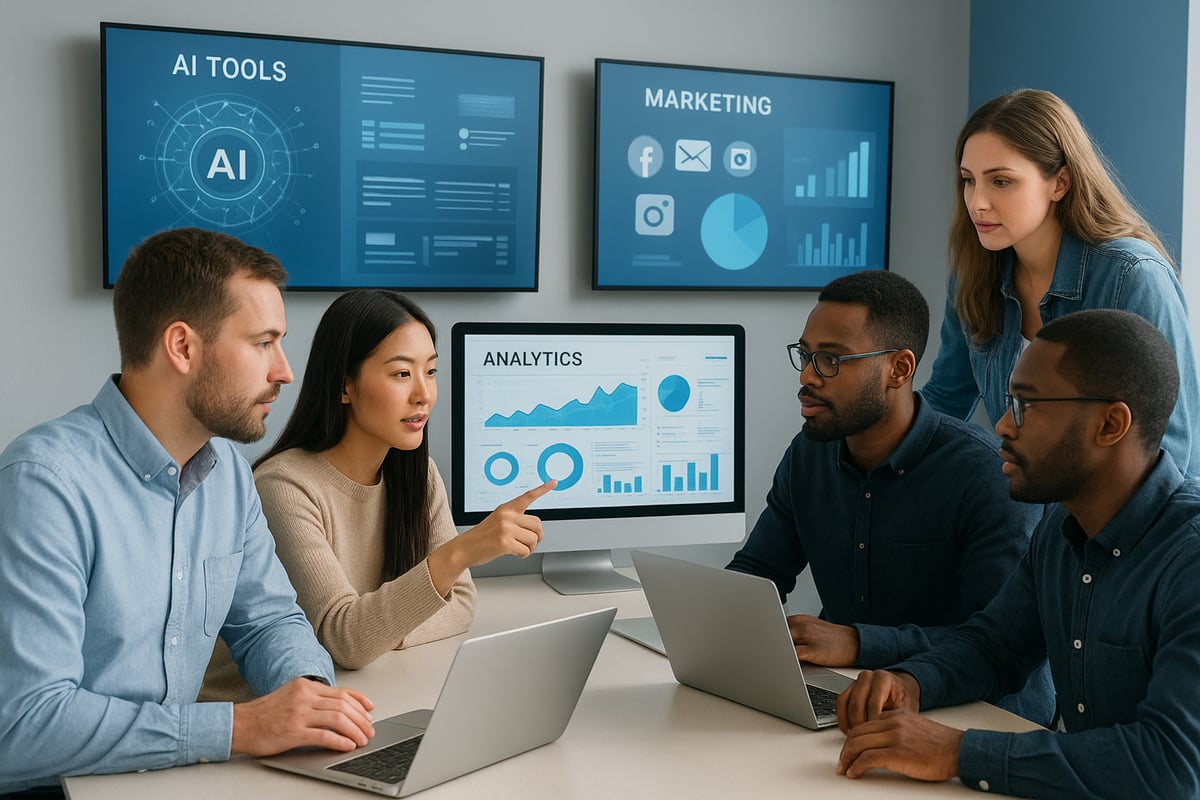
Online marketing has shifted dramatically from its traditional roots. Early efforts focused on print and broadcast, but the rise of the internet marked a turning point. The mobile-first era redefined engagement, while video content quickly became dominant. Recent years have seen artificial intelligence (AI) integrated into everything from content creation to campaign management.
Consumer habits have also changed. Over 60% of global consumers now shop online, and digital ad spend has overtaken traditional media worldwide. The rise of new platforms and personalized experiences means brands must constantly learn and adapt. Agility is not optional but essential for survival and growth in online marketing.
Core Components of Modern Online Marketing
Modern online marketing is built on a robust mix of channels. These include SEO, paid advertising, social media, content creation, email, influencer partnerships, video, affiliate programs, and digital PR. Successful brands integrate these channels for seamless omnichannel experiences, ensuring customers interact with the brand consistently across touchpoints.
Data-driven decision-making is at the heart of every campaign. Competitors often analyze which channels deliver the best ROI and tailor strategies accordingly. Automation tools streamline repetitive tasks, while advanced personalization helps brands deliver the right message to the right audience. The rise of these components enables online marketing to deliver results at scale.
Key Benefits for Businesses
The advantages of online marketing are clear. Digital strategies are more cost-effective than traditional marketing. For example, content marketing generates three times more leads at 62% less cost. Real-time engagement allows brands to respond quickly to customer feedback, while advanced targeting ensures messages reach the most relevant audiences.
Personalization and measurable ROI are central benefits. Campaigns can be tracked and optimized in real time, giving businesses control and insight into performance. Enhanced customer service and a competitive edge come naturally to those who invest in robust online marketing.
Challenges and Pitfalls to Avoid
Despite its strengths, online marketing presents challenges. The sheer volume of platforms and content can lead to information overload and fatigue for both marketers and audiences. Ad costs are rising, and privacy regulations make targeting more complex.
Measuring ROI can be difficult for channels like content marketing and digital PR. Specialized skills in areas like technical SEO, marketing automation, and analytics are in high demand. Businesses must also avoid chasing every new tool or trend without a clear strategy, a common pitfall known as shiny object syndrome in online marketing.
2026-Specific Trends Shaping Online Marketing
Looking ahead, several trends will define online marketing in 2026. AI-driven content and campaign optimization are becoming mainstream, with voice and visual search gaining popularity. Privacy-first marketing is essential as third-party cookies disappear, and hyper-personalization is reaching new heights.
The line between physical and digital is blurring, giving rise to phygital experiences. For more on how AI will shape these trends, see AI’s Role in Digital Marketing. Adapting to these shifts is critical for any business aiming to thrive with online marketing.
Step-By-Step Online Marketing Strategy for 2026
To thrive in the dynamic world of online marketing, brands must follow a structured, adaptable strategy. This step-by-step framework is designed for 2026, ensuring businesses achieve measurable growth and stay ahead of rapid market shifts.
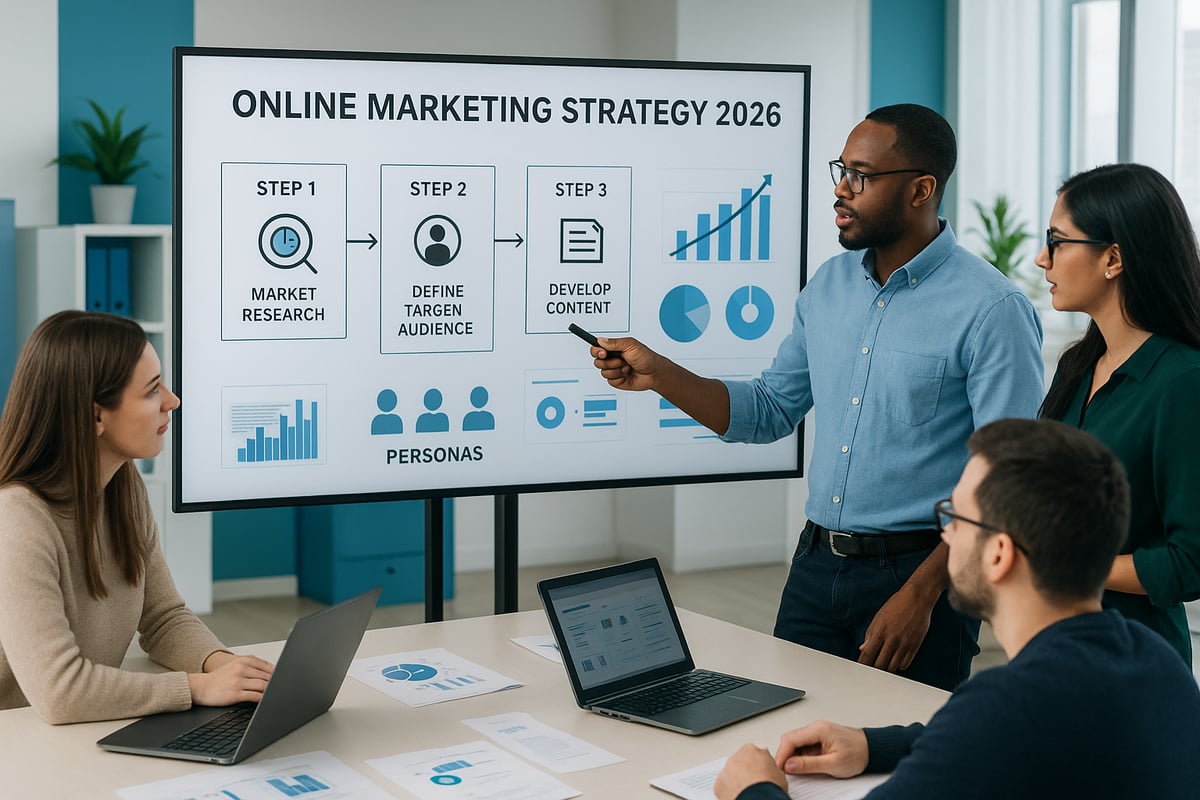
Step 1: Define Your Unique Value Proposition
A compelling value proposition is the foundation of effective online marketing. It distinguishes your brand and clarifies why audiences should choose you over competitors. Start by identifying what makes your offerings unique, whether it is product features, customer experience, or brand mission.
Craft a concise message that resonates with digital audiences. For example, a local retailer might highlight exclusive product stories and community involvement to create an emotional connection online. Align your value proposition with both business objectives and customer needs for maximum impact.
Avoid vague statements or generic claims. If you need expert guidance, consider digital marketing coaching services to help clarify your positioning and strategy.
Step 2: Deep Audience Understanding & Segmentation
Successful online marketing requires deep insights into your target audience. Build detailed buyer personas using data from surveys, social listening, and CRM analytics. Segment your audience by demographics, behavior, and lifecycle stage for more relevant messaging.
Effective segmentation allows you to tailor campaigns to specific groups. For instance, you can send personalized email offers based on where a customer is in their buying journey. Research shows that personalized emails deliver six times higher transaction rates, proving the power of targeted communication.
Analyze feedback regularly to refine your personas and segmentation approach, ensuring your marketing remains relevant.
Step 3: Select the Right Marketing Channels
Choosing the right channels is critical for online marketing success in 2026. Evaluate channels like SEO, PPC, social media, video, influencer, affiliate, email, and digital PR based on your audience, goals, and industry trends.
Consider whether a multichannel or omnichannel approach best fits your business. For example, a B2B SaaS company may prioritize LinkedIn and content marketing, while a D2C brand thrives on TikTok and Instagram. Review competitors to understand which channels drive results in your sector.
Balance your budget and resources across high-performing channels, and regularly reassess as new platforms and trends emerge.
Step 4: Set SMART Goals & KPIs
Clear objectives are essential for effective online marketing. Set SMART goals—Specific, Measurable, Achievable, Relevant, and Time-bound—to guide your strategy and track progress.
Align marketing goals with broader business outcomes, such as sales growth, lead generation, or brand awareness. Identify relevant KPIs for each channel, like CTR, CAC, ROAS, or organic traffic. For example, you might set a target to increase qualified leads from SEO by 20 percent by Q3.
Regularly review and adjust your goals to stay responsive to performance data and changing market conditions.
Step 5: Develop High-Impact Content & Creative
Content is at the heart of online marketing. For 2026, focus on interactive, video, AI-generated, user-generated, and educational content. Match content formats to each stage of the buyer’s journey to maximize engagement.
Authenticity and value-driven messaging are crucial. For instance, an educational video series can attract and nurture leads, while user-generated content builds trust. Video is especially important, with forecasts indicating it will drive over 80 percent of online traffic.
Test new formats and creative approaches to keep your content fresh and aligned with audience preferences.
Step 6: Build a Test, Measure, and Optimize Loop
Continuous improvement powers online marketing in a fast-changing environment. Adopt agile marketing principles by regularly testing, measuring, and optimizing every campaign.
Use A/B testing for ads, landing pages, and emails to identify what works best. Leverage analytics tools for real-time insights, enabling swift adjustments. For example, iterative PPC improvements based on performance data can significantly boost ROI.
Foster a culture of learning within your team, encouraging experimentation and data-driven decisions for ongoing growth.
Channel-Specific Strategies for Maximum Impact
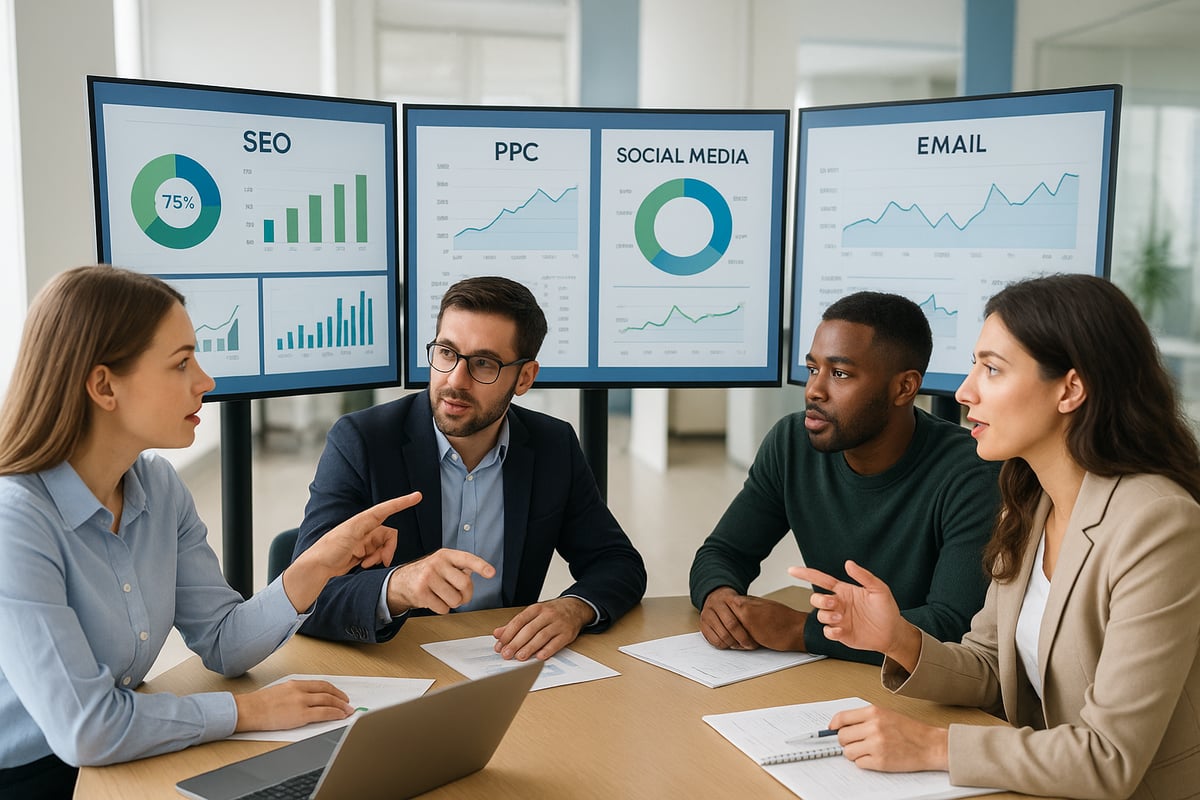
To achieve standout results with online marketing online marketing in 2026, businesses must master each key digital channel. Success means more than just being present; it requires tailored strategies that leverage the strengths of every platform. Below, we break down actionable tactics for each major channel, ensuring your approach is both holistic and future-ready.
SEO & Content Marketing in 2026
SEO and content remain the backbone of online marketing online marketing. In 2026, advanced tactics like voice search optimization, structured data, and E-E-A-T (Experience, Expertise, Authoritativeness, Trustworthiness) are essential. Building content clusters and pillar pages helps establish topical authority, while local SEO ensures visibility for searches such as “best gym near me.”
AI-driven content tools streamline keyword research, content creation, and optimization, making it easier to stay ahead. For example, a local fitness studio can use local SEO and AI content to dominate neighborhood searches. According to recent studies, 68% of online experiences now begin with a search engine, highlighting the channel’s ongoing importance.
Want to elevate your content strategy? Explore the Best content marketing companies for expert guidance tailored to online marketing online marketing needs.
Paid Advertising & PPC Innovations
The paid landscape for online marketing online marketing is rapidly evolving. Platforms like Google, Facebook, and TikTok are integrating more AI and automation, offering features such as smart bidding, dynamic creative, and predictive audience targeting.
Managing rising ad costs is critical. Marketers must focus on maximizing ROAS by refining targeting and leveraging automation. For example, retailers are turning to Google Performance Max campaigns to unify ads across search, display, YouTube, and more. This omnichannel approach drives both reach and efficiency.
A/B testing and real-time analytics are vital for ongoing optimization. By consistently measuring performance and reallocating budget, businesses can stay agile, ensuring their online marketing online marketing investments deliver measurable returns.
Social Media Marketing & Community Building
Social media is at the heart of online marketing, driving brand awareness and customer acquisition. Platform-specific tactics, such as Instagram Reels, TikTok trends, and LinkedIn content for B2B, keep brands relevant. Micro-influencers and user-generated content (UGC) add authenticity and foster trust.
Social commerce continues to expand, with shoppable posts making purchases seamless. Community management, live engagement, and responding to feedback in real time help build loyalty. Adobe reports that social media remains the top channel for acquiring new customers, reflecting its growing influence in online marketing online marketing.
To maximize impact, brands should create platform-specific content calendars, engage with followers, and encourage UGC to amplify reach and credibility.
Email Marketing & Automation
Email marketing is a tried-and-true pillar of online marketing online marketing, but in 2026, hyper-personalization and automation are key differentiators. Dynamic content, triggered workflows, and segmentation ensure messages resonate with each recipient.
For instance, an abandoned cart email series can significantly boost e-commerce conversions. Automation tools streamline nurturing, onboarding, and re-engagement, saving time and enhancing consistency. Privacy-first practices, such as clear consent and value-driven messaging, maintain deliverability and trust.
The numbers speak for themselves: email marketing delivers an average ROI of $42 for every $1 spent, making it indispensable for any online marketing online marketing strategy focused on measurable growth.
Influencer, Affiliate, and Partnership Marketing
Influencer, affiliate, and partnership strategies are expanding the reach of online marketing online marketing for brands seeking credibility and performance-based results. Collaborate with niche influencers who align with your brand values for genuine advocacy.
Affiliate networks allow businesses to scale efficiently, rewarding performance and driving sales. Partnerships with industry experts—such as SaaS brands hosting webinars with thought leaders—can boost authority and lead generation.
Challenges include managing relationships and accurately measuring impact, but the rewards of authentic collaborations and diversified acquisition channels are significant for online marketing online marketing in 2026.
Video, Display, and Digital PR Tactics
Video is dominating online marketing online marketing, with short-form and long-form content serving different stages of the customer journey. Silent and autoplay video creative is optimized for mobile, while display retargeting supports full-funnel engagement.
Digital PR efforts, including thought leadership, guest features, and viral campaigns, enhance authority and drive high-quality backlinks. For example, a local business featured on prominent news sites gains brand awareness and trust.
Combining video, display, and digital PR ensures a comprehensive approach, supporting both immediate conversions and long-term reputation growth within online marketing.
Personalization, AI, and Automation: The 2026 Advantage
The future of online marketing is defined by rapid advances in personalization, AI, and automation. Businesses that embrace these tools will create more relevant, engaging experiences for their audiences. Let us explore how these innovations are driving measurable results for brands in 2026.
The Rise of AI-Driven Marketing
AI is revolutionizing online marketing by powering smarter audience targeting, creative generation, and campaign optimization. Brands now leverage AI for predictive analytics, enabling next-best-action recommendations and real-time personalization. For instance, AI-powered chatbots offer instant support, improving customer satisfaction and freeing up human resources.
According to recent research, 80% of businesses plan to adopt AI marketing tools by 2026. To learn more about how generative AI is transforming digital marketing strategies, explore AI’s Impact on Digital Marketing. Embracing AI is no longer optional for brands seeking a competitive edge in online marketing online marketing.
Hyper-Personalization at Scale
Hyper-personalization is reshaping online marketing by delivering dynamic content and tailored experiences based on real-time user behavior. Personalization engines now recommend products or services that match each visitor’s unique interests and purchase history. E-commerce brands, for example, use AI to increase average order value with individualized offers and messaging.
Statistics show personalized experiences can boost conversion rates by up to 202%. As personalization tools grow more sophisticated, brands must use data responsibly to maximize results in online marketing online marketing.
Marketing Automation for Efficiency
Automation is at the core of efficient online marketing online, allowing businesses to streamline repetitive tasks and nurture leads at scale. Automated workflows connect CRM, email, social, and ad platforms, ensuring consistent communication throughout the customer journey. This not only saves time but also improves ROI through better targeting and engagement.
A practical example is automated re-engagement campaigns that reach out to dormant leads, reigniting interest and driving conversions. By integrating automation, marketers can focus on strategy and creativity while technology handles execution in online marketing online marketing.
Privacy, Ethics, and Consumer Trust
As online marketing becomes more data-driven, respecting privacy and ethical standards is essential. Marketers must adapt to cookie-less environments and comply with evolving data privacy regulations. Building trust means being transparent about data collection and usage, and always gaining consent for personalized communications.
Brands that prioritize ethical AI use and clear privacy policies will strengthen customer relationships. Responsible practices are key to sustaining long-term success with online marketing online marketing in 2026.
Measurement, Analytics, and Continuous Improvement
Accurate measurement is the backbone of every successful online marketing campaign. In 2026, businesses must leverage analytics frameworks, track essential metrics, and foster a culture of ongoing improvement. This approach ensures visibility, adaptability, and sustainable growth in a landscape that rewards data-driven decisions.
Setting Up Robust Analytics Frameworks
A comprehensive analytics framework is essential for tracking the full customer journey in online marketing online marketing. Start by integrating tools such as Google Analytics 4, CRM dashboards, and advanced attribution modeling. These platforms help unify data across channels, providing clarity from first touchpoint to conversion.
Connecting multiple data sources is crucial. This unified view enables marketers to identify patterns, track performance, and react to changes swiftly. For example, multi-touch attribution reveals which channels contribute most to conversions, informing future strategies.
If you're unsure whether your analytics setup truly reflects your digital presence, explore Can your customers find you online for practical guidance on online visibility and measurement best practices.
Key Metrics for Every Channel
Measuring the right metrics is vital in online marketing. Each channel has its own KPIs that reveal what is working and what needs adjustment. Here is a quick summary:
| Channel | Key Metrics |
|---|---|
| SEO | Organic traffic, keyword rankings, conversion rate |
| PPC | CTR, CPC, ROAS, quality score |
| Social | Engagement rate, share of voice, follower growth |
| Content | Time on page, shares, lead generation |
| Open rate, click-through, unsubscribe rate |
Focusing on these metrics allows you to optimize for both efficiency and effectiveness. Tracking them regularly helps you link marketing activities to business outcomes, ensuring every effort in online marketing online marketing delivers measurable value.
Data-Driven Decision Making
Turning analytics into action is what separates leading brands in online marketing. Interpreting both real-time and historical data uncovers opportunities for growth and highlights underperforming areas. Marketers should prioritize actionable insights over vanity metrics, using data to inform everything from budget allocation to creative direction.
For example, if social media engagement drops but website conversions rise, shifting focus or resources may yield better results. By constantly reviewing analytics, teams can adapt quickly and maximize return on investment.
Embracing a data-first mindset ensures strategies remain relevant, aligned with consumer behavior, and competitive in the evolving online marketing online marketing landscape.
Continuous Optimization Process
Continuous improvement is the hallmark of resilient online marketing strategies. Regular performance reviews and agile sprints enable teams to test new ideas, measure outcomes, and refine tactics. Monthly optimization cycles help uncover quick wins and long-term growth opportunities.
Automation and digital tools play a critical role in this process. Leveraging the latest digital tools for marketing success streamlines campaign management, reporting, and analysis, freeing up time for strategic innovation.
Fostering a culture of experimentation and learning ensures your team adapts to new trends and technologies, keeping your online marketing online marketing strategy ahead of the curve.
Future-Proofing Your Online Marketing: Trends & Action Plan for 2026
The future of online marketing online marketing is rapidly evolving. To stay competitive in 2026, brands must embrace innovation, agility, and a proactive mindset. This section explores the top trends, practical steps, and expert guidance you need to ensure your online marketing online marketing efforts are truly future-proof.
Emerging Trends to Watch
Online marketing online marketing is being shaped by several powerful trends in 2026. Artificial intelligence and machine learning are revolutionizing campaign management, content creation, and audience targeting. Voice and visual search are becoming mainstream, changing how users discover products and services. Social commerce and live shopping are merging content with seamless transactions. Augmented reality is enhancing online experiences, while sustainability and values-driven marketing are influencing consumer choices.
A recent AI Marketing Automation Study highlights how brands are leveraging AI to automate creativity and drive campaign results. As these trends accelerate, staying informed is essential for online marketing online marketing success.
Actionable Steps for Staying Ahead
To future-proof your online marketing online marketing, prioritize continuous learning and agile adaptation. Invest in ongoing education for your team, attend webinars, and follow industry thought leaders. Early adoption of promising technologies like AI-driven analytics or AR-powered ads can provide a competitive edge. Build flexible marketing processes that allow for rapid testing and iteration.
According to the AI in Marketing Research Analysis, integrating AI into marketing requires both technical understanding and strategic foresight. Stay proactive by monitoring new platforms and tools, ensuring your online marketing online marketing remains ahead of the curve.
Building a Resilient Marketing Team
A resilient online marketing online marketing team blends data, creative, and strategic expertise. Cross-functional skills are vital, enabling teams to adapt quickly as new technologies and channels emerge. Collaboration and innovation should be encouraged through regular brainstorming sessions and knowledge sharing.
Consider a hybrid team structure, mixing in-house talent with agency or freelance specialists. This approach ensures your online marketing online marketing efforts can scale and pivot in response to changing demands and opportunities.
Leveraging Expert Partners and Resources
Knowing when to outsource versus build in-house is crucial for online marketing online marketing scalability. Partner with agencies or consultants for specialized needs, such as technical SEO or advanced analytics. Select partners who align with your company’s goals, values, and vision for growth.
Effective partnerships extend your capabilities and provide access to fresh perspectives. Regularly review partner performance and ensure clear communication to keep your online marketing online marketing initiatives on track.
How Mountain Mover Coaching and Digital Marketing Empowers 2026 Success
Mountain Mover Coaching and Digital Marketing is a trusted ally for businesses seeking online marketing online marketing excellence in 2026. Their expert coaching and digital marketing services are tailored for SMBs and growth-focused leaders. Clients benefit from website design, SEO, social media management, digital advertising, and comprehensive business coaching.
The unique blend of coaching and marketing empowers holistic transformation. Personalized strategies, profit acceleration, and enhanced online visibility set clients apart in competitive markets. A free business snapshot report helps you spot immediate opportunities for improvement and growth, fueling your online marketing online marketing journey.
Creating Your 2026 Action Plan
Turn insights into action with a clear, step-by-step plan for online marketing success. Start by summarizing key takeaways from each section. Prioritize quick wins that deliver immediate impact, such as optimizing website SEO or launching a targeted email campaign. Balance these with long-term initiatives like building omnichannel experiences or investing in team training.
Set timelines, assign responsibilities, and schedule regular reviews to track progress. Use a 90-day roadmap to implement new strategies and adapt as trends evolve. Revisit your online marketing online marketing action plan often to ensure ongoing relevance and sustained growth.
After exploring the latest strategies for online marketing success in 2026, you might be wondering how these insights apply to your unique business goals. The path to measurable growth starts with understanding where you stand today and identifying the best opportunities for improvement. That’s where Mountain Mover Coaching and Digital Marketing can help—we combine expert coaching with proven digital tactics to accelerate your results. If you’re ready to see exactly where your business can gain more visibility and traction online, I invite you to get your Free Visibility Snapshot.