
Did you know that digital competition is expected to hit new heights in 2026, with billions of websites all vying for attention? For brands and creators, the challenge to generate website traffic has never been greater, but the opportunity is just as immense.
To stay ahead, it is crucial to adapt your approach, embracing new trends, technologies, and evolving user behaviors. This comprehensive guide will unveil 9 powerful ways to generate website traffic, each tested for effectiveness and designed for the digital landscape of the future.
Backed by the latest data and best practices, these strategies will help you attract more visitors, increase engagement, and drive real results. Ready to unlock the secrets to sustainable website growth? Let us dive in.
The Evolving Digital Landscape: Why Website Traffic Strategies Must Change
In 2026, the race to generate website traffic is more intense than ever. The digital world is evolving at a record pace, and businesses face both unprecedented challenges and massive opportunities. With over 2 billion websites projected to compete for user attention, standing out requires more than traditional tactics.

The way people discover and interact with websites has fundamentally shifted. AI-driven search engines are rapidly changing how content is ranked and presented. Automation tools streamline the user journey, while voice search is making queries more conversational and context-driven. To generate website traffic, brands must now optimize for natural language, semantic intent, and instant answers.
Privacy regulations are reshaping the data landscape. Cookie-less tracking is becoming the new standard, making it harder to target and retarget users using previous methods. This shift forces marketers to find innovative, privacy-compliant ways to generate website traffic and understand their audience.
Competition is fierce, and user expectations have never been higher. Seamless user experiences and omnichannel presence are essential. Visitors expect fast load times, mobile-first design, and consistent branding across every touchpoint. Businesses that fail to deliver risk losing valuable traffic to competitors who prioritize user-centric design.
Content consumption habits are also evolving. Short-form video, interactive quizzes, and personalized recommendations dominate engagement metrics. Static blogs and generic content no longer suffice. Personalization, powered by AI and real-time data, is quickly becoming the norm for those who want to generate website traffic and build lasting relationships.
Consider the cautionary tale of brands that relied solely on outdated SEO or ignored mobile optimization. Many of these companies saw dramatic drops in organic visitors as algorithms and user preferences shifted. Their inability to adapt resulted in lost market share and diminished authority.
To remain visible, relevant, and competitive, it is imperative for businesses to future-proof their strategies. Adapting to new search technologies, privacy standards, and content trends is no longer optional. Explore digital marketing strategies for online visibility to ensure your approach evolves alongside the digital landscape. Only by embracing innovation and continuous learning can organizations reliably generate website traffic in the years ahead.
9 Powerful Ways to Generate Website Traffic in 2026
Adapting to the rapidly changing digital world is essential if you want to generate website traffic at scale in 2026. The following nine strategies blend cutting-edge technology, evolving user behaviors, and proven marketing tactics to help you reach and exceed your traffic goals.

1. Optimize for AI-Driven Search Engines
AI-powered search engines like Google SGE and Bing AI are transforming how users find information and how brands generate website traffic. As algorithms get smarter, ranking depends on semantic relevance, context, and intent.
To generate website traffic, optimize your content for natural language queries. Use structured data and schema markup to help AI understand your site. Focus on answering questions directly with clear, concise FAQs. Brands that tailor content for AI-driven search often see significant traffic growth.
A recent study projects that over 60 percent of search traffic will come from AI-driven engines by 2026. Tools like Google's Search Console and schema generators make this process more accessible. For a deeper dive, check out AI-Driven Search Optimization Strategies.
Stay proactive by updating your content as algorithms evolve. The brands that master this will continue to generate website traffic regardless of search changes.
2. Leverage Short-Form Video Content
Short-form video is dominating online engagement and offers a powerful way to generate website traffic. Platforms like TikTok, Instagram Reels, and YouTube Shorts make it easy to reach vast audiences quickly.
Create bite-sized, engaging videos that spark curiosity and encourage viewers to visit your site for more. Integrate clear calls-to-action and links in your video descriptions. Embed these videos in your blog posts and landing pages to boost SEO and keep visitors engaged.
A recent case study showed a business doubled its traffic after a short video campaign went viral. Video content is expected to account for 82 percent of all internet traffic by 2026. For more data, see Video Marketing Statistics 2025: Usage, ROI, And Trends.
Cross-promote your videos across platforms to maximize reach and generate website traffic. Consistency and creativity are key.
3. Build Strategic Partnerships & Collaborations
Collaborations are a proven method to generate website traffic by tapping into new audiences. Co-marketing, guest posting, and influencer partnerships expand your reach and increase referral traffic.
Identify partners whose audiences align with your goals. Structure joint webinars, content swaps, or co-branded resources for mutual benefit. SaaS companies often see a 30 percent increase in traffic from these alliances.
Use tools to manage relationships and measure ROI. When you collaborate, you multiply your efforts and generate website traffic efficiently.
4. Harness Voice Search and Conversational AI
Voice-enabled devices are changing how users interact with content and how brands generate website traffic. With 55 percent of households projected to use voice search daily by 2026, optimizing for this trend is essential.
Adjust your keyword strategy to match conversational queries. Focus on featured snippets and create FAQ pages that answer common questions clearly. Local businesses benefit by optimizing for mobile and voice search, attracting more on-the-go customers.
Leverage tools that track voice search performance. By doing so, you position your site to generate website traffic from emerging sources.
5. Prioritize Core Web Vitals and User Experience (UX)
Google's focus on Core Web Vitals means that site speed, mobile-friendliness, and interactivity directly impact your ability to generate website traffic. Sites meeting these standards see an average of 24 percent more visitors.
Improve your site by reducing load times, stabilizing visuals, and enhancing responsiveness. Trends for 2026 include immersive design, personalization, and accessibility. E-commerce sites that optimize these areas often see a 40 percent increase in organic traffic.
Use audit tools to identify issues and monitor progress. A seamless user experience not only helps you generate website traffic but also keeps visitors coming back.
6. Create Interactive and Personalized Content
Interactive content like quizzes, calculators, and polls increases engagement and helps generate website traffic. Personalized experiences, powered by AI, keep users on your site longer and encourage repeat visits.
Use data to tailor content to each visitor’s interests. B2B companies have boosted leads and traffic with interactive assessments. Personalized content typically delivers six times higher engagement rates.
Platforms now make it easy to build dynamic experiences. By offering value and interaction, you generate website traffic and strengthen visitor relationships.
7. Expand Omnichannel Presence Beyond Google
Relying solely on Google limits your ability to generate website traffic. Diversify by tapping into social media, email, forums, and emerging platforms like decentralized networks.
Consistent branding and messaging across all channels help you reach broader audiences. Brands leveraging Reddit, Pinterest, and LinkedIn have tripled their traffic. Community-driven spaces such as Discord and Telegram also offer new traffic sources.
Use management tools to track and optimize your omnichannel performance. Expanding your reach ensures you generate website traffic from multiple touchpoints.
8. Invest in Advanced SEO and Content Clusters
SEO in 2026 focuses on topic authority and content clusters, not just keyword density. Develop pillar pages and interlinked hubs to organize your content, which helps you generate website traffic by ranking for a wide range of queries.
AI tools can assist with topic planning and optimization. Blogs using this strategy have seen organic traffic triple, and content clusters improve rankings for 90 percent of targeted keywords.
Follow a step-by-step approach: identify core topics, create comprehensive pillar pages, and build supporting articles. This structure helps search engines and users navigate your site, increasing your ability to generate website traffic.
9. Utilize Data-Driven Paid Advertising
Paid advertising is evolving with AI and machine learning, making it a powerful way to generate website traffic. Advanced PPC, retargeting, and programmatic ads now deliver hyper-targeted results.
Integrate paid campaigns with your organic efforts for maximum impact. SMBs using these methods have scaled their traffic rapidly, and businesses see a 200 percent ROI on advanced programmatic campaigns.
Monitor your campaigns with analytics tools to test, track, and optimize results. By investing in data-driven paid ads, you can generate website traffic efficiently and predictably.
Measuring Success: Tracking and Analyzing Website Traffic in 2026
Evaluating how you generate website traffic in 2026 requires more precision and adaptability than ever before. With digital channels multiplying and user behaviors shifting rapidly, success hinges on accurate measurement and swift strategy adjustments.
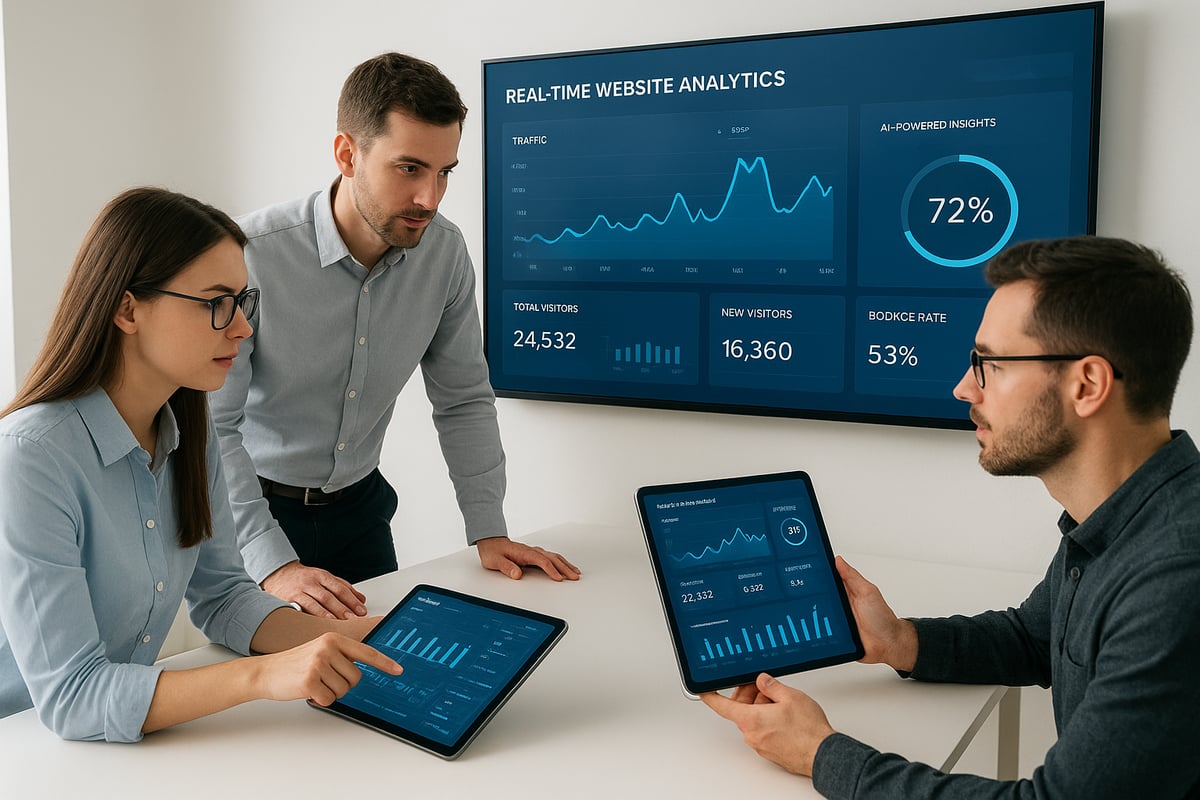
Key Metrics to Track Website Success
Begin by defining the right KPIs for your business model. Page views, unique visitors, session duration, bounce rate, and conversion rates remain foundational. However, in 2026, engagement metrics such as scroll depth, interactive content usage, and cross-device journeys are just as vital.
AI-powered analytics platforms now bring real-time insights to your fingertips. These tools process massive data sets in seconds, uncovering patterns that help you generate website traffic more efficiently. Predictive analytics can even forecast future spikes or drops, letting you act before trends shift.
Leveraging Multi-Channel Attribution and User Journey Data
Modern attribution models reveal how users move across channels before converting. Tracking every touchpoint, from social clicks to email opens, is crucial to understand what truly drives results. User journey mapping highlights which content or campaigns contribute most to your website's growth.
Dashboards are now more actionable, offering customizable views of live traffic sources, campaign performance, and customer segments. By integrating these dashboards with automation, teams can respond instantly to traffic changes or emerging opportunities.
Privacy, Compliance, and Continuous Improvement
With stricter privacy laws and the decline of third-party cookies, ethical data collection is essential. Use consent management tools and transparent policies to maintain user trust. Always review analytics for compliance with global standards.
The real key is to treat website analytics as a living process. Regularly audit your data, test new tactics, and adapt based on insights. Businesses leveraging predictive analytics have reported significant increases in their ability to generate website traffic proactively.
For ongoing strategies and the latest tips on website growth measurement, explore our blog on marketing and website growth, where we dive deeper into actionable analytics and optimization methods.
As you look ahead to boosting your website traffic in 2026, it’s clear that staying ahead of digital trends and adapting to new technologies is crucial for growth. You’ve just explored nine proven strategies designed to help you thrive in the evolving online landscape, but knowing where you stand right now is just as important. If you want a clear, actionable starting point tailored to your business, I encourage you to grab your Free Visibility Snapshot—it’s a practical way to see what’s working, where you can improve, and how to set your site up for measurable success.